We're loading the full news article for you. This includes the article content, images, author information, and related articles.
As the tragedy in Tumbler Ridge reignites the debate on public safety, we dissect the labyrinth of Canada’s firearm regulations—a system far stricter than its southern neighbor but now under intense scrutiny.
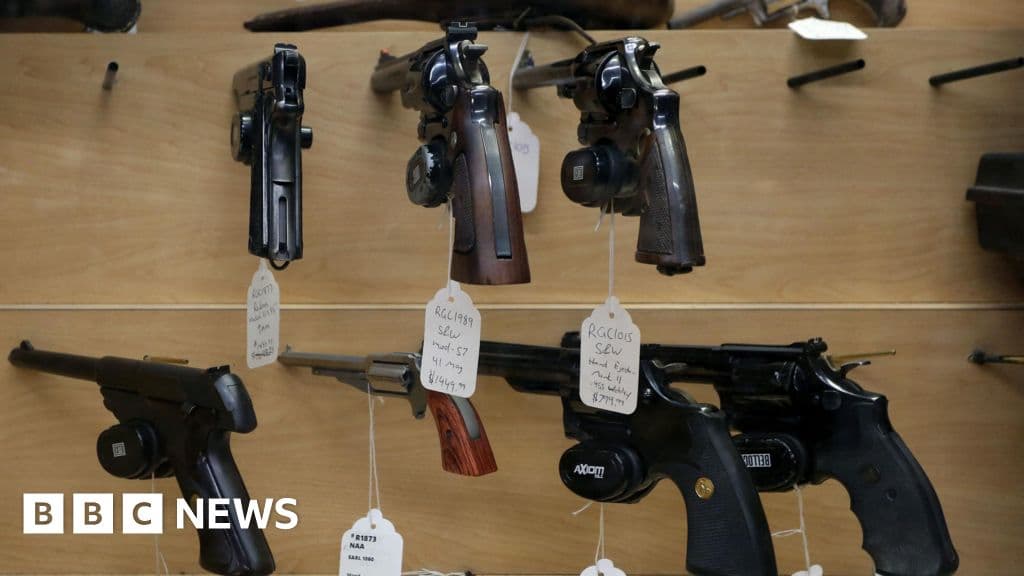
As the tragedy in Tumbler Ridge reignites the debate on public safety, we dissect the labyrinth of Canada’s firearm regulations—a system far stricter than its southern neighbor but now under intense scrutiny.
In the wake of the Tumbler Ridge massacre, where ten lives were claimed in a senseless act of violence, the world’s eyes have turned to Canada’s gun control regime. Often cited as a global model for responsible firearm regulation, Canada’s laws are a complex web of federal oversight, rigorous vetting, and strict prohibitions. Yet, as the events in British Columbia demonstrate, even the most fortified systems are not impervious to tragedy.
Unlike the United States, where the right to bear arms is constitutionally enshrined, gun ownership in Canada is a privilege, not a right. The Firearms Act and the Criminal Code govern every aspect of possession, transport, and storage. To own a gun, a Canadian must obtain a Possession and Acquisition Licence (PAL), a process that involves a mandatory safety course, a cooling-off period, and an exhaustive background check that scours the applicant’s history for criminal records, mental health issues, and domestic violence.
Canadian law categorizes firearms into three distinct classes: non-restricted, restricted, and prohibited. Non-restricted firearms generally include standard hunting rifles and shotguns. Restricted firearms cover handguns and certain semi-automatic rifles, which require additional layers of licensing (RPAL) and can only be used at approved shooting ranges. The third category, prohibited firearms, includes automatic weapons and sawed-off shotguns, which are essentially banned for civilians.
Recent legislation has tightened the noose even further. In October 2022, the government implemented a "national freeze" on the sale, purchase, and transfer of handguns, effectively capping the number of legal handguns in circulation. Furthermore, the ban on "assault-style" firearms, introduced in May 2020 following the Nova Scotia shooting, outlawed over 1,500 models of military-grade weapons. Despite these measures, over 2.2 million Canadians held valid licenses in 2021, proving that a gun culture exists, albeit a regulated one.
The Tumbler Ridge incident will inevitably lead to a forensic audit of these laws. Questions will be asked: How did the shooter obtain the weapon? Was it legal? Did the red flag laws fail? The debate is no longer academic; it is visceral.
For now, Canada remains a country where guns are tools for hunting or sport, not instruments of self-defense. But as the nation mourns, the uncomfortable truth remains: no law is absolute, and safety is an illusion that can be shattered in a single afternoon.
Keep the conversation in one place—threads here stay linked to the story and in the forums.
Other hot threads
E-sports and Gaming Community in Kenya
Active 9 months ago
The Role of Technology in Modern Agriculture (AgriTech)
Active 9 months ago
Popular Recreational Activities Across Counties
Active 9 months ago
Investing in Youth Sports Development Programs
Active 9 months ago



