We're loading the full news article for you. This includes the article content, images, author information, and related articles.
Heavy rainfall predicted across Kenya during Idd-ul-Fitr poses significant travel risks, infrastructure challenges, and safety concerns for families.
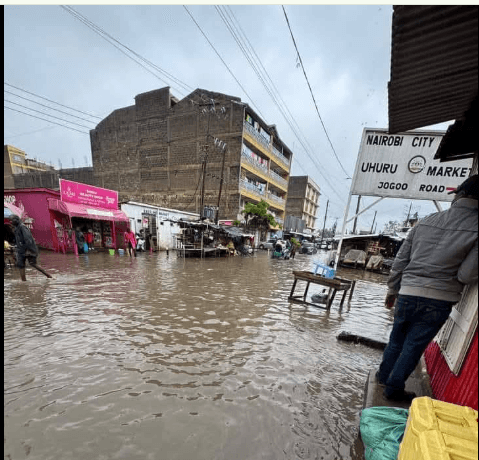
Dark, gathering clouds are punctuating the skyline across Nairobi and parts of Western Kenya this morning, casting a tangible pall over preparations for Idd-ul-Fitr. While millions of Kenyans look toward a day of communal prayer, feasting, and visitation, the weather forecast for Friday, March 20, has shifted from mere seasonal expectation to a critical public safety advisory.
The Kenya Meteorological Department has issued a formal warning signaling moderate to heavy rainfall patterns, a development that threatens to disrupt travel, outdoor gatherings, and the fragile infrastructure of the capital city. As the nation pauses to mark the end of the holy month of Ramadan, the intersection of volatile meteorological conditions and mass public movement creates a high-stakes scenario for emergency services, urban planners, and the thousands of families whose holiday plans are now tethered to the whims of the atmosphere.
According to the latest bulletin from the Kenya Meteorological Department, the rainfall is not merely a transient shower but part of a sustained weather system moving across the country. Meteorological analysts define the current alert as a moderate-to-heavy event, often characterized by precipitation levels exceeding 20 millimeters within a 24-hour window. For a city like Nairobi, where ground saturation is high and soil absorption rates have been compromised by rapid urbanization, this intensity of rainfall is frequently the tipping point for flash flooding.
Climate scientists at the University of Nairobi have previously noted that the increasing frequency of these heavy-rainfall events is part of a broader, destabilizing climatic trend in East Africa. The unpredictability of these patterns makes the task of municipal management immensely difficult, as standard drainage systems often struggle to handle sudden, high-volume water accumulation. The warning issued today explicitly highlights potential risks in low-lying areas, including the informal settlements of Mukuru, Mathare, and Kibera, where drainage infrastructure is already severely constrained.
The impact of this weather event extends well beyond the inconvenience of a dampened celebration it serves as an indictment of the capital city's aging infrastructure. Nairobi, a rapidly growing metropolis of over 5 million people, operates on a drainage network designed for a much smaller population density. When heavy rains arrive, the system is routinely overwhelmed, turning major arteries such as Mombasa Road and Thika Superhighway into impassable conduits of standing water and stranded vehicles.
For the logistics and transport sectors, the timing of this heavy rainfall is particularly punishing. Idd-ul-Fitr is typically a period of high domestic travel as families move to their rural homes or visit extended kin. A disruption in traffic flow across major highways does not just result in tardiness it carries a significant economic cost. Trade experts estimate that major transportation delays during peak holiday periods can lead to a daily contraction in retail activity and logistical efficiency, often amounting to hundreds of millions of shillings in lost productivity across the transport and supply chain sectors.
Beyond the macro-economic metrics, the story of this weather event is written in the lives of ordinary citizens. For a family in a densely packed urban corridor, heavy rain is rarely just weather it is a precarious event that threatens to destroy household property and disrupt access to basic services. The persistent risk of waterborne diseases, exacerbated by contaminated runoff infiltrating the water supply, remains a significant public health concern that usually follows these heavy rainfall episodes.
Community leaders in affected areas are calling for proactive measures from the Nairobi City County government. Despite previous promises to overhaul the city's drainage capacity, many residents argue that progress remains glacial, leaving them to manage the fallout of climate events with little institutional support. The expectation for today is that disaster response teams from the Kenya Red Cross will be on high alert, prepared to mitigate the impact of the predicted storms on the most vulnerable members of society.
This episode is a stark reminder that as East Africa faces the realities of an evolving climate, the resilience of our urban centers must be moved to the forefront of national policy. Building cities that can withstand sudden, intense environmental shocks is no longer an optional ambition it is an urgent requirement for economic and social stability. As the nation marks Idd-ul-Fitr, the focus will remain on the safety of loved ones, but the underlying concern about the durability of Kenya's urban infrastructure will undoubtedly persist long after the rain stops.
Ultimately, the question remains whether these frequent warnings will catalyze a definitive shift in how the nation handles its environmental vulnerabilities. Until the drainage systems are modernized and urban planning becomes more climate-conscious, the specter of heavy rain will continue to shadow the moments of celebration that define the Kenyan experience.
Keep the conversation in one place—threads here stay linked to the story and in the forums.
Sign in to start a discussion
Start a conversation about this story and keep it linked here.
Other hot threads
E-sports and Gaming Community in Kenya
Active 10 months ago
The Role of Technology in Modern Agriculture (AgriTech)
Active 10 months ago
Popular Recreational Activities Across Counties
Active 10 months ago
Investing in Youth Sports Development Programs
Active 10 months ago