We're loading the full news article for you. This includes the article content, images, author information, and related articles.
Tokyo accuses Beijing of ‘painting’ its aircraft with missile-targeting radar near Okinawa, marking a dangerous escalation in the East China Sea that threatens global supply chains.
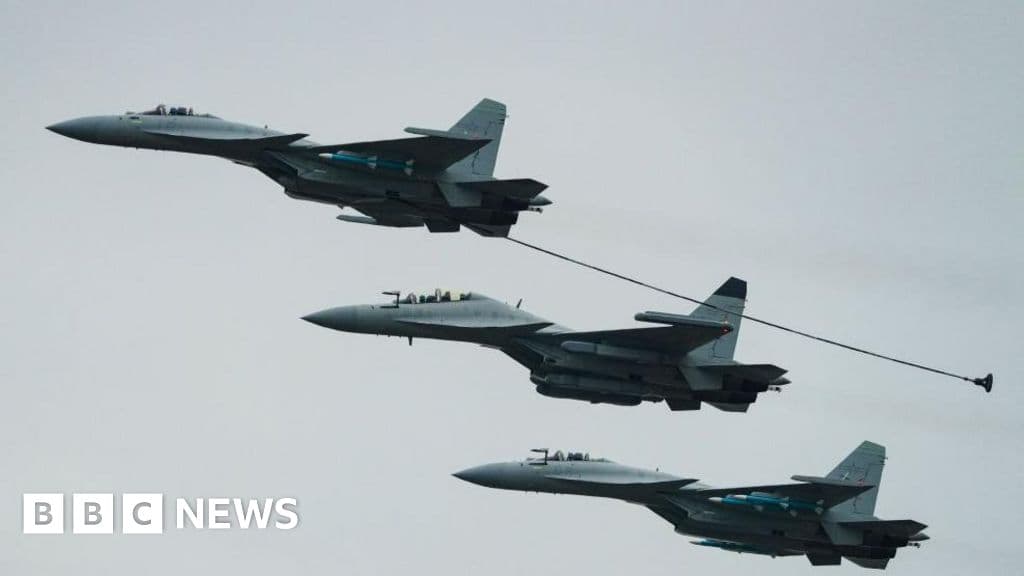
The skies over the East China Sea turned volatile on Saturday when Chinese fighter jets reportedly painted Japanese aircraft with fire-control radar—a hostile maneuver often considered the final step before a missile launch.
This aggressive escalation, occurring off the southern Okinawa islands, forced Japan to scramble its own fighter jets in a high-stakes aerial standoff. While no shots were fired, the incident marks a perilous deepening of the rift between Asia’s two largest economies.
For Kenyans watching from afar, this is not merely a distant diplomatic spat. It is a tremor in the manufacturing hub of the world. Any disruption in this maritime corridor—a critical artery for the vehicles, electronics, and machinery flowing into Mombasa—could send shockwaves through local markets already grappling with supply chain volatility.
According to Japanese defense officials, two separate incidents occurred involving Chinese J-15 fighter jets. A ministry official noted that while the exact intent remains "unclear," the act of locking radar is distinct from standard surveillance.
To put this in perspective: standard radar searches for objects, much like a flashlight in the dark. A "lock-on," however, is akin to pointing a loaded weapon directly at a target to calculate a firing solution. The official emphasized there was "no need" for such a measure if the Chinese pilots were simply trying to locate other aircraft.
Beijing, however, has fiercely rejected this narrative. In a statement, Chinese authorities accused Tokyo of "harassing" its forces during what they termed a routine training exercise, claiming Japan is the provocateur in the region.
The incident does not exist in a vacuum. It follows a month of spiraling rhetoric sparked by Japanese Prime Minister Sanae Takaichi. Her recent suggestion that Tokyo could take military action if Beijing were to attack Taiwan has infuriated Chinese leadership.
Beijing views self-governed Taiwan as a breakaway province and has never ruled out the use of force to achieve "reunification." The friction has already begun to bleed into the maritime domain:
The widening rift is beginning to affect daily life for citizens in both Asian nations, but the fallout could be global. Kenya maintains deep ties with both nations—relying on China for infrastructure financing and imports, and on Japan for development aid and automotive technology.
Analysts warn that if these "gray zone" tactics—aggressive actions that stop short of war—escalate into open conflict, the economic consequences would be immediate. Energy prices could spike due to uncertainty, and the flow of goods through the South and East China Seas could grind to a halt.
As the rhetoric hardens, the margin for error in the skies above Okinawa is vanishing. What remains is a fragile standoff where a single miscalculation by a pilot could alter the geopolitical landscape overnight.
Keep the conversation in one place—threads here stay linked to the story and in the forums.
Sign in to start a discussion
Start a conversation about this story and keep it linked here.
Other hot threads
E-sports and Gaming Community in Kenya
Active 9 months ago
The Role of Technology in Modern Agriculture (AgriTech)
Active 9 months ago
Popular Recreational Activities Across Counties
Active 9 months ago
Investing in Youth Sports Development Programs
Active 9 months ago