We're loading the full news article for you. This includes the article content, images, author information, and related articles.
The 1.5-million-year-old Ileret footprints in Marsabit are handed over to the county government, empowering the local community to protect humanity’s heritage.
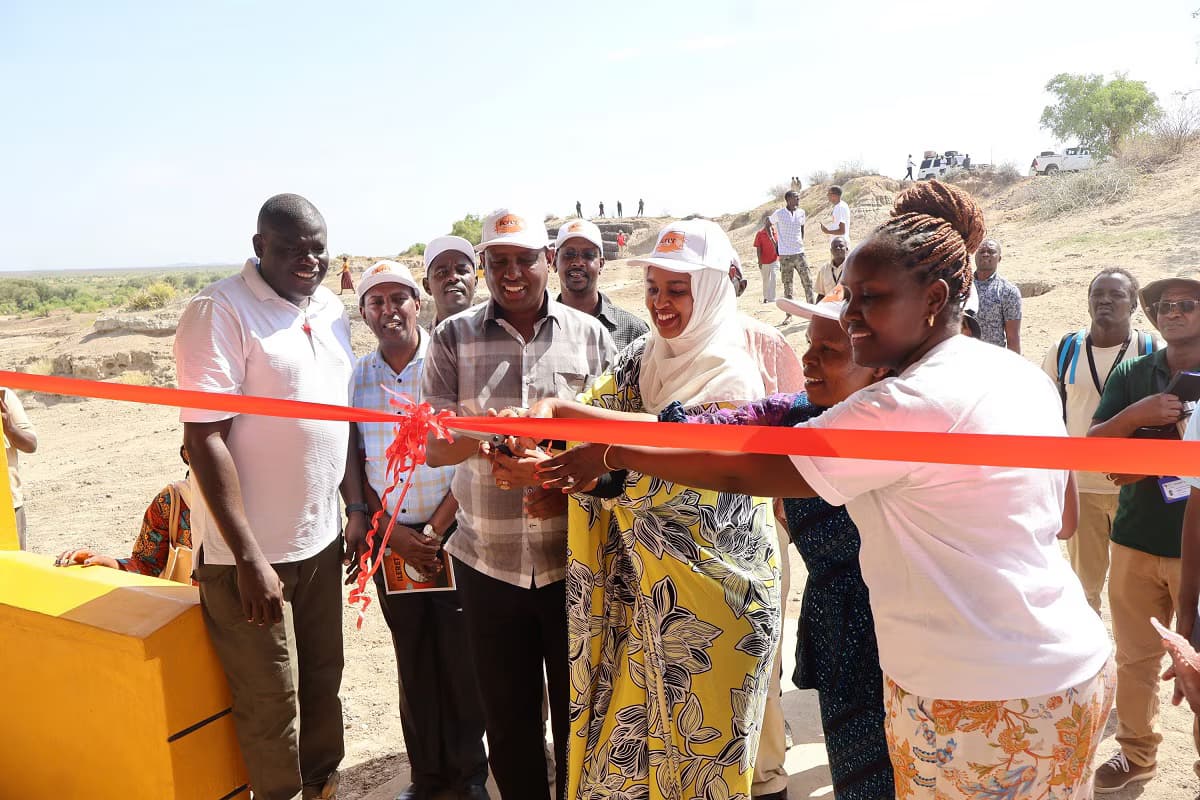
One of humanity’s oldest known journeys has found new stewards—1.5 million years after it was first made.
The National Museums of Kenya (NMK) has formally handed over the Ileret Footprint Site to the Marsabit County Government, placing one of the world’s most significant archaeological landmarks under local custodianship and marking a shift in how Kenya manages its deep prehistory.
Situated along the eastern shores of Lake Turkana, the Ileret site preserves a rare sequence of fossilized footprints attributed to Homo erectus, offering compelling evidence of early humans walking upright with a stride strikingly similar to that of modern people. Scientists rank the footprints as the second-oldest known human footprints globally, making them a cornerstone in the study of human evolution.
The handover follows years of conservation work by NMK, aimed at protecting the fragile impressions from erosion, wind, and seasonal rains. The museum has installed a protective canopy over the footprints and constructed a visitor interpretation centre, allowing the site to be accessed without compromising its scientific integrity.
“This is not just dust,” said Dr. Purity Kiura, NMK’s Chief Research Scientist. “It is our origin story. These footprints tell us how we became human—how we stood, walked, and moved across landscapes.”
Researchers note that the footprints provide rare biomechanical evidence, showing foot arches, toe alignment, and walking patterns that closely resemble those of present-day humans, despite being over a million years old.
Under the new arrangement, Marsabit County—working closely with the Daasanach community—will manage the site as a protected heritage and tourism asset. The move reflects a growing policy shift toward community-centred heritage management, where conservation and local livelihoods are developed side by side.
Local leaders say the handover restores ownership not just in administrative terms, but in cultural meaning.
“For generations, these lands have held our history,” said a community elder present at the ceremony. “Now we are trusted to protect it and benefit from it.”
As part of the transition, women’s groups from the Daasanach community have been trained to produce traditional beadwork and crafts for visitors, creating income streams linked directly to heritage tourism. Guides drawn from the local population are also being prepared to interpret the site’s global significance for researchers, students, and tourists.
Cultural heritage experts say the Ileret model demonstrates how ancient science can be woven into modern development—where preservation does not exclude people, but includes them.
“This is how the ‘Cradle of Mankind’ should be managed,” said one heritage specialist. “Protected by science, sustained by communities.”
The handover strengthens Lake Turkana’s status as one of the world’s richest paleoanthropological landscapes, complementing nearby fossil sites that have reshaped understanding of early human evolution.
For Marsabit County, the challenge now lies in balancing access, conservation, and long-term sustainability. For Kenya, the Ileret Footprints represent more than a tourist attraction—they are a reminder that the story of humanity began on this soil.
And now, after 1.5 million years, those first steps are once again under the care of the people who live closest to where history was made.
Keep the conversation in one place—threads here stay linked to the story and in the forums.
Sign in to start a discussion
Start a conversation about this story and keep it linked here.
Other hot threads
E-sports and Gaming Community in Kenya
Active 9 months ago
The Role of Technology in Modern Agriculture (AgriTech)
Active 9 months ago
Popular Recreational Activities Across Counties
Active 9 months ago
Investing in Youth Sports Development Programs
Active 9 months ago