We're loading the full news article for you. This includes the article content, images, author information, and related articles.
Acting President Delcy Rodríguez proposes a law to heal political wounds by releasing non-violent detainees and transforming the infamous El Helicoide prison into a community center.
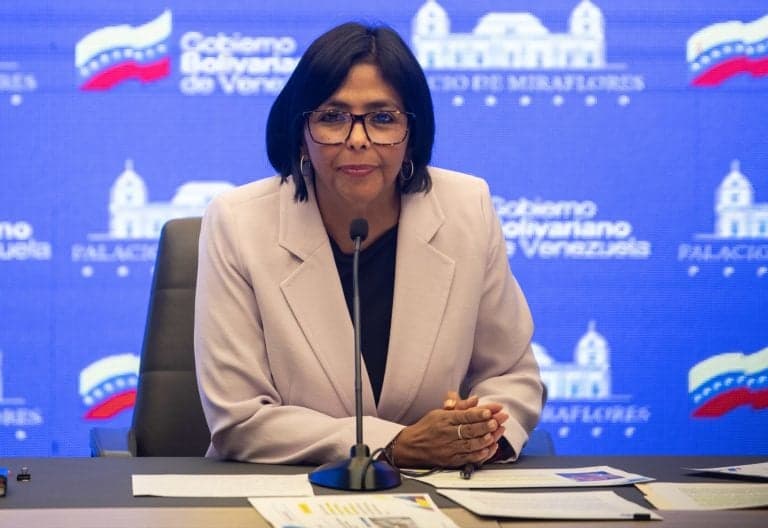
Venezuela’s acting President Delcy Rodríguez has announced a sweeping amnesty law that promises to release hundreds of political prisoners and close the country’s most feared detention center. In a move aimed at "healing the wounds" of a fractured nation, the proposal excludes those convicted of homicide or human rights violations but signals a dramatic shift in the post-Maduro era.
The announcement, made from the Supreme Tribunal of Justice in Caracas, comes just weeks after the dramatic ouster of Nicolás Maduro, marking a pivotal moment in Venezuela's transition. Rodríguez framed the initiative not merely as a legal concession, but as a necessary step toward national reconciliation in a country torn apart by decades of polarization and authoritarian rule.
The most symbolic component of the proposal is the closure of El Helicoide, the spiral-shaped modernist icon that became a dungeon for the regime’s opponents. Known ironically as "The Helix," it served as the headquarters of the intelligence services and a site where human rights groups have documented systematic torture for years.
"We are transforming this symbol of pain into a center for sports, culture, and social service," Rodríguez declared, flanked by members of the judiciary. "Never again shall the walls of our institutions be used to silence dissent. We must build a justice system that serves the people, not one that oppresses them."
While the announcement has been welcomed by some families of detainees, the opposition remains wary. Activists point out that "political prisoners" are often held on trumped-up charges of terrorism or treason, which might technically exclude them from the amnesty if not carefully defined.
Alfredo Romero, head of the legal aid group Foro Penal, urged caution. "An amnesty law is only as good as its implementation," he said. "We have seen promises before. We need to see the prison doors open and our brothers and sisters walking free before we can celebrate."
The transition government faces a Herculean task. Beyond the human rights crisis, Venezuela is grappling with an economic collapse that has driven millions into exile. By prioritizing the release of prisoners, Rodríguez appears to be extending an olive branch to the opposition, whose cooperation is essential for rebuilding the state.
The bill now heads to the National Assembly, where it is expected to be fast-tracked. For the families of those held in El Helicoide, the wait is agonizing. Many have spent years bringing food and medicine to the gates, unsure if their loved ones were still alive.
"I just want to hold my son again," said Maria Gonzalez, whose son was detained during the 2024 protests. "They took his youth away. If this law gives him back his future, then I can finally forgive." The coming days will test whether this amnesty is a genuine fresh start or a strategic maneuver in the high-stakes game of Venezuelan politics.
Keep the conversation in one place—threads here stay linked to the story and in the forums.
Sign in to start a discussion
Start a conversation about this story and keep it linked here.
Other hot threads
E-sports and Gaming Community in Kenya
Active 10 months ago
The Role of Technology in Modern Agriculture (AgriTech)
Active 10 months ago
Popular Recreational Activities Across Counties
Active 10 months ago
Investing in Youth Sports Development Programs
Active 10 months ago



