We're loading the full news article for you. This includes the article content, images, author information, and related articles.
A high-stakes standoff escalates in the Caribbean as the United States deploys massive naval power and doubles a bounty on President Maduro, threatening to ripple through global oil markets and hit Kenyan pockets.
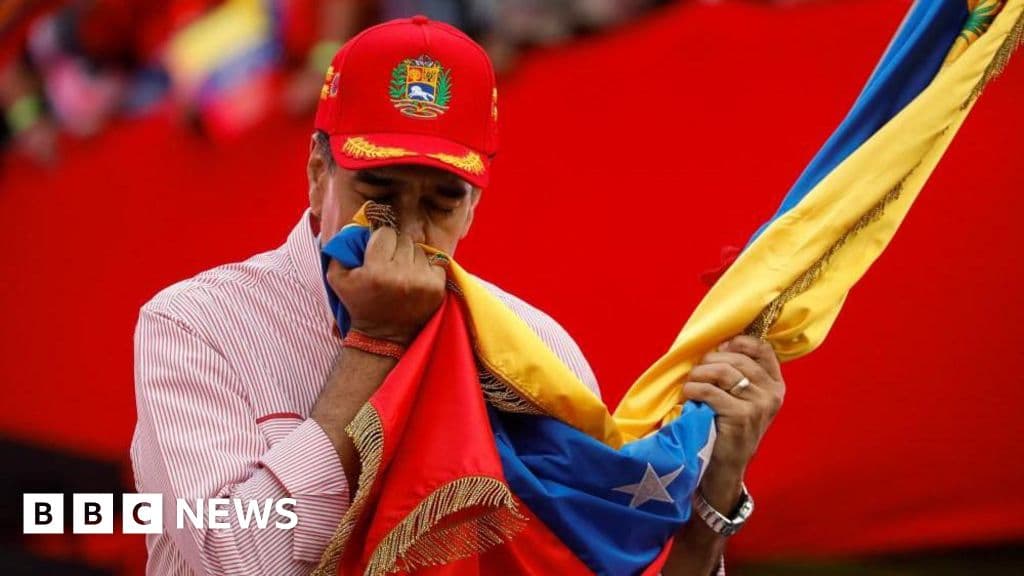
A tense geopolitical drama is unfolding thousands of miles away in the Caribbean, but its shockwaves could soon be felt at petrol stations across Kenya. The United States has significantly escalated its pressure campaign against Venezuelan President Nicolás Maduro, deploying a formidable naval fleet and reportedly issuing a direct ultimatum for him to relinquish power following a heavily disputed election.
The standoff places the world on edge, threatening to destabilize an already volatile region and, crucially for Kenyans, disrupt global energy markets. At the heart of the crisis is the contested result of Venezuela's 2024 presidential election. The country's electoral council declared Maduro the winner, but the opposition, led by former diplomat Edmundo González, produced vote tallies suggesting they had won by a landslide. The United States, along with many European and Latin American nations, has refused to recognize Maduro's victory, instead acknowledging González as the "president-elect."
In a muscular display of military might, the Trump administration has dispatched an aircraft carrier strike group, the USS Gerald R. Ford, along with more than a dozen warships and approximately 15,000 troops to the waters near Venezuela. The stated mission is to combat narcotics trafficking, with Washington accusing Maduro of leading a "narco-terrorist" state. This operation has already seen deadly strikes on boats alleged to be transporting drugs.
Adding financial pressure to military posturing, the U.S. has doubled the reward for information leading to Maduro's capture to $50 million (approx. KES 6.5 billion). U.S. Attorney General Pam Bondi stated that under President Trump, "Maduro will not escape justice and he will be held accountable for his despicable crimes." Venezuela's government has decried the moves as a "crude political propaganda operation" and an act of aggression.
The situation intensified following a direct phone call on November 21, 2025, during which President Trump reportedly gave his Venezuelan counterpart a blunt ultimatum: leave the country immediately with a guarantee of safe passage, or risk the consequences. Maduro reportedly refused, demanding global amnesty for himself and his allies—a proposal Washington rejected, leading to a collapse in the talks.
For the average Kenyan, the critical question is how this international power struggle affects their livelihood. The answer lies in the price of crude oil. Venezuela sits on the world's largest proven oil reserves, and while its production has been crippled by years of mismanagement and sanctions, the threat of open conflict could send global oil prices soaring. Any disruption, analysts warn, could translate directly to higher costs for petrol and diesel in Nairobi, squeezing household budgets and increasing transport expenses for businesses.
While the Kenyan government has not issued a formal statement on the 2024 Venezuelan election, the two nations share a history of diplomatic engagement. Relations were formally established in 1970, and past agreements have focused on energy cooperation, including technical assistance for oil exploration. More recently, in April 2025, Kenya's National Assembly Speaker, Moses Wetang'ula, hosted the Venezuelan Ambassador to establish a Kenya-Venezuela Parliamentary Friendship Group aimed at strengthening bilateral ties.
The international community remains divided. Observers from the United Nations and the Carter Center noted that the election process lacked credibility and failed to meet democratic standards. Following the vote, the US imposed fresh sanctions on 16 of Maduro's allies for obstructing the democratic process. Opposition leader Edmundo González, who has since been forced into exile in Spain after an arrest warrant was issued, has been meeting with international leaders, including US President Joe Biden, to rally support.
As warships patrol the Caribbean and diplomatic channels fray, the standoff between Washington and Caracas is more than just a foreign headline. It is a brewing storm with the potential to reach across continents, impacting everything from international law to the price every Kenyan pays to get to work, transport goods, and put food on the table. The world watches, hoping for a peaceful resolution, but the forward-looking statements from Washington suggest a hardening stance. As President Trump noted regarding potential future actions, "the land is easier, but that's going to start very soon."
Keep the conversation in one place—threads here stay linked to the story and in the forums.
Sign in to start a discussion
Start a conversation about this story and keep it linked here.
Other hot threads
E-sports and Gaming Community in Kenya
Active 9 months ago
The Role of Technology in Modern Agriculture (AgriTech)
Active 9 months ago
Popular Recreational Activities Across Counties
Active 9 months ago
Investing in Youth Sports Development Programs
Active 9 months ago



