We're loading the full news article for you. This includes the article content, images, author information, and related articles.
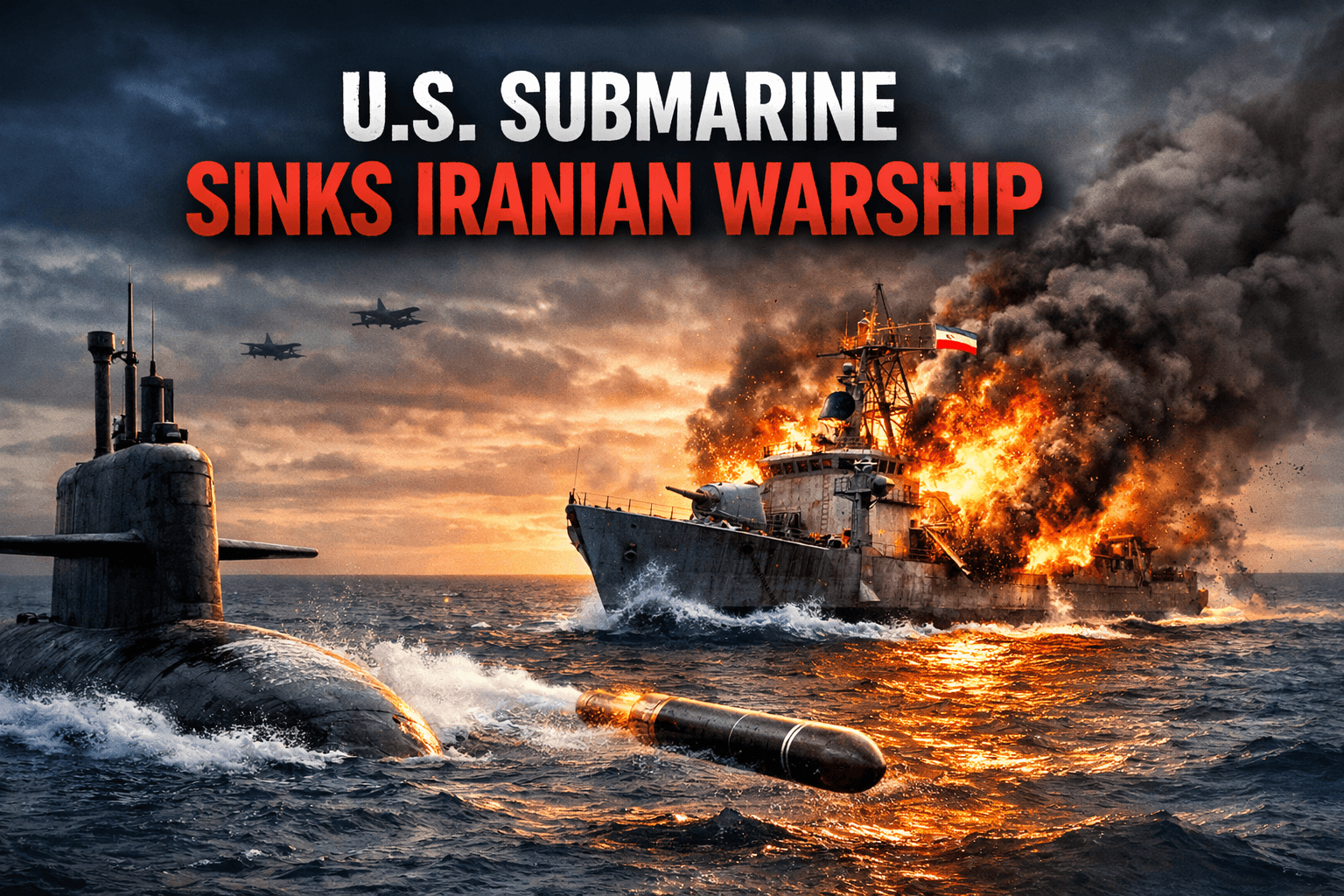
A U.S. submarine sank an Iranian warship with a torpedo in international waters, marking the first such American submarine combat sinking since World War II and escalating the widening U.S.–Iran conflict.
Washington / Indian Ocean — March 4, 2026
A U.S. Navy submarine has sunk an Iranian warship with a torpedo in international waters of the Indian Ocean, an event the United States says marks the first time an American submarine has destroyed an enemy vessel in combat since World War II. The confirmation came Wednesday from U.S. Defense Secretary Pete Hegseth, signaling a dramatic escalation in the widening confrontation between Washington and Tehran.
The Iranian vessel—identified by multiple reports as the IRIS Dena, a frigate operating near Sri Lanka—was struck by a torpedo late Tuesday night while sailing in international waters. The attack resulted in heavy casualties among the crew, with dozens killed and survivors later rescued during emergency operations in the region.
Speaking at a Pentagon briefing, Hegseth described the strike as a decisive military action carried out by a U.S. submarine using a torpedo—an operational method rarely seen in modern naval combat.
He characterized the sinking as “a quiet death,” emphasizing the stealth and lethality of submarine warfare and noting that it represents the first confirmed torpedo sinking of an enemy ship by the United States since the end of World War II.
While naval combat between major powers has occurred since 1945, most modern engagements have relied on aircraft, cruise missiles, or surface-launched anti-ship weapons. Submarine torpedo attacks against enemy warships have become extremely rare due to advances in surveillance, anti-submarine defenses, and the changing nature of naval warfare.
Reports indicate the warship was operating near the southern coast of Sri Lanka, within international waters but inside the country’s wider economic zone. Sri Lankan maritime authorities responded to the distress signal and assisted with search-and-rescue efforts, recovering several survivors from the wreck.
The vessel had reportedly been returning from an Indian naval event before it was intercepted and struck.
The sinking did not occur in isolation. It comes amid a rapidly escalating conflict involving the United States, Israel, and Iran, with missile attacks, airstrikes, and regional military mobilization spreading across the Middle East.
In recent days:
Iran launched missile and drone strikes against several regional targets.
U.S. and Israeli forces expanded attacks on Iranian military infrastructure.
Regional states and NATO members have increased missile defenses and military readiness.
Casualties across the broader conflict have already reached into the thousands, and the fighting has begun to disrupt global energy markets and shipping routes through the Strait of Hormuz.
Military analysts say the attack demonstrates the continuing strategic relevance of submarine warfare. Nuclear-powered submarines remain among the most difficult military assets to detect, giving them the ability to strike surface fleets without warning.
The strike also sends a geopolitical signal: the U.S. Navy retains the capacity to project stealth force across distant maritime theaters, far from its traditional Middle Eastern bases.
However, such actions also raise the stakes dramatically. The destruction of a major naval vessel—especially outside the immediate Gulf region—expands the geographic scope of the conflict and risks drawing additional powers into the crisis.
Iran has vowed retaliation and warned that it will target military and economic infrastructure linked to U.S. interests across the region. At the same time, Western governments have begun evacuating citizens from areas considered at risk of further escalation.
Diplomats and security analysts caution that the sinking of the Iranian warship may represent a turning point in the conflict—transforming what began as regional strikes into a broader naval confrontation.
If the escalation continues, the Indian Ocean—traditionally a trade artery rather than a battlefield—could emerge as a new front in one of the most volatile geopolitical crises of the decade.
Keep the conversation in one place—threads here stay linked to the story and in the forums.
Sign in to start a discussion
Start a conversation about this story and keep it linked here.
Other hot threads
E-sports and Gaming Community in Kenya
Active 9 months ago
The Role of Technology in Modern Agriculture (AgriTech)
Active 9 months ago
Popular Recreational Activities Across Counties
Active 9 months ago
Investing in Youth Sports Development Programs
Active 9 months ago



