We're loading the full news article for you. This includes the article content, images, author information, and related articles.
Washington’s contribution drops sharply from previous highs, with strict bans on climate funding and aid to Afghanistan, though support for Sudan remains.
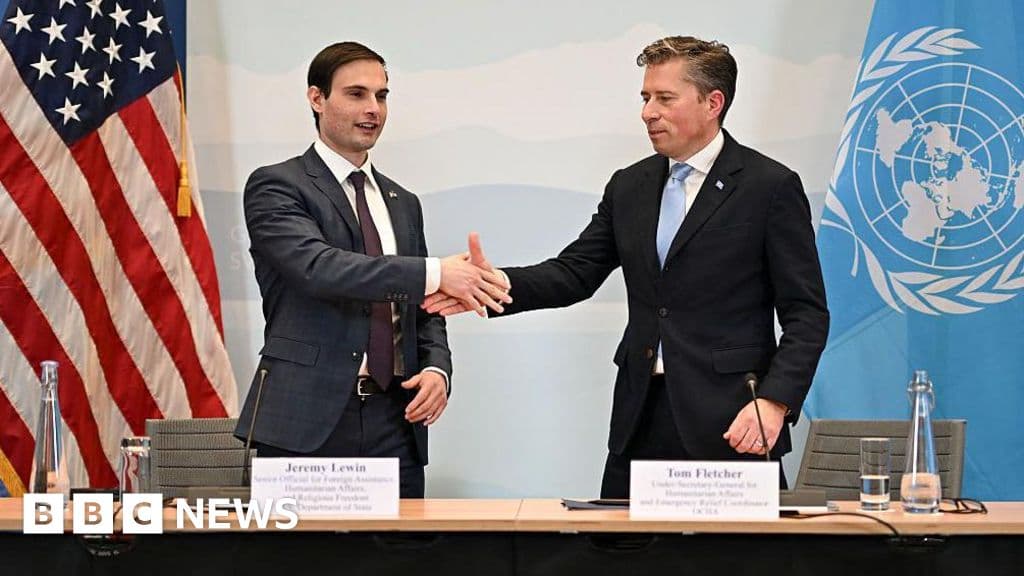
The United States has thrown a financial lifeline to the United Nations, pledging $2 billion (approx. KES 258 billion) in humanitarian aid, but it comes attached to a stark ultimatum: reform immediately or face irrelevance.
The announcement, delivered in Geneva by Jeremy Lewin, Under Secretary for Foreign Assistance in the Trump administration, marks a fundamental shift in global diplomacy. While the funds will keep essential machinery running, the message to the UN was blunt: "adapt or die." For East Africa, where humanitarian needs are often intertwined with climate shocks and conflict, the conditions attached to this money signal a turbulent year ahead.
While KES 258 billion sounds substantial, it represents a precipitous drop from historical norms. In 2022, the US contribution to the UN's humanitarian work stood at an estimated $17 billion (approx. KES 2.2 trillion). The new pledge is roughly 12% of that figure, leaving a massive deficit that other traditional donors like the UK and Germany—who are also signaling cuts—are unlikely to fill.
UN Emergency Relief Chief Tom Fletcher welcomed the funds, noting they would save "millions of lives." However, the reduction raises urgent questions about the sustainability of aid operations globally. Analysts warn that without alternative funding streams, the gap will likely result in:
In a move that could have severe repercussions for Kenya and its neighbors, the new funding framework explicitly rules out projects related to tackling climate change. Mr. Lewin justified the exclusion by stating such initiatives were not "life-saving" in the immediate sense and did not align with "US interests."
This policy creates a complex dilemma for aid agencies operating in East Africa, where drought and flooding are primary drivers of displacement. Separating "life-saving" aid from climate resilience in a region battered by extreme weather may prove operationally impossible for many NGOs.
The US has moved away from broad funding to a targeted approach, prioritizing just 17 countries. Crucially for Nairobi, Sudan is on the priority list. With the ongoing conflict in Sudan driving refugees toward the Kenyan border, continued aid there is vital for regional stability.
Conversely, Afghanistan and Yemen have been cut off entirely. Mr. Lewin alleged that Washington possesses evidence of UN funds in Afghanistan being diverted to the Taliban. "President Trump will never tolerate a penny of taxpayers' money going to terrorist groups," Lewin asserted.
The selective nature of this aid package leaves the UN in a precarious position. As agencies scramble to adjust to the new austerity, the definition of humanitarian aid is being rewritten in real-time. For the millions depending on these lifelines, the geopolitics of Geneva have never felt closer to home.
Keep the conversation in one place—threads here stay linked to the story and in the forums.
Sign in to start a discussion
Start a conversation about this story and keep it linked here.
Other hot threads
E-sports and Gaming Community in Kenya
Active 9 months ago
The Role of Technology in Modern Agriculture (AgriTech)
Active 9 months ago
Popular Recreational Activities Across Counties
Active 9 months ago
Investing in Youth Sports Development Programs
Active 9 months ago



