We're loading the full news article for you. This includes the article content, images, author information, and related articles.
The United States has imposed new sanctions on Russia's two largest oil companies, Rosneft and Lukoil, in a bid to pressure Moscow into a peace agreement for the ongoing conflict in Ukraine.
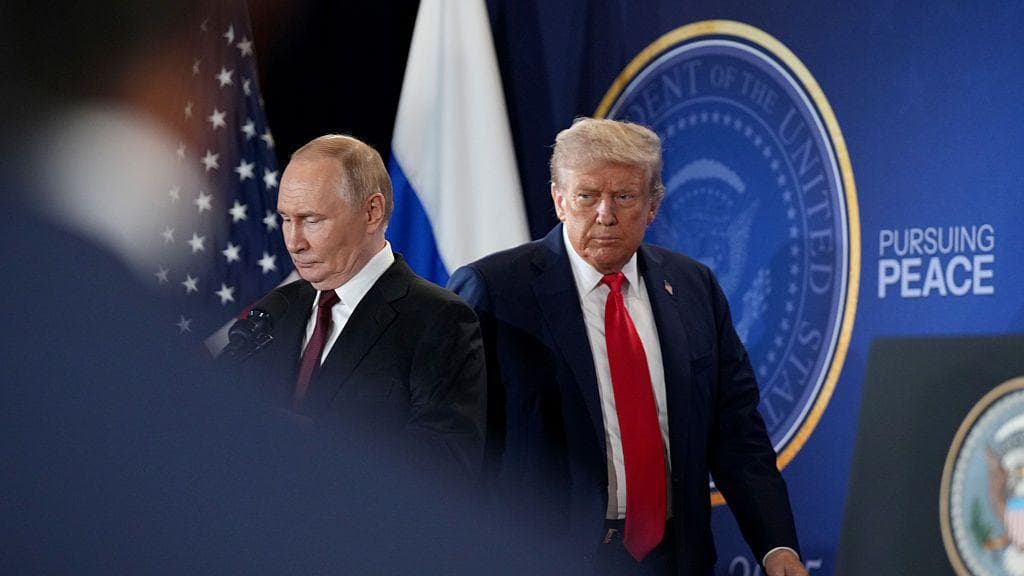
The US Department of the Treasury announced on Wednesday, October 22, 2025, that it is sanctioning Russia's two largest oil companies, Rosneft and Lukoil, along with over thirty of their subsidiaries. This action aims to cut off crucial revenue streams that fund Russia's military operations in Ukraine. US Treasury Secretary Scott Bessent stated that the sanctions were necessary due to "Putin's refusal to end this senseless war" and that these companies finance the Kremlin's "war machine."
President Donald Trump confirmed the sanctions, expressing frustration over stalled peace negotiations with President Putin. Speaking alongside NATO Secretary-General Mark Rutte, President Trump remarked, "Every time I speak to Vladimir, I have good conversations and then they don't go anywhere. They just don't go anywhere." The sanctions represent a significant policy shift for the Trump administration, marking the first such measures against Russia since his return to the White House in January 2025.
The announcement of these sanctions came a day after President Trump indefinitely postponed a planned meeting with President Putin in Budapest, Hungary. This decision followed a call between US Secretary of State Marco Rubio and Russian Foreign Minister Sergey Lavrov, where Lavrov reportedly indicated Russia's negotiating position remained unchanged, rejecting Trump's ceasefire proposal. President Trump had previously held a summit with President Putin in Alaska on August 15, 2025, to discuss the Russo-Ukrainian War, which concluded without a substantial agreement.
The conflict in Ukraine has continued for over three and a half years, with significant human and material costs. As of October 14, 2025, Russian forces occupied approximately 115,077 square kilometers of Ukrainian land, representing 19% of Ukrainian territory. Estimates of casualties vary, but a UK Defence Intelligence report on October 14, 2025, indicated Russia had suffered approximately 1.118 million total casualties since the full-scale invasion began. Ukrainian President Volodymyr Zelenskyy estimated 400,000 killed or injured and 35,000 missing as of January 2025.
The sanctions against Rosneft and Lukoil were imposed pursuant to Executive Order 14024, which targets entities operating in the energy sector of the Russian Federation economy. This executive order carries the threat of secondary sanctions on foreign financial institutions that continue to conduct business with the sanctioned companies. The US Treasury Department has issued a general license allowing for a wind-down of transactions with Rosneft and Lukoil, which is set to expire on November 21, 2025.
US Treasury Secretary Scott Bessent, who was sworn in on January 28, 2025, has been a vocal proponent of tougher economic policies against Russia. He emphasized that the sanctions aim to degrade the Kremlin's ability to raise revenue for its war efforts. Analysts have described these measures as a significant step, though some suggest they are long overdue. Experts from the Atlantic Council predict a "direct and immediate impact on Russia's oil profits."
The new sanctions are expected to put further downward pressure on Russian oil revenues. However, the effectiveness of these sanctions will depend on whether the US threatens secondary sanctions on countries like China and India, which are major purchasers of Russian oil. The EU has also approved its 19th package of sanctions on Russia, including a phased ban on Russian liquefied natural gas imports, but has not yet sanctioned Lukoil due to exemptions for some member states.
The long-term impact of these sanctions on Russia's war efforts and its economy remains to be seen. There is also uncertainty regarding the extent to which other nations will adhere to the US sanctions, particularly those heavily reliant on Russian energy. The cancellation of the Trump-Putin summit highlights the deep divisions and lack of a clear path towards a peaceful resolution.
Observers will be closely watching for Russia's response to the new sanctions and any potential counter-measures. The willingness of major oil importers like China and India to comply with the sanctions will be a critical factor in their overall impact. Further diplomatic efforts, or lack thereof, between the US and Russia regarding the Ukraine conflict will also be a key area of focus.
Keep the conversation in one place—threads here stay linked to the story and in the forums.
Sign in to start a discussion
Start a conversation about this story and keep it linked here.
Other hot threads
E-sports and Gaming Community in Kenya
Active 9 months ago
The Role of Technology in Modern Agriculture (AgriTech)
Active 9 months ago
Popular Recreational Activities Across Counties
Active 9 months ago
Investing in Youth Sports Development Programs
Active 9 months ago



