We're loading the full news article for you. This includes the article content, images, author information, and related articles.
The United States has transferred $160 million (approx. KES 20.8 billion) to the United Nations, a modest payment against a staggering backlog of over $4 billion (approx. KES 520 billion) owed to the international body.
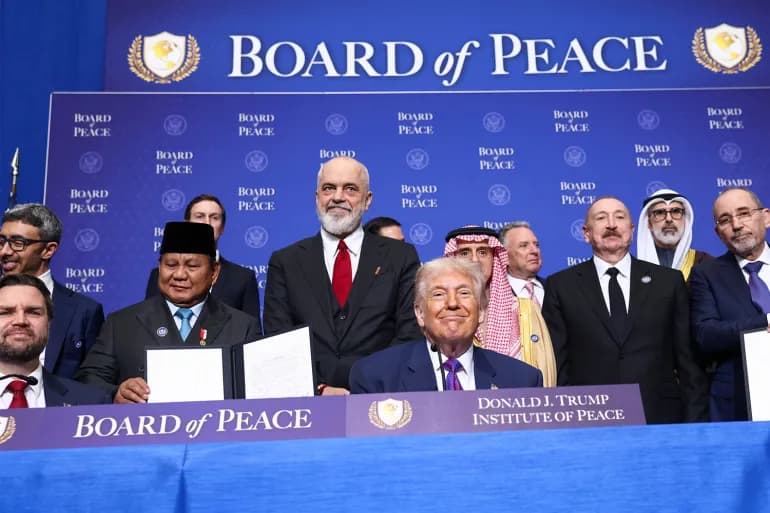
The United States has transferred $160 million (approx. KES 20.8 billion) to the United Nations, a modest payment against a staggering backlog of over $4 billion (approx. KES 520 billion) owed to the international body.
In a financial move that highlights the precarious funding structure of global diplomacy, the United States has made a $160 million (approx. KES 20.8 billion) payment toward its astronomical United Nations arrears. This partial settlement barely scratches the surface of the more than $4 billion (approx. KES 520 billion) debt the superpower currently owes the international organization.
The chronic underfunding of the UN by its largest contributor casts a long, concerning shadow over global operations, particularly as multiple geopolitical crises demand urgent humanitarian and peacekeeping interventions. This financial instability threatens to paralyze vital missions, leaving vulnerable populations exposed and undermining the operational efficacy of UN agencies stationed across the developing world.
For East Africa, the implications of this financial shortfall are immediate and severe. Nairobi proudly hosts the United Nations Office at Nairobi (UNON), the global headquarters for both the UN Environment Programme (UNEP) and UN-Habitat. These critical agencies operate on tightly constrained budgets that are highly sensitive to the liquidity crises engineered by member state arrears.
When the UN's general budget is starved of capital, administrative freezes and hiring delays inevitably trickle down to the regional headquarters. This impacts local employment in Nairobi and diminishes the capacity of these agencies to execute vital environmental conservation and urban development projects across the African continent. The local Kenyan economy, which benefits significantly from the expatriate and diplomatic community, also feels the secondary economic tremors.
The strategic withholding of UN dues is frequently utilized as a mechanism of diplomatic leverage. As the US recalibrates its foreign policy posture, the financial starvation of international bodies serves as a blunt instrument to demand institutional reform or protest specific UN resolutions. However, this approach severely compromises the UN's ability to respond to emergent crises.
Furthermore, the lack of robust financial backing weakens the UN's negotiating power in conflict zones. In regions like the Horn of Africa, where UN agencies manage massive refugee populations in camps such as Dadaab and Kakuma, any disruption to supply chains can trigger localized humanitarian disasters. The reliance on unpredictable, piecemeal payments fundamentally destabilizes long-term strategic planning.
As the international community watches this financial brinkmanship unfold, the structural vulnerability of the United Nations has never been more apparent, prompting urgent calls for systemic financial reform.
Keep the conversation in one place—threads here stay linked to the story and in the forums.
Sign in to start a discussion
Start a conversation about this story and keep it linked here.
Other hot threads
E-sports and Gaming Community in Kenya
Active 9 months ago
The Role of Technology in Modern Agriculture (AgriTech)
Active 9 months ago
Popular Recreational Activities Across Counties
Active 9 months ago
Investing in Youth Sports Development Programs
Active 9 months ago