We're loading the full news article for you. This includes the article content, images, author information, and related articles.
Washington has praised Kenya's leadership in the challenging Haiti security operation, but financial uncertainties and on-the-ground realities are testing Nairobi's high-stakes commitment
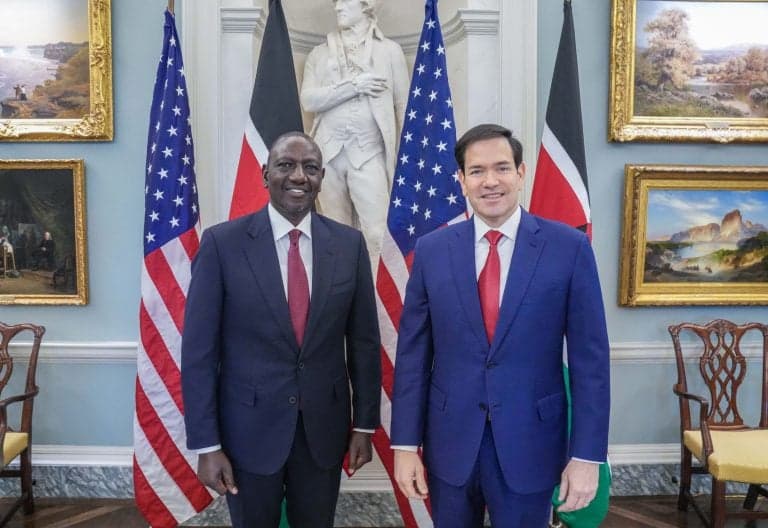
The United States has publicly commended Kenya for its leadership in the Multinational Security Support (MSS) mission aimed at quelling catastrophic gang violence in Haiti, a move President William Ruto has defended as a historic act of global solidarity.
This high-profile deployment, however, places Kenyan police officers on perilous ground, navigating a complex web of international finance, domestic criticism, and the brutal reality of a nation largely under gang control. For Kenyans watching from home, the core question remains: at what cost comes this international praise, and will it translate into tangible security for our officers and stability in the Caribbean nation?
US Secretary of State Antony Blinken has repeatedly lauded Kenya's commitment, emphasizing in conversations with President Ruto the vital importance of restoring peace for the Haitian people. The US has been the primary financial architect of the mission, pledging over $300 million (approx. KES 39 billion) to support the force. This backing was crucial for the initial deployment of Kenyan officers, which began in June 2024 and has since grown to over 600 personnel.
Despite the international applause, the mission's financial footing appears precarious. Recent political shifts in Washington have led to a freeze on some funds, casting a shadow over the operation's long-term sustainability. The UN-managed trust fund for the mission remains significantly underfunded, holding far less than the estimated $600 million (approx. KES 78 billion) required annually.
At home, the Haiti deployment is a subject of fierce debate. The government's decision has faced legal challenges, with critics like Thirdway Alliance party leader Ekuru Aukot arguing the move is unconstitutional. Concerns are rife over the safety of the officers, who face gangs that control up to 90% of the capital, Port-au-Prince, and are often better armed.
The mission's progress has been mixed. President Ruto has highlighted significant achievements, noting that joint operations with Haitian police have led to:
Yet, analysts warn the mission is understaffed, under-equipped, and facing immense logistical hurdles, including a language barrier. Some security experts have called it an "impossible mission," pointing to the failures of previous, larger international interventions.
While the United States continues to publicly support Kenya's leadership, there are whispers of plans to alter the mission's structure, potentially doubling troop numbers and even scaling back Kenya's command role. As the international community deliberates the mission's future, Kenyan officers continue their patrols in Port-au-Prince. Their success hinges not just on their bravery, but on the wavering commitment of global partners. As President Ruto himself noted, the mission cannot succeed without "sustained funding" and a "full troop deployment."
Keep the conversation in one place—threads here stay linked to the story and in the forums.
Sign in to start a discussion
Start a conversation about this story and keep it linked here.
Other hot threads
E-sports and Gaming Community in Kenya
Active 9 months ago
The Role of Technology in Modern Agriculture (AgriTech)
Active 9 months ago
Popular Recreational Activities Across Counties
Active 9 months ago
Investing in Youth Sports Development Programs
Active 9 months ago



