We're loading the full news article for you. This includes the article content, images, author information, and related articles.
A new American military-funded technology that charges drones in mid-air using lasers could dramatically enhance the Kenya Defence Forces' surveillance and counter-terrorism operations.
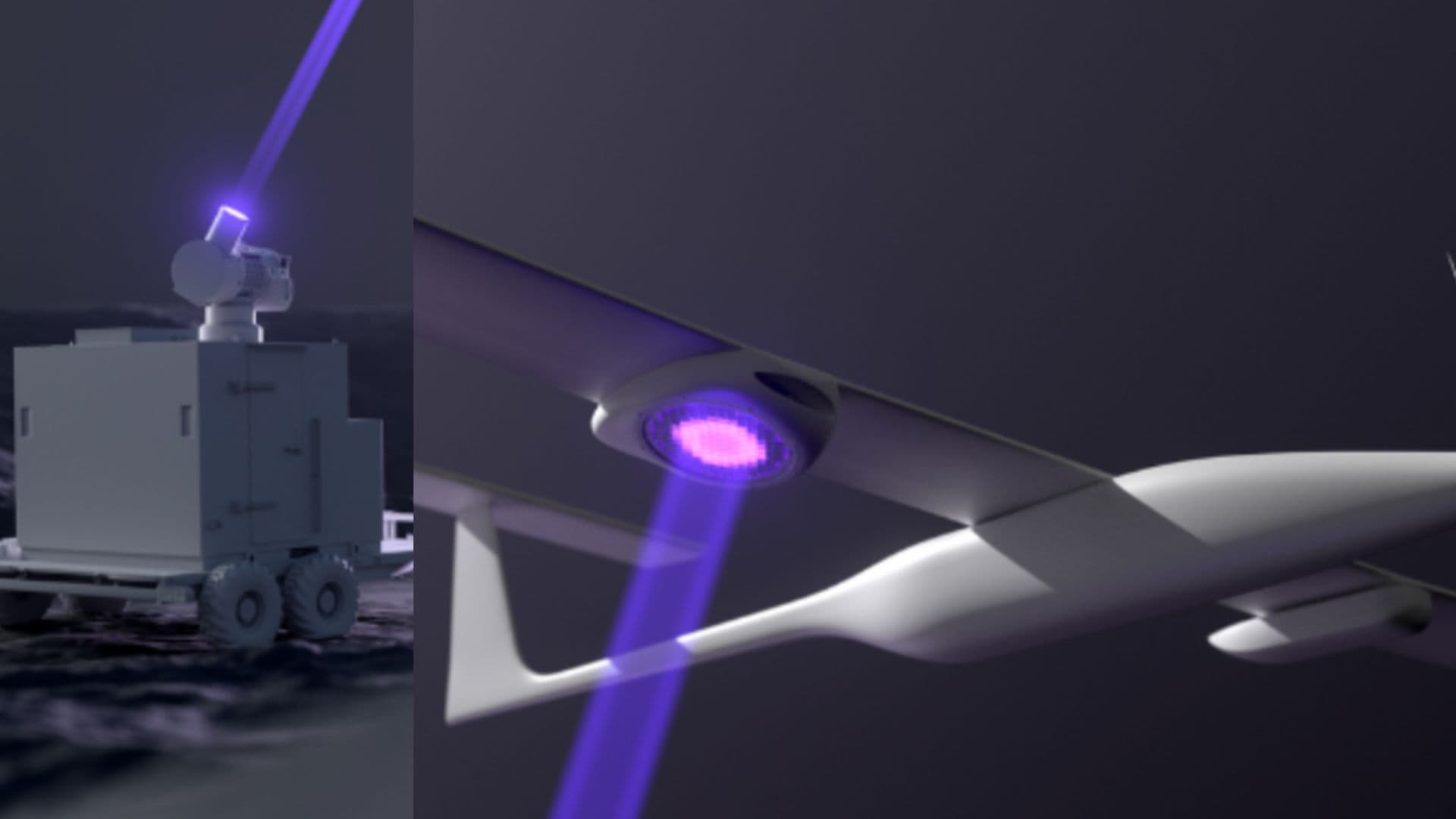
A breakthrough in wireless power could soon mean military drones never have to land to refuel. A US-based firm, PowerLight Technologies, announced it has successfully tested a laser system that recharges unmanned aerial systems (UAS) while they fly up to 5,000 feet in the air.
This development, funded by the U.S. Department of Defense, is more than a technical achievement; it signals a potential turning point for security operations in regions like East Africa, where the Kenya Defence Forces (KDF) are heavily reliant on drone surveillance in the fight against terror groups like Al-Shabaab.
The technology works by transmitting a high-power laser from a ground station to a lightweight receiver, weighing about 2.7 kilograms, installed on the drone. This receiver converts the laser's light into electricity, charging the drone's batteries. "This is much more than point-to-point power transfer using a laser; we are building an intelligent mesh energy network capability," explained PowerLight CTO Tom Nugent.
For the KDF, particularly troops serving in the African Union Transition Mission in Somalia (AUSSOM), persistent surveillance is critical. Kenyan soldiers already use drones to monitor movements and detect threats around their bases. However, the need to land for recharging creates operational gaps. This new laser-beaming technology could eliminate that vulnerability entirely.
An unmanned aircraft that can stay airborne indefinitely offers significant advantages:
The U.S. has a history of military cooperation with Kenya, including joint training exercises and supplying drone technology like the ScanEagle and Raven UAVs. This new power-beaming capability could become a future component of that security partnership.
While the immediate application is military, the long-term potential for Kenya's economy is significant. The same technology could one day power commercial drones used in agriculture for crop spraying and monitoring—a sector the Kenyan government is keen to modernise with drone technology. It could also revolutionize logistics and healthcare delivery to remote areas, building on existing drone-based services in the region.
"A platform that doesn’t need to land to refuel or recharge is one that never blinks," noted Fatema Hamdani, CEO of PowerLight’s partner, Kraus Hamdani Aerospace. As this technology matures, it could offer Kenya a powerful tool for both national security and economic development.
Keep the conversation in one place—threads here stay linked to the story and in the forums.
Sign in to start a discussion
Start a conversation about this story and keep it linked here.
Other hot threads
E-sports and Gaming Community in Kenya
Active 9 months ago
The Role of Technology in Modern Agriculture (AgriTech)
Active 9 months ago
Popular Recreational Activities Across Counties
Active 9 months ago
Investing in Youth Sports Development Programs
Active 9 months ago