We're loading the full news article for you. This includes the article content, images, author information, and related articles.
Copenhagen has summoned the American ambassador after President Trump appointed a special envoy who promptly vowed to make the autonomous Danish territory "a part of the U.S.", reigniting tensions over American ambitions in the resource-rich Arctic.
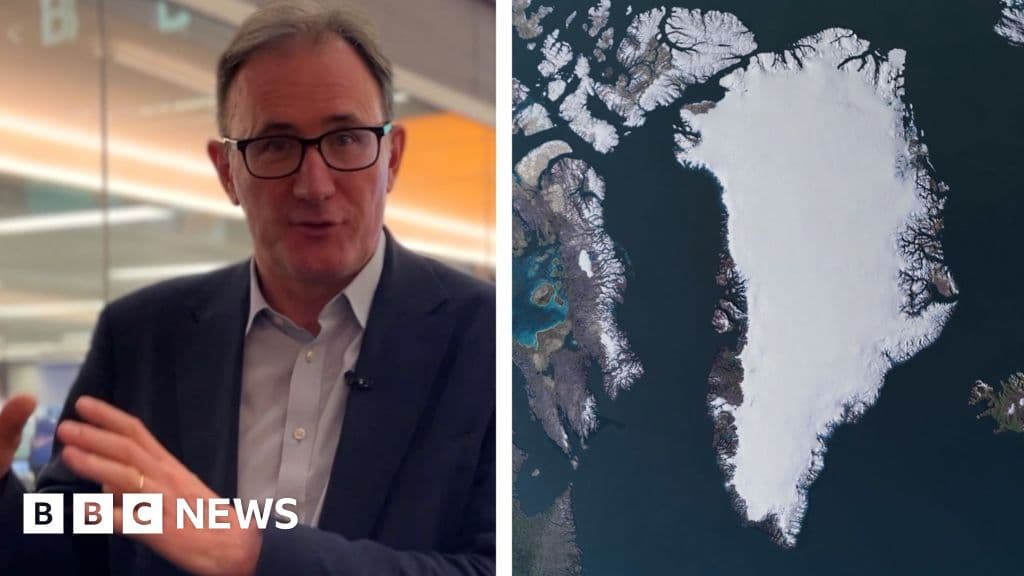
A diplomatic crisis has erupted between the United States and Denmark following President Donald Trump's appointment of a special envoy for Greenland. The move, and the envoy's subsequent declaration of intent to incorporate the autonomous territory into the U.S., has been met with outrage in both Copenhagen and Nuuk, Greenland's capital.
The appointment of Louisiana Governor Jeff Landry has escalated a long-simmering issue into a full-blown diplomatic dispute. Danish Foreign Minister Lars Lokke Rasmussen condemned the appointment and the envoy's remarks as "totally unacceptable" and confirmed his ministry would summon the U.S. ambassador for an explanation. This sharp rebuke underscores the gravity with which Denmark, a NATO ally, views Washington's renewed and aggressive interest in the strategically vital island.
President Trump has long been transparent about his desire to acquire Greenland, citing its vast mineral resources and critical location for American national security. In announcing Governor Landry's appointment, Trump emphasized that Landry "understands how essential Greenland is to our National Security." Landry, a vocal supporter of annexation, responded on social media, stating it was an "honor to serve... to make Greenland a part of the U.S."
This direct challenge to Danish sovereignty has been firmly rejected. In a joint statement, Danish Prime Minister Mette Frederiksen and Greenland's Prime Minister Jens-Frederik Nielsen asserted, "You cannot annex another country. Not even with an argument about international security... Greenland belongs to Greenlanders."
The American focus on Greenland is driven by a convergence of strategic interests, placing the island at the center of a new geopolitical contest. For Kenya and other nations, the implications of this power play in the Arctic are significant, potentially impacting global trade routes and access to critical resources.
Washington's desire for Greenland is not new. The U.S. has made several attempts to purchase the island, dating back to the 19th century. In 1946, the Truman administration secretly offered Denmark $100 million in gold (approximately KES 15.5 billion today) for the territory, viewing it as a "military necessity" during the Cold War. While that offer was rejected, a 1951 treaty granted the U.S. significant defense rights, solidifying its military presence.
While details of the current U.S. strategy remain scarce, the appointment of an envoy with an explicit annexationist goal signals a departure from past diplomatic approaches. Analysts are divided on whether this is a serious policy push or a tactic to apply pressure on a key ally. Greenland's leaders, however, are resolute. "We will determine our future ourselves," Prime Minister Nielsen wrote in a message to his people. As the ice continues to melt, the political and economic future of the Arctic hangs in the balance, with this diplomatic standoff as its latest, and perhaps most significant, tremor.
Keep the conversation in one place—threads here stay linked to the story and in the forums.
Sign in to start a discussion
Start a conversation about this story and keep it linked here.
Other hot threads
E-sports and Gaming Community in Kenya
Active 9 months ago
The Role of Technology in Modern Agriculture (AgriTech)
Active 9 months ago
Popular Recreational Activities Across Counties
Active 9 months ago
Investing in Youth Sports Development Programs
Active 9 months ago