We're loading the full news article for you. This includes the article content, images, author information, and related articles.
The US has officially withdrawn from the WHO under President Trump, leaving a KES 36 billion funding gap that threatens critical health programs in Africa.
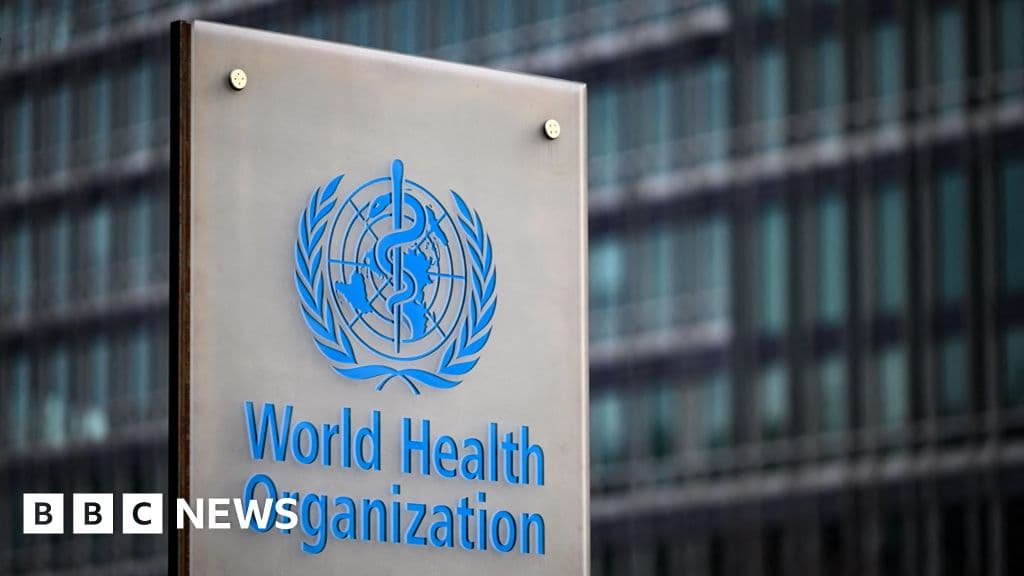
In a geopolitical earthquake that will be felt from Geneva to Nairobi, the United States has officially completed its withdrawal from the World Health Organization (WHO). The move, orchestrated by President Donald Trump and Health Secretary Robert F. Kennedy Jr., leaves the UN agency facing a KES 36 billion ($278 million) financial black hole.
The withdrawal, effective January 22, 2026, fulfills a long-standing threat from the Trump administration, which has accused the WHO of being "China-centric" and "irreparably broken" following its handling of the COVID-19 pandemic. In a joint statement, Secretary of State Marco Rubio and RFK Jr. declared that American taxpayers would no longer subsidize an organization they claim has failed its core mandate.
The US has traditionally been the WHO’s largest donor, contributing roughly 20% of its budget.The immediate cessation of funding—including unpaid dues for 2024 and 2025—threatens to cripple critical health programs across Africa.
For Kenya, the implications are dire. The Kenya Medical Research Institute (KEMRI) and the Ministry of Health have often leaned on WHO technical support and funding for malaria and maternal health initiatives. With the US pivoting to "bilateral engagements," Kenya may be forced to negotiate direct health aid deals with Washington, potentially with new political strings attached.
"This is a disaster for global health security," remarked a senior official at the African Union CDC in Addis Ababa. "Diseases do not respect borders. If the US walks away, the firewall against the next pandemic crumbles."
As the WHO scrambles to fill the void, likely turning to European and Asian partners, the global health architecture has fundamentally shifted. The era of a unified global health response appears to be over, replaced by a fragmented landscape of competing national interests.
Keep the conversation in one place—threads here stay linked to the story and in the forums.
Sign in to start a discussion
Start a conversation about this story and keep it linked here.
Other hot threads
E-sports and Gaming Community in Kenya
Active 9 months ago
The Role of Technology in Modern Agriculture (AgriTech)
Active 9 months ago
Popular Recreational Activities Across Counties
Active 9 months ago
Investing in Youth Sports Development Programs
Active 9 months ago