We're loading the full news article for you. This includes the article content, images, author information, and related articles.
The United States has granted India a temporary 30-day waiver to purchase Russian oil stranded at sea, seeking to stabilize global energy markets amidst the intensifying conflict between the US, Israel, and Iran.
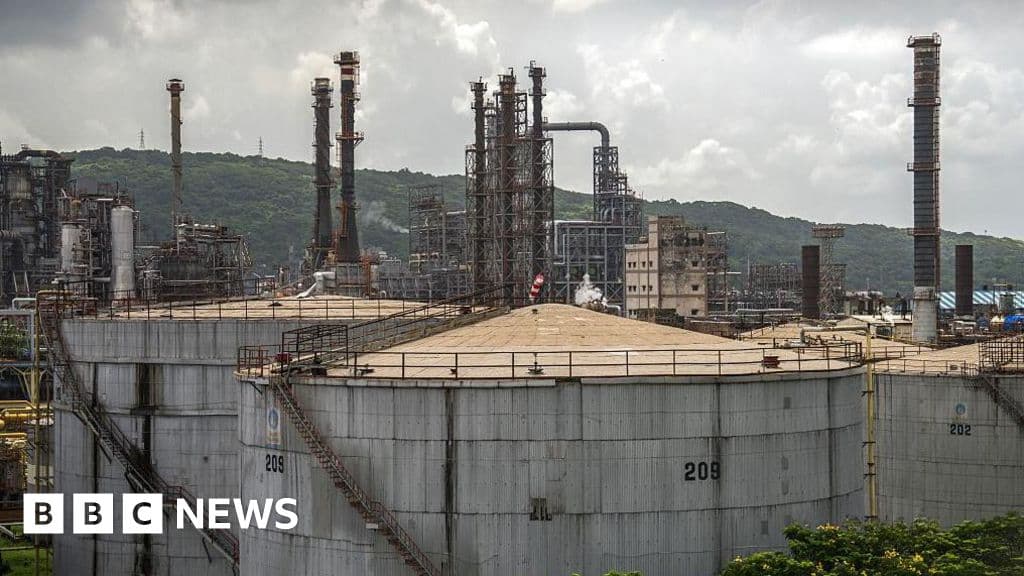
In a dramatic geopolitical pivot, the US government has temporarily eased sanctions, allowing India to purchase Russian oil stranded at sea amidst spiraling Middle East tensions.
This 30-day waiver, framed as a desperate stop-gap measure, highlights the fragile nature of global energy supply chains. For East Africa, where pump prices dictate the cost of living, the threat of an extended blockage in the Strait of Hormuz could trigger a severe inflationary shock across the region.
Millions of barrels of oil and gas currently idle near the Strait of Hormuz, a critical chokepoint handling nearly half of India's energy imports. With Tehran threatening to target commercial vessels in retaliation to the ongoing US-Israeli military campaign, global markets are bracing for unprecedented disruption.
Treasury Secretary Scott Bessent defended the move, explicitly stating that the waiver is designed to "alleviate pressure caused by Iran's attempt to take global energy hostage." Washington has historically pressured India to shun Moscow’s exports to choke funding for the war in Ukraine, making this concession a stark indicator of mounting panic in the energy sector.
For Kenya, the stakes are uncomfortably high. The Energy and Petroleum Regulatory Authority (EPRA) closely monitors global crude benchmarks. Any disruption in India’s refining capacity—a major supplier of refined petroleum to East Africa—will inevitably push local pump prices up, squeezing an already burdened consumer base grappling with high living costs.
The indefinite halt in supplies has ignited fears of an impending energy crisis in India, which reportedly holds reserves for only 25 days. The ripple effects will not be confined to South Asia.
President Donald Trump has warned that the confrontation with Iran could stretch for several weeks, indicating that short-term waivers may only delay, rather than avert, a deeper structural crisis in the oil market. If the waiver expires without a broader de-escalation, countries reliant on imported refined petroleum, including Kenya, must prepare for severe economic headwinds.
The geopolitical chessboard is shifting rapidly. By granting India access to Russian crude—effectively turning a blind eye to its own sanctions framework—Washington is prioritizing immediate market stability over long-term strategic containment of Moscow. This exposes the limits of Western economic sanctions when confronted with acute energy shortages.
Local economists in Nairobi warn that Kenya must accelerate its transition to renewable energy to buffer against such external shocks. The current reliance on volatile Middle Eastern and Asian supply chains remains a critical vulnerability for the nation's economic security.
"The waiver is a pragmatic, albeit hypocritical, acknowledgment that energy security trumps geopolitical posturing when the lights threaten to go out."
Keep the conversation in one place—threads here stay linked to the story and in the forums.
Sign in to start a discussion
Start a conversation about this story and keep it linked here.
Other hot threads
E-sports and Gaming Community in Kenya
Active 9 months ago
The Role of Technology in Modern Agriculture (AgriTech)
Active 9 months ago
Popular Recreational Activities Across Counties
Active 9 months ago
Investing in Youth Sports Development Programs
Active 9 months ago



