We're loading the full news article for you. This includes the article content, images, author information, and related articles.
Francis Atwoli wins another five-year term as KPAWU General Secretary unopposed, cementing his dominance in Kenya’s labor movement and political sphere.

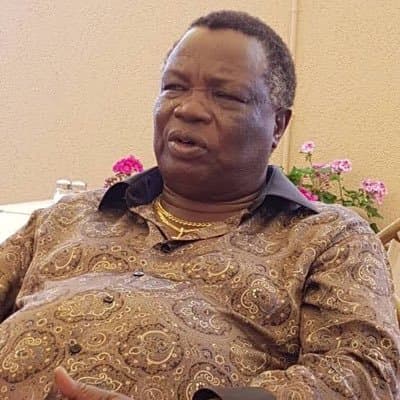
Francis Atwoli has once more underlined his unrivalled dominance of Kenya’s trade union landscape, clinching a fresh five-year term as General Secretary of the Kenya Plantation and Agricultural Workers Union (KPAWU) without facing a single challenger.
The endorsement, delivered unanimously by delegates meeting in Nakuru, reinforces Atwoli’s status as one of the most enduring—and influential—figures in East Africa’s labour movement. For a union that represents tens of thousands of workers across tea, flower, and agricultural estates, the message was unequivocal: continuity over change.
Atwoli’s longevity has long divided opinion. Critics argue that decades at the helm have crowded out younger leadership and entrenched a personality-driven union culture. Supporters counter that his institutional memory, political reach, and combative negotiating style make him uniquely equipped to confront powerful multinational employers.
In his acceptance remarks, Atwoli leaned into the persona that has made him both feared and revered, issuing a sharp warning to employers against what he termed “monkey business” with workers’ wages and conditions—a phrase that drew applause from the floor.
The renewed mandate comes at a difficult moment for the agricultural sector. Rising production costs, global market volatility, and pressure on export earnings have left employers pushing for restraint, while workers face eroding purchasing power.
Atwoli’s immediate task will be to negotiate new Collective Bargaining Agreements (CBAs) for thousands of tea and flower farm workers in regions such as Kericho and Naivasha, where labour tensions are never far from the surface.
As is typical of Atwoli’s leadership, union business quickly intersected with national politics. Using the platform, he openly backed the government’s housing levy, describing it as “painful but necessary” for workers—a position that places him firmly within the current administration’s orbit and underscores his role as a labour leader who also operates as a political power broker.
That alignment has strengthened his access to the corridors of power, even as it fuels accusations that organised labour under his watch has grown too close to the state.
By the end of this term, Atwoli will have led KPAWU for more than three decades, a record with few parallels in the region. For many plantation workers, he remains “Baba”—a flamboyant but formidable shield against exploitation. For detractors, he is the immovable object in a labour movement struggling to renew itself.
What is beyond dispute is this: Francis Atwoli is not merely surviving the passage of time—he is defining it. And for the foreseeable future, the purple-shirted unionist will remain a central figure in Kenya’s labour and political theatre.
Keep the conversation in one place—threads here stay linked to the story and in the forums.
Sign in to start a discussion
Start a conversation about this story and keep it linked here.
Other hot threads
E-sports and Gaming Community in Kenya
Active 9 months ago
The Role of Technology in Modern Agriculture (AgriTech)
Active 9 months ago
Popular Recreational Activities Across Counties
Active 9 months ago
Investing in Youth Sports Development Programs
Active 9 months ago
Key figures and persons of interest featured in this article