We're loading the full news article for you. This includes the article content, images, author information, and related articles.
Antonio Guterres appoints 40 global experts to an independent body tasked with separating "fact from fakes" in the rapidly evolving AI landscape.
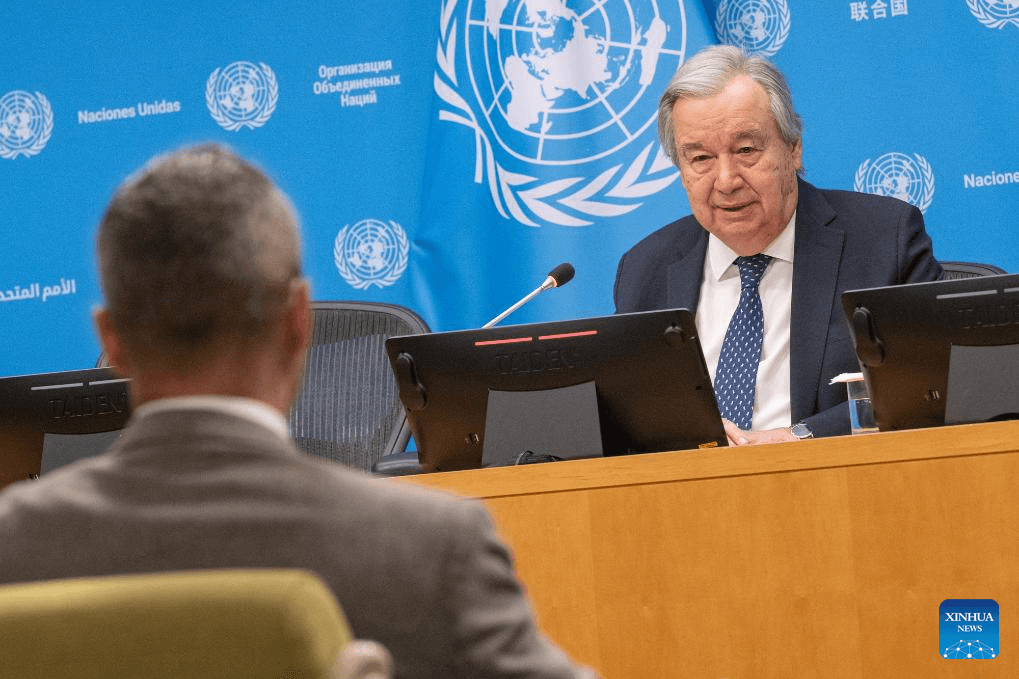
The United Nations has launched what it hopes will become the world’s most authoritative scientific reference point on artificial intelligence — a body designed to help governments separate evidence from hype, and policy from panic, as AI reshapes economies, security, education and public life.
But a crucial detail has been widely misstated in early reporting and commentary: Secretary-General António Guterres has not appointed the panel members. He has submitted a list of 40 proposed experts for appointment by the UN General Assembly.
That procedural difference matters. It defines who holds legal authority, how independence is protected, and whether the initiative can credibly serve the entire world — rather than appear as a Secretariat-led project.
On February 4, 2026, Guterres presented the Independent International Scientific Panel on Artificial Intelligence, framing it as a science-based guardrail for a technology he warned is “moving at the speed of light.”
According to the UN Secretary-General’s office, the list of 40 names emerged from an open global call that attracted more than 2,600 applications, after which the Secretary-General recommended/proposed the nominees to the General Assembly.
The UN’s own panel webpage is explicit: these are “proposed panel members … to be appointed by the General Assembly.”
This panel is not a standalone announcement; it is anchored in a formal UN process.
The UN states the panel was established under General Assembly Resolution A/RES/79/325, adopted in late August 2025, which sets out modalities for both:
the Independent International Scientific Panel on AI, and
a broader Global Dialogue on AI Governance.
Independent analysis of the same resolution describes it as a significant multilateral step — notable precisely because it was adopted by consensus at a time when geopolitical fractures often paralyze global governance.
The UN says proposed members will serve in their personal capacity, independent of governments, companies, or institutions — a design choice aimed at insulating scientific assessment from corporate lobbying and state rivalry.
The stated goal is to create a body that can credibly assess AI’s real-world impacts across societies and economies — not just the technical frontier, but the lived consequences: labor shifts, education disruption, health opportunities, surveillance risks, and the industrialization of misinformation.
In AI governance, legitimacy is everything. A scientific panel only works if states and stakeholders accept it as neutral.
If the public is told the Secretary-General “appointed” the experts, skeptics can frame the panel as politically curated.
If the public understands the UNGA appoints the experts, the panel carries a clearer multilateral mandate — and the UN’s own documentation supports that pathway.
The UN’s FAQ describes the process in plain terms: the Secretary-General recommends the list; the General Assembly appoints the panel.
The panel’s work is expected to feed into the UN’s expanding architecture for AI governance. Reporting on the launch indicates the panel’s first report is expected in time for the Global Dialogue on AI Governance in July.
UN-linked summaries describe the panel’s intended role as an independent, multidisciplinary assessment mechanism — aimed at closing an “AI knowledge gap” and giving policymakers shared evidence to design “guardrails” across priority sectors such as health, education and energy.
The timing is not accidental. AI is colliding with three realities at once:
A geopolitical race — as states treat compute, chips, data and model capability as strategic assets.
A trust emergency — as deepfakes, synthetic propaganda and automated scams scale faster than public verification systems.
A governance lag — where lawmaking moves slower than model iteration, while societal harm can spread in days.
By building a science-first mechanism, the UN is attempting to create a shared baseline of facts — a prerequisite for any global rulebook that can survive the pressures of politics and profit
Status: The Secretary-General has proposed/recommended 40 experts; appointment lies with the UN General Assembly.
Basis: Established under UNGA Resolution A/RES/79/325 (Aug 2025).
Selection: Open global call; 2,600+ applications reported.
Independence: Members serve in personal capacity, independent of governments and companies.
Next milestone: First report expected ahead of the Global Dialogue on AI Governance (July).
Keep the conversation in one place—threads here stay linked to the story and in the forums.
Sign in to start a discussion
Start a conversation about this story and keep it linked here.
Other hot threads
E-sports and Gaming Community in Kenya
Active 10 months ago
Popular Recreational Activities Across Counties
Active 10 months ago
The Role of Technology in Modern Agriculture (AgriTech)
Active 10 months ago
Investing in Youth Sports Development Programs
Active 10 months ago



