We're loading the full news article for you. This includes the article content, images, author information, and related articles.
**A groundbreaking concept from the University of Leicester could shield sensitive medical and power grid equipment from disruptive magnetic fields, with significant implications for Kenya's healthcare and infrastructure.**
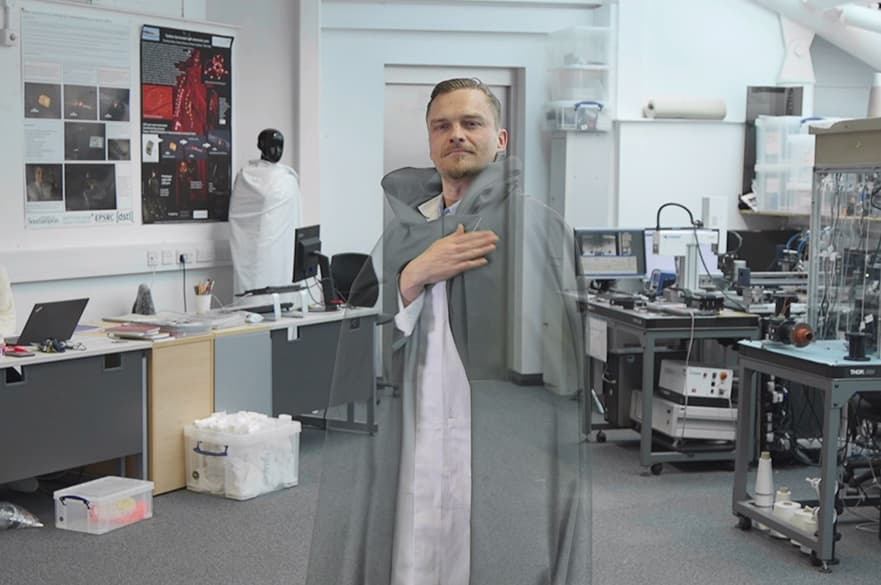
Engineers in the United Kingdom have designed a magnetic 'invisibility cloak' that could make sensitive technology practically invisible to disruptive magnetic fields, a breakthrough that promises to enhance everything from hospital MRI scans to the stability of our national power grid.
This innovation tackles a persistent problem for modern economies: unwanted magnetic fields. In settings like hospitals or power networks, these invisible forces can cause signal distortion, data errors, or complete equipment failure, threatening patient diagnostics and the reliable flow of electricity that powers Kenyan homes and businesses.
Published in the journal Science Advances, the new concept from the University of Leicester represents a major leap forward. Previous attempts at magnetic cloaking only worked for perfectly cylindrical or spherical objects, limiting their real-world use. This new design, however, can be tailored for the complex, irregular shapes of actual machinery.
The proposed cloak cleverly combines two types of materials. An inner layer of superconductor naturally repels magnetic fields, while an outer layer of a soft ferromagnet guides the field lines smoothly around the object, tricking magnetic sensors into seeing nothing at all. "Magnetic cloaking is no longer a futuristic concept," noted Dr. Harold Ruiz, the study's lead author from the University of Leicester School of Engineering. "This study shows that practical, manufacturable cloaks for complex geometries are within reach."
For Kenya, the practical applications are significant:
While the design is a major step, the team has yet to build a physical prototype. A key challenge is that the superconducting elements require extremely cold temperatures to function. However, the researchers are confident this is not a deal-breaker, pointing to the well-established cryogenics industry that already supports such technologies.
The path forward is clear. "Our next step is the fabrication and experimental testing of these magnetic cloaks using high-temperature superconducting tapes and soft magnetic composites," Ruiz explained. This next phase will be crucial in turning a brilliant concept into a tangible tool that could one day protect the vital technologies that underpin Kenyan society.
Keep the conversation in one place—threads here stay linked to the story and in the forums.
Sign in to start a discussion
Start a conversation about this story and keep it linked here.
Other hot threads
E-sports and Gaming Community in Kenya
Active 9 months ago
The Role of Technology in Modern Agriculture (AgriTech)
Active 9 months ago
Popular Recreational Activities Across Counties
Active 9 months ago
Investing in Youth Sports Development Programs
Active 9 months ago