We're loading the full news article for you. This includes the article content, images, author information, and related articles.
Citing a persistent and high threat of terrorism, the advisory places several counties near the Somalia border on a no-travel list, sparking fresh concerns for the region's economy.
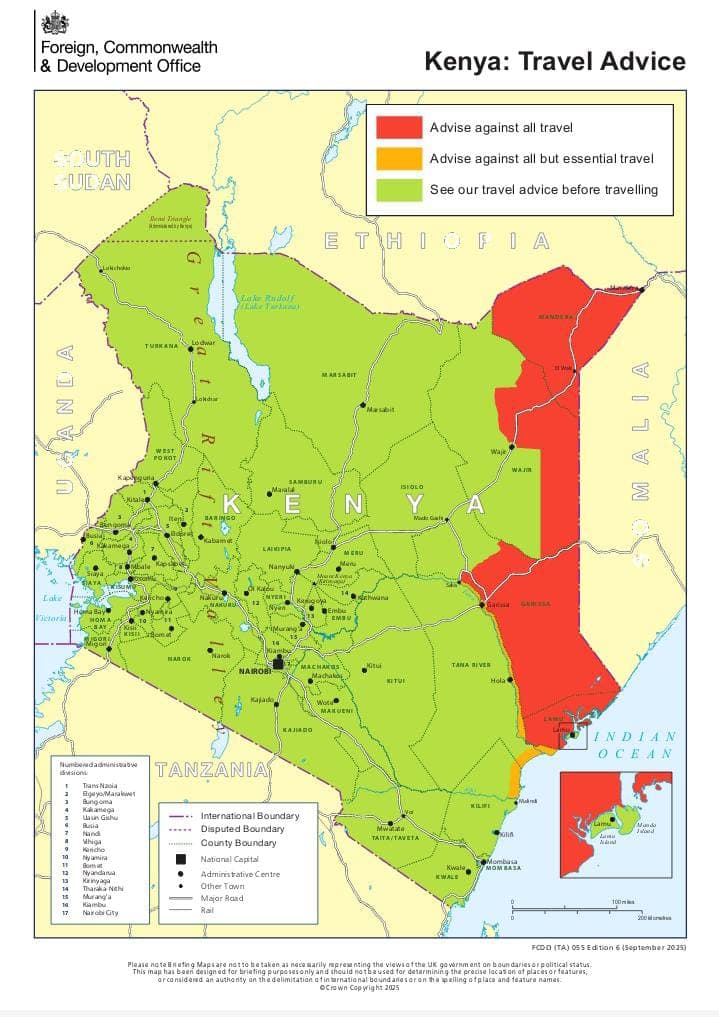
The United Kingdom has issued a stringent travel advisory for Kenya, urging its citizens to avoid all non-essential travel to several counties in the north and along the coast due to significant security risks.
The warning from the UK’s Foreign, Commonwealth & Development Office (FCDO), updated on December 2, 2025, explicitly points to the high threat of terrorism and kidnapping from Somalia-based extremist groups, particularly Al-Shabaab. This move directly impacts communities in border regions, threatening to stifle economic activity just as the festive season approaches.
The advisory is geographically specific, distinguishing between high-risk zones and safer tourist destinations. The FCDO has advised against all travel to Mandera, large parts of Wajir and Garissa counties, and areas of Lamu County on the mainland.
Specifically, the no-go zones include:
The FCDO noted that Al-Shabaab militants have carried out frequent attacks in these border regions, targeting both civilians and Kenyan security forces. Recent government reports indicate that between September 2024 and August 2025, there were 61 terror-related incidents in these hotspot counties, including numerous IED attacks and kidnappings.
While intended to protect British citizens, such advisories carry severe economic consequences for Kenya. The tourism sector, a critical pillar of the nation's economy, is particularly vulnerable. Past advisories have been shown to cause significant drops in tourist arrivals, leading to job losses and billions of shillings in lost revenue.
The timing of the warning, ahead of the peak December holiday season, could deter potential visitors, affecting not just hotels and tour operators but the entire supply chain of local artisans and transport providers. For UK tourists now reconsidering their plans, the financial implications are clear, with every £100 (approx. KES 17,087) they would have spent now lost to the local economy.
Historically, the Kenyan government has criticized such blanket warnings, arguing they do not reflect the security situation in the entire country and unfairly penalize regions that are safe for visitors. Analysts note that while the UK has a duty to protect its citizens, these advisories can also create diplomatic friction and damage Kenya's international reputation as a safe destination.
As Kenyan security forces intensify their presence and operations in the affected areas, the nation faces the dual challenge of neutralizing the terror threat while reassuring the world that Kenya remains open and safe for business.
Keep the conversation in one place—threads here stay linked to the story and in the forums.
Sign in to start a discussion
Start a conversation about this story and keep it linked here.
Other hot threads
E-sports and Gaming Community in Kenya
Active 9 months ago
The Role of Technology in Modern Agriculture (AgriTech)
Active 9 months ago
Popular Recreational Activities Across Counties
Active 9 months ago
Investing in Youth Sports Development Programs
Active 9 months ago



