We're loading the full news article for you. This includes the article content, images, author information, and related articles.
A British-Indian doctor remains stranded in Mumbai after immigration officials blocked his departure due to a police lookout circular linked to social media posts critical of India's ruling Bharatiya Janata Party.
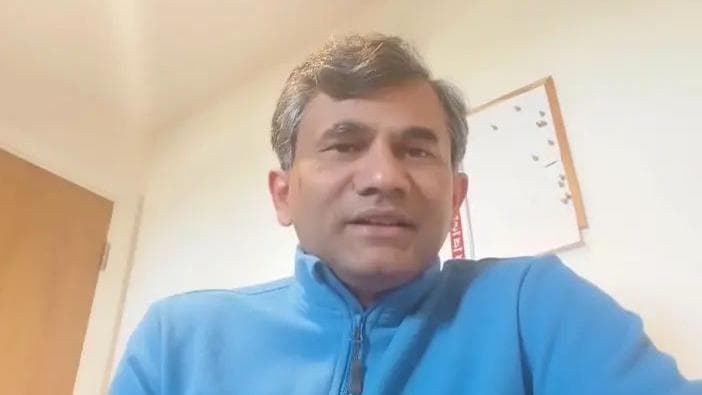
A British-Indian doctor remains stranded in Mumbai after immigration officials blocked his departure due to a police lookout circular linked to social media posts critical of India's ruling Bharatiya Janata Party.
Dr. Sangram Patil, an esteemed consultant with the UK's National Health Service, was dramatically halted at Chhatrapati Shivaji Maharaj International Airport, unable to return to his family and critical medical practice in London.
This escalating diplomatic incident highlights the growing global reach of domestic political censorship and raises severe concerns for East African expatriates and international professionals navigating the increasingly strict digital speech laws of foreign nations.
The ordeal of Dr. Patil underscores a chilling new reality in international travel and digital rights. Arrested not for physical crimes, but for expressing political dissent online from thousands of miles away, his situation serves as a stark warning. The First Information Report (FIR) leading to his travel ban was filed in Mumbai, citing derogatory language against the BJP and its leadership on Facebook. Despite fully cooperating with the authorities and submitting to extensive interrogations by the Mumbai Crime Branch, the restrictive Look Out Circular (LOC) remained active.
For the vast East African diaspora, particularly the thousands of Kenyan and Tanzanian students, medical professionals, and business operators who frequently travel to India, this case is highly alarming. India has traditionally been a key partner for East Africa in healthcare, education, and technology. However, the weaponization of immigration controls to punish overseas political commentary introduces a dangerous layer of legal jeopardy for international travelers.
The Indian authorities argue that the investigation is at a critical cyber-forensic stage, expressing concerns over potential organized efforts to malign constitutional authorities. They demanded access to his personal devices and social media accounts, which Dr. Patil has legally challenged in the Bombay High Court. His legal team is actively seeking to quash the FIR, arguing that the travel restrictions violate fundamental international human rights and freedom of movement.
Beyond the immediate human rights implications, the economic and professional disruption caused by such state actions is profound. As an NHS consultant, Dr. Patil's sudden and indefinite absence creates a significant void in a healthcare system already under immense strain. The arbitrary nature of his detention at the airport, despite having previously recorded statements with the police, illustrates the unpredictable and punitive nature of these geopolitical legal maneuvers.
This incident also casts a long shadow over bilateral professional exchanges. If international experts fear arbitrary detention based on their digital footprints, the free flow of talent—vital to the globalized economy—will inevitably contract. Professionals will be forced to self-censor or avoid jurisdictions that aggressively police overseas online behavior.
The legal standoff highlights several critical flashpoints in the modern digital era:
As the Bombay High Court prepares to hear his petition, the diplomatic channels between London and New Delhi are undoubtedly engaged in high-stakes negotiations. A spokesperson from the UK's Foreign, Commonwealth and Development Office confirmed they are providing consular support, yet the resolution remains highly uncertain. The Mumbai Police remain steadfast, arguing that allowing him to return to the UK would make it nearly impossible to secure his presence for future investigations.
For East African policymakers observing this friction, the situation necessitates a critical review of consular protections. As nations worldwide tighten their cybercrime statutes, the risk of citizens becoming ensnared in foreign legal nets over innocuous or critical social media posts is rising exponentially. Governments must proactively educate their traveling citizens on the severe, tangible risks of digital expression in increasingly authoritarian digital landscapes.
The resolution of Dr. Patil's case will undoubtedly set a vital legal and diplomatic precedent. It will determine whether the fundamental right to free expression can survive the long, punitive reach of state-sponsored digital surveillance.
"My children and my critical medical duties are in the United Kingdom; international law gives me the right to move freely, yet I remain trapped in a legal labyrinth," Dr. Patil lamented, summarizing the plight of the modern, hyper-connected global citizen.
Keep the conversation in one place—threads here stay linked to the story and in the forums.
Sign in to start a discussion
Start a conversation about this story and keep it linked here.
Other hot threads
E-sports and Gaming Community in Kenya
Active 9 months ago
The Role of Technology in Modern Agriculture (AgriTech)
Active 9 months ago
Popular Recreational Activities Across Counties
Active 9 months ago
Investing in Youth Sports Development Programs
Active 9 months ago