We're loading the full news article for you. This includes the article content, images, author information, and related articles.
President Donald Trump has announced the commencement of "major combat operations" against Iran, launching sweeping joint strikes with Israel aimed at toppling the regime in Tehran.
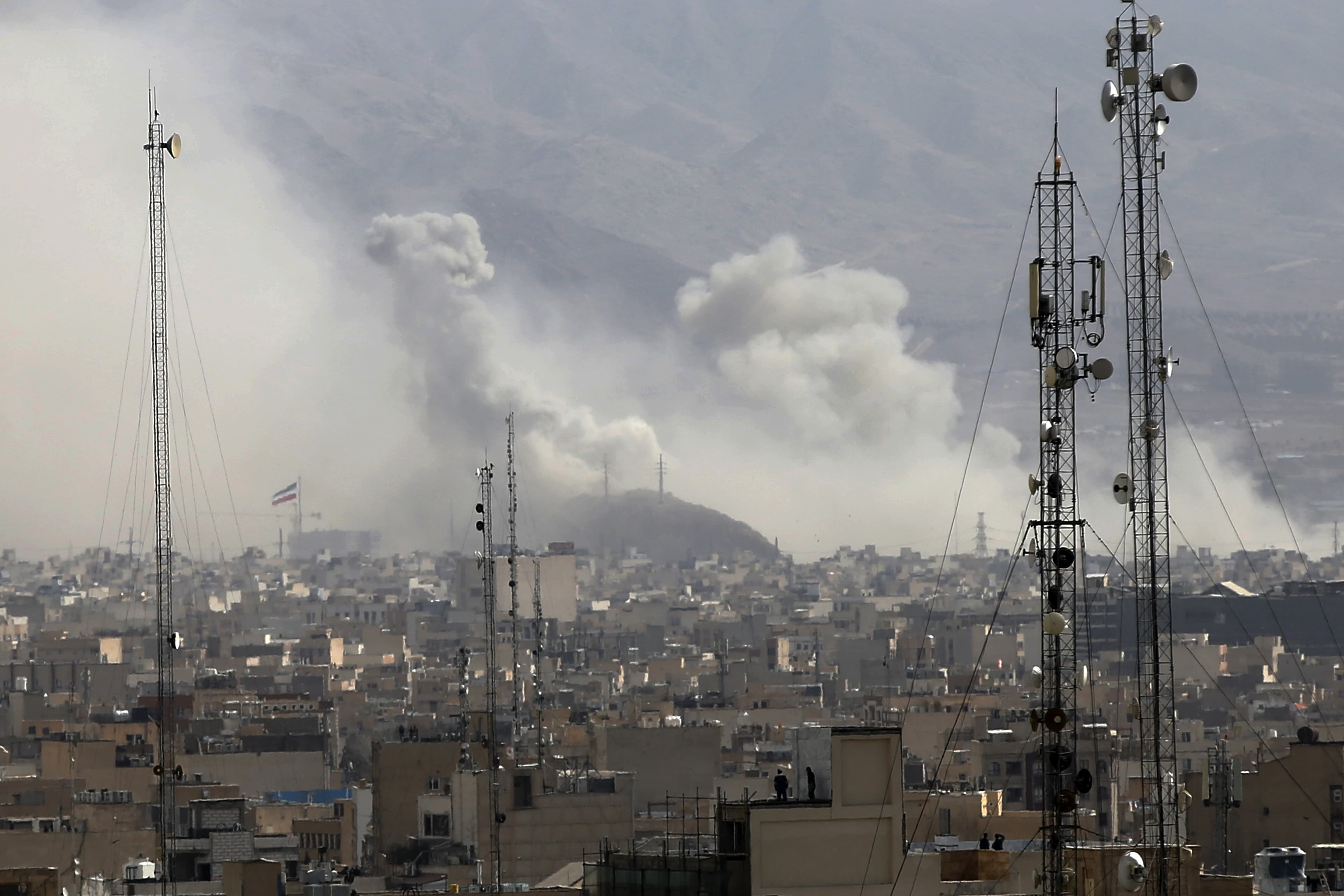
President Donald Trump has announced the commencement of "major combat operations" against Iran, launching sweeping joint strikes with Israel aimed at toppling the regime in Tehran.
In an unprecedented escalation of global hostilities, the United States and Israel unleashed a torrential wave of military strikes across Iran early Saturday morning, an offensive dubbed "Operation Epic Fury" directly targeting the survival of the regime.
Broadcasted to the world via a stark video message from President Donald Trump, the military campaign signifies a complete rupture of regional diplomacy. By explicitly calling for the Iranian people to overthrow their government amidst the bombardment, Washington has fundamentally altered the geopolitical calculus with devastating global implications.
The dawn skies over the Islamic Republic were illuminated by the terrifying glow of advanced munitions as the U.S. and Israeli air forces executed a highly coordinated, multi-pronged assault. Explosions violently rocked the capital city of Tehran, with thick plumes of smoke visible from the city center, marking the most direct and aggressive military confrontation between the nations in modern history.
According to Pentagon officials, the operation is explicitly designed to systematically dismantle Iran's military capabilities, heavily targeting advanced missile production facilities and critical naval infrastructure. The sheer scale and audacity of the bombardment underscore a profound shift in Western policy; the era of proportionate, tit-for-tat retaliation has been definitively replaced by an uncompromising strategy of absolute systemic destruction.
Perhaps more shocking than the ordnance dropped was the political rhetoric that accompanied it. Taking to his Truth Social platform at 2:30 a.m. Eastern Time, President Donald Trump delivered an eight-minute address that shattered established diplomatic norms. He explicitly articulated that the objective was not merely containment, but the total eradication of the current Iranian leadership.
Addressing the Iranian populace directly, Trump urged civilians to seize the chaos of the bombardment to instigate a revolution. "When we are finished, take over your government. It will be yours to take. This will be, probably, your only chance for generations," he declared. This explicit endorsement of regime change eliminates any remaining pathways for negotiated nuclear settlements and plunges the region into an existential struggle for survival.
The Iranian response was swift and merciless. Refusing to capitulate under the overwhelming firepower, Tehran activated its formidable ballistic missile arsenal, initiating the first phase of an operation dubbed "Truthful Promise 4."
Iranian Foreign Minister Abbas Araghchi, appearing on state television, confirmed that multiple U.S. military installations across the Middle East—including high-value targets in Qatar, Bahrain, and the United Arab Emirates—had been struck. Furthermore, barrages of missiles were directed toward northern Israel. Araghchi firmly stated that the strikes were an act of legitimate self-defense against "blatant aggression," insisting that the regime remained fully functional and that the calls for an internal uprising were a "mission impossible."
The outbreak of major combat operations in the Strait of Hormuz is a terrifying prospect for the global economy, and the localized impact on East Africa will be exceptionally severe. As the primary conduit for a massive percentage of the world's daily oil supply, any sustained conflict guarantees a catastrophic spike in global energy prices.
For the Kenyan economy, the mathematics of war are unforgiving. A prolonged surge in Brent crude will exponentially increase the national import bill. Transport costs will inflate overnight, driving up the prices of essential commodities and agricultural inputs. The resulting inflationary pressure could force the Central Bank of Kenya to drastically hike interest rates, suffocating credit access for local businesses and stalling national economic growth.
As the fog of war begins to settle, the grim realities of the human cost are emerging. Early reports from Iranian state media indicate heartbreaking civilian casualties, including an unverified incident where a girls' school in Minab was allegedly struck.
The world has crossed a dangerous rubicon this weekend, and the reverberations of Operation Epic Fury will reshape international relations for decades to come.
Keep the conversation in one place—threads here stay linked to the story and in the forums.
Sign in to start a discussion
Start a conversation about this story and keep it linked here.
Other hot threads
E-sports and Gaming Community in Kenya
Active 9 months ago
The Role of Technology in Modern Agriculture (AgriTech)
Active 9 months ago
Popular Recreational Activities Across Counties
Active 9 months ago
Investing in Youth Sports Development Programs
Active 9 months ago