We're loading the full news article for you. This includes the article content, images, author information, and related articles.
Centuries of colonial silence are broken as Abagusii leaders march for the repatriation of their legendary warrior, Otenyo Nyamaterere, demanding dignity for his restless spirit.
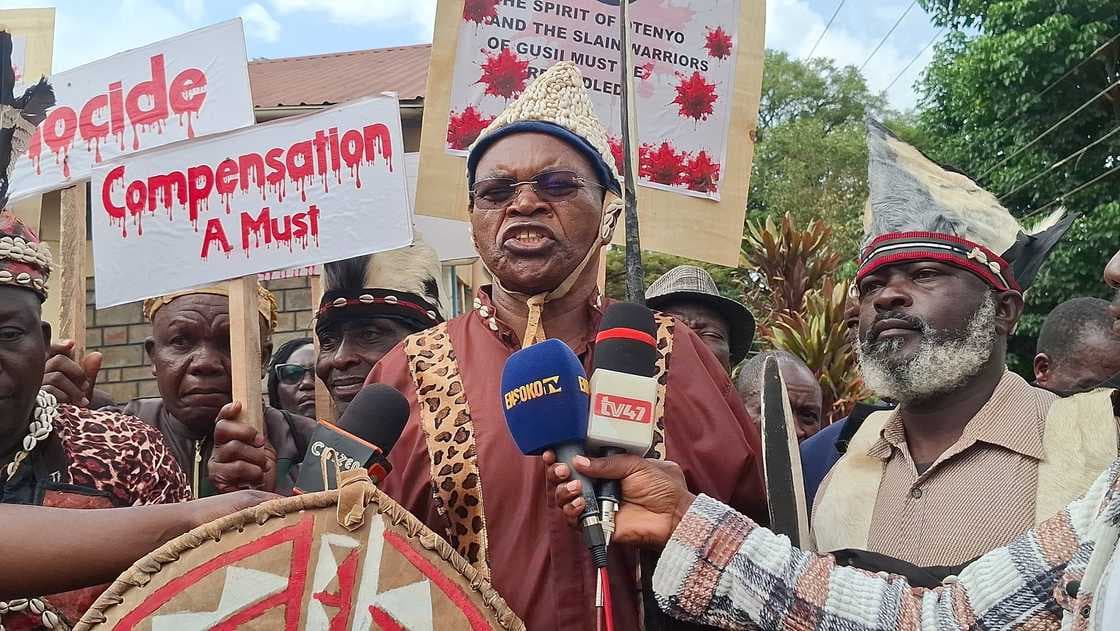
The streets of Kisii town have erupted in a kaleidoscope of tradition and defiance. Clad in animal skins and wielding shields that have not seen the light of battle for generations, hundreds of Abagusii elders have marched with a singular, chilling demand for the British government: bring back the head of Otenyo Nyamaterere. The procession, a solemn river of history and grief, cut through the modern bustle of the town, serving as a stark reminder of a colonial wound that refuses to heal.
This is not merely a request for archival transfer; it is a spiritual ultimatum. More than 118 years after the legendary warrior was executed and beheaded by British colonial forces, his community argues that his spirit remains restless, haunting the current generation until his skull—believed to be gathering dust in a London museum—is returned for a dignified burial. The march comes in the wake of renewed conversations about reparations following King Charles III’s recent visit to Kenya, yet for the Gusii people, diplomatic niceties have been replaced by a raw, non-negotiable demand for justice.
To understand the fury on the streets today, one must look back to the bloody events of 1908. Otenyo Nyamaterere was not just a warrior; he was the tip of the spear in the Abagusii resistance against British imperialism. History records that he famously spearheaded the attack on Geoffrey Alexander Northcote, the first British administrator of the region, whom the locals dubbed 'Nyarigoti'. Otenyo’s ambush on Northcote was a daring act of defiance that shattered the aura of European invincibility.
The British retaliation was swift and merciless. A punitive expedition was launched, resulting in the massacre of hundreds of locals and the confiscation of over 20,000 head of livestock. Otenyo was eventually captured, tried in a kangaroo court, and executed by firing squad at what is now the Kisii Stadium. But death was not enough punishment for the colonial administration. In a final act of desecration intended to terrorize the population into submission, Otenyo was beheaded. His body was discarded, while his head was shipped to London as a macabre trophy of conquest—a piece of 'proof' for the Crown that the rebellion had been crushed.
\"We want the head that was taken by the British to be returned, so that we can give it a proper and dignified final burial ceremony,\" declared James Matundura, the Chairman of the Abagusii Cultural Development Council. His voice, heavy with the weight of unperformed rites, resonated with the crowd. For the Abagusii, a body buried without its head is an abomination, a spiritual severance that prevents the deceased from joining the ancestors.
As the sun set over the Kisii hills, the chant \"Tunataka kichwa\" (We want the head) continued to echo, a message sent directly from the heart of Nyanza to the halls of Westminster. [...](asc_slot://start-slot-9)The British government faces a choice: continue to hide the sins of the empire behind museum glass, or finally grant a hero the rest he has been denied for over a century.
Keep the conversation in one place—threads here stay linked to the story and in the forums.
Sign in to start a discussion
Start a conversation about this story and keep it linked here.
Other hot threads
E-sports and Gaming Community in Kenya
Active 9 months ago
The Role of Technology in Modern Agriculture (AgriTech)
Active 9 months ago
Popular Recreational Activities Across Counties
Active 9 months ago
Investing in Youth Sports Development Programs
Active 9 months ago



