We're loading the full news article for you. This includes the article content, images, author information, and related articles.
With weeks to the historic Grade 10 transition, the teachers' employer reveals a deficit of 58,590 specialized tutors—threatening to derail the STEM and Arts pathways before they even begin.
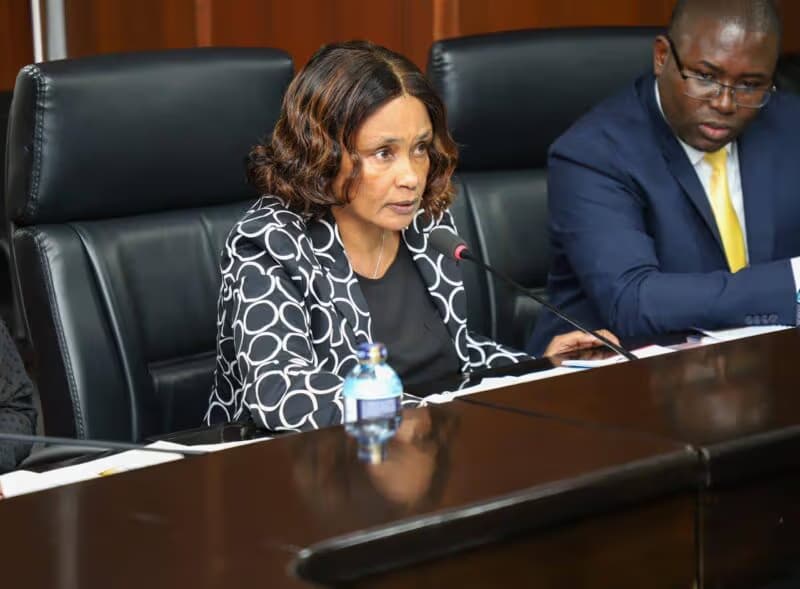
The Teachers Service Commission (TSC) has sounded a red alert over a looming staffing crisis that threatens to cripple the rollout of Senior School in January 2026. With the pioneer Competency-Based Curriculum (CBC) class set to transition to Grade 10 in just a few weeks, the commission has revealed a deficit of 58,590 teachers needed specifically for the new specialized pathways.
This grim admission by the teachers' employer exposes a critical gap between the curriculum’s ambitious promise and the reality on the ground. For the first time, Kenyan learners are expected to choose between three distinct tracks—Science, Technology, Engineering and Mathematics (STEM); Social Sciences; or Arts and Sports Science. But according to the TSC, the experts required to teach these subjects simply aren't there.
The shortage is not merely a headcount issue; it is a skills mismatch of historic proportions. TSC Director of Quality Assurance, Dr. Reuben Nthamburi, painted a stark picture while appearing before the National Assembly’s Constitutional Implementation Oversight Committee. He noted that the STEM pathway, which is expected to absorb 60 percent of the learners, is the hardest hit.
“For the projected teacher requirements for Grade 10 in January 2026... we need around 35,111 teachers for STEM alone,” Dr. Nthamburi explained. The deficit is particularly acute in niche subjects that define the new curriculum, such as Marine and Fisheries Technology, Aviation, Media Technology, and Performing Arts.
TSC CEO Dr. Nancy Macharia has placed the blame squarely on the doorstep of the National Treasury. Despite repeated requests for funding to hire and retool educators, the commission’s coffers remain dry. The current national teacher shortage stands at a staggering 98,261 across all levels, a figure that continues to balloon as student enrollment surges.
Dr. Macharia warned that without an immediate injection of funds—estimated at over KES 72 billion (approx. $553 million) annually to fully bridge the gap—the quality of education in public schools will nosedive. “The lack of an adequate budget to recruit teachers has led to shortages in public schools, therefore impeding the right to access basic quality education,” she told MPs.
For the Kenyan parent, this bureaucratic standoff translates to anxiety. Families have spent years preparing for this transition, with many investing in expensive learning materials. The prospect of sending a child to a school that offers a "Sports Science" pathway, only to find no qualified coach or instructor, is a bitter pill to swallow.
Analysts warn that if the shortage is not addressed, schools will be forced to improvise—assigning biology teachers to teach physics or history teachers to handle drama—effectively watering down the specialization that is the hallmark of the CBC system. As the clock ticks toward January, the question remains: Will the government find the money, or will the pioneer class walk into empty classrooms?
Keep the conversation in one place—threads here stay linked to the story and in the forums.
Sign in to start a discussion
Start a conversation about this story and keep it linked here.
Other hot threads
E-sports and Gaming Community in Kenya
Active 9 months ago
The Role of Technology in Modern Agriculture (AgriTech)
Active 9 months ago
Popular Recreational Activities Across Counties
Active 9 months ago
Investing in Youth Sports Development Programs
Active 9 months ago



