We're loading the full news article for you. This includes the article content, images, author information, and related articles.
Can She Hug 1,172 Trees in an Hour? Truphena Muthoni’s New Bid to Break World Record in Brazil

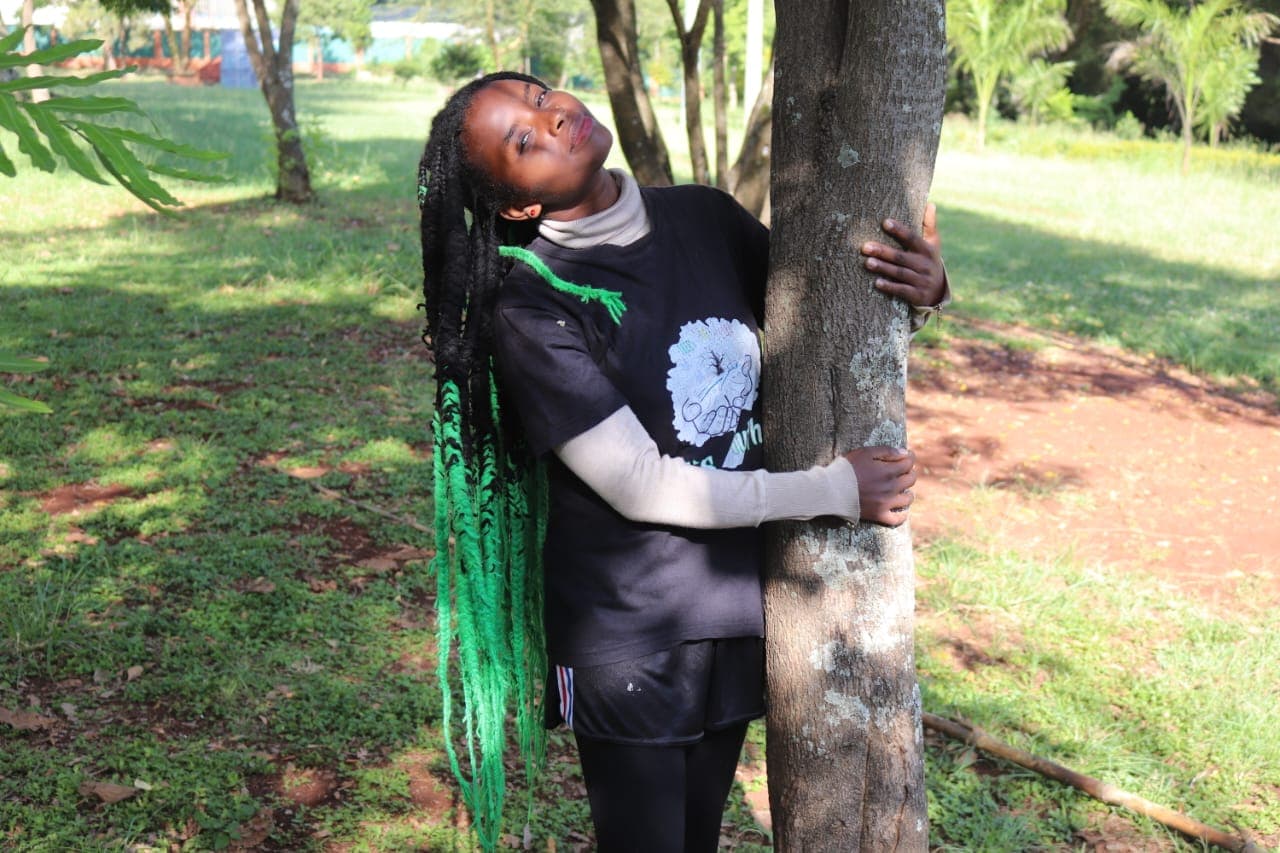
Truphena Muthoni does not see the dense undergrowth of the Brazilian rainforest as a landscape she sees it as a high-stakes, 60-minute battlefield. Standing at the precipice of a Guinness World Record, the Kenyan environmental activist is preparing to attempt a feat that defies traditional athletic logic: hugging 1,172 trees in exactly one hour. This is not merely a display of endurance, but a calculated, high-octane bid to center the global conversation on reforestation and the critical intersection of East African conservation efforts and Amazonian preservation.
For Muthoni, the challenge is as much a test of physical agility as it is a message to international policymakers. To succeed, she must maintain a pace of one tree every 3.07 seconds, traversing the uneven, root-laden forest floor without pause. The logistical complexity of this challenge is immense, requiring precision, stamina, and a rigorous adherence to the strict definitions of physical contact mandated by international record-keeping bodies. It is a grueling pursuit that pits human physiology against the unforgiving density of the forest.
The mathematics of the attempt are daunting. To achieve a count of 1,172, Muthoni cannot afford a single misstep or a moment of hesitation. She must navigate a predetermined course that satisfies regulatory requirements—specifically, that each tree must be a distinct, mature specimen and that the physical contact must be sustained for the duration defined by the adjudicators. Experts in sports physiology note that such an endeavor requires interval-training levels comparable to elite sprinters, yet sustained for the duration of a professional football match.
The logistical requirements for this attempt go far beyond the athlete. A team of independent verifiers, potentially including local forestry officials and international adjudicators, must map the course to ensure no tree is hugged twice. They must monitor the pace and the quality of the contact, as any variation could result in disqualification. The physical toll on the knees and ankles, given the potential for slippery terrain and hidden obstacles in the Amazonian basin, introduces a significant risk of injury that Muthoni must mitigate through months of specialized preparation.
While the record attempt takes place in Brazil, the genesis of this initiative is firmly rooted in Kenyan soil. Muthoni’s campaign aims to draw a parallel between the rapid deforestation facing the Amazon and the challenges of the Mau Forest complex and other Kenyan water towers. By situating her record attempt in one of the world’s most biodiverse regions, she forces a geopolitical juxtaposition: the global importance of the Amazon as the "lungs of the planet" versus the local struggles of Kenyan communities fighting to protect their immediate water catchments.
Environmental economists at the University of Nairobi argue that such high-profile activism serves to bridge the gap between abstract climate policy and visceral public engagement. While global summits and COP meetings focus on multi-trillion dollar (potentially KES 130 trillion) finance targets, the visual spectacle of an individual racing to hug over a thousand trees translates these complex metrics into an accessible narrative. It highlights the inherent value of individual trees, which are often reduced to mere units of carbon credit in high-level trade discussions.
Guinness World Record adjudicators maintain stringent guidelines for endurance records. Every tree must be tagged and mapped before the clock begins. The definition of a "hug" is critical it is not a mere touch, but a deliberate embrace that signifies both connection and commitment. Any deviation—a tree that is too thin, a touch that is too fleeting—triggers immediate penalties or invalidation of the specific tree count. The mental discipline required to remain focused on the count while physically exhausted is the defining barrier between success and failure.
Muthoni’s team has worked closely with Brazilian forestry experts to select a site that meets the necessary density requirements without causing damage to the ecosystem. This careful selection process reflects a growing trend in eco-activism: the need to ensure that the method of protest or awareness-raising does not inherently conflict with the conservation message itself. The preparation involves a budget that, while undisclosed, represents a significant investment of resources, including international travel, logistics, and independent verification fees, estimated by industry analysts to range between KES 2.5 million and KES 4 million.
Behind the numbers lies the stark reality of modern conservation. The Amazon rainforest has faced unprecedented threats in the last decade, with deforestation rates fluctuating significantly based on political shifts and enforcement capabilities. By highlighting the sheer scale of 1,172 trees, Muthoni attempts to visualize a quantity that is usually presented in vast, abstract hectares. For a Kenyan audience, this resonance is palpable the recent push by the government to plant 15 billion trees by 2032 provides a national context that makes her global endeavor feel like a shared continental pursuit.
As the date of the attempt approaches, the focus shifts from the spectacle to the resilience required to sustain it. Muthoni is not just running she is engaging in a rhythmic, repetitive motion that mimics the heartbeat of the forest itself. Whether or not she crosses the threshold of 1,172 trees, the publicity generated by the attempt will undoubtedly bring renewed attention to the necessity of protecting existing canopies rather than relying solely on future replanting.
The record, should she break it, will stand as a testament to the endurance of the human spirit in the face of ecological crisis. But even if she falls short, the dialogue prompted by her journey—linking the highlands of Kenya to the basin of the Amazon—will persist. In an era of digital climate fatigue, perhaps the simplest, most human gesture of an embrace is exactly what the global movement requires.
Keep the conversation in one place—threads here stay linked to the story and in the forums.
Sign in to start a discussion
Start a conversation about this story and keep it linked here.
Other hot threads
E-sports and Gaming Community in Kenya
Active 9 months ago
The Role of Technology in Modern Agriculture (AgriTech)
Active 9 months ago
Popular Recreational Activities Across Counties
Active 9 months ago
Investing in Youth Sports Development Programs
Active 9 months ago
Key figures and persons of interest featured in this article