We're loading the full news article for you. This includes the article content, images, author information, and related articles.
Former U.S. President Donald Trump has appointed a special envoy to Greenland with the explicit goal of making it part of the United States, triggering a furious response from Denmark and Greenland who insist their sovereignty is not for sale.
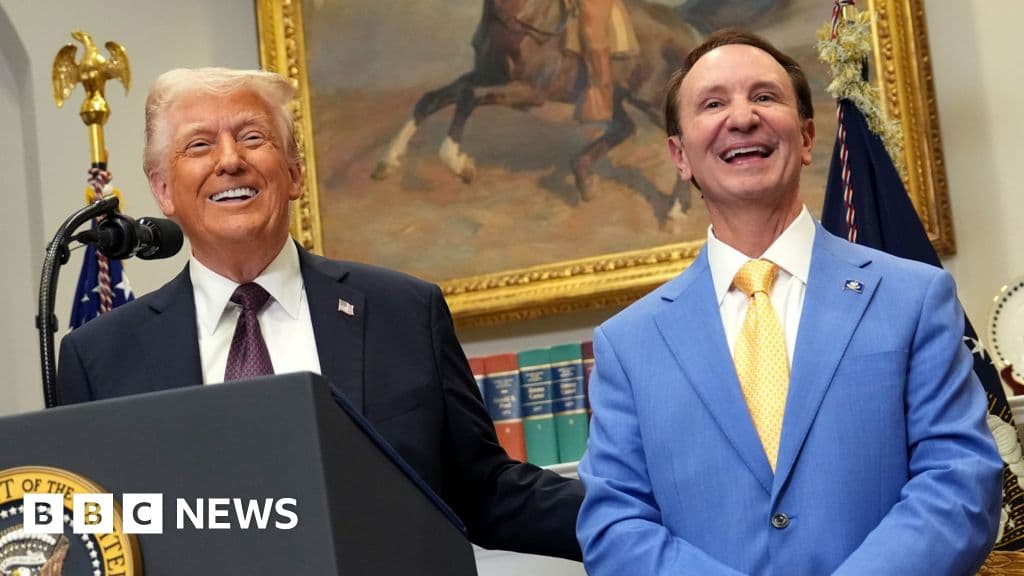
Donald Trump has ignited a diplomatic crisis with a key NATO ally, declaring the United States "has to have" Greenland and appointing a special envoy to pursue its acquisition. The move drew a swift and sharp rebuke from both Copenhagen and Nuuk, who have called the overture "completely unacceptable."
This renewed push for control over the vast, semi-autonomous Danish territory thrusts the strategic importance of the Arctic into the global spotlight. For Kenyans and other observers of international relations, it is a stark reminder of how superpower ambitions can challenge established national borders and the principle of self-determination, echoing historical struggles for sovereignty worldwide.
In a social media post, Trump announced that Louisiana Governor Jeff Landry would serve as the special envoy, stating Landry "understands how essential Greenland is to our National Security." Landry, a staunch Trump supporter, embraced the role, calling it an "honor to serve... in this volunteer position to make Greenland a part of the U.S."
The reaction from Denmark was immediate. Foreign Minister Lars Løkke Rasmussen announced he would summon the U.S. ambassador for an explanation, calling the appointment and associated statements "deeply upsetting."
In a forceful joint statement, Danish Prime Minister Mette Frederiksen and Greenlandic Premier Jens-Frederik Nielsen underscored their position. "National borders and the sovereignty of states are rooted in international law," they noted. "You cannot annex other countries... Greenland belongs to the Greenlanders."
Nielsen added separately that while the announcement might "sound big," it "does not change anything for us at home. We decide our own future ourselves." This sentiment is backed by public opinion in Greenland, where most people desire independence from Denmark but do not wish to become part of the United States.
This is not the first time a U.S. leader has coveted the island. Washington's interest dates back to the 19th century and includes a notable attempt in 1946 when the Truman administration offered $100 million in gold (approximately KES 13 billion at today's value, though a direct comparison is complex) for the territory.
Trump has insisted his primary motive is national security, not the island's considerable mineral wealth. The strategic value of Greenland is undeniable and multifaceted:
The aggressive American posture has put its NATO allies in what Prime Minister Frederiksen called "a difficult situation." While details of the envoy's strategy remain scarce, the standoff over Greenland's future represents a significant and unsettling new chapter in Arctic geopolitics.
Keep the conversation in one place—threads here stay linked to the story and in the forums.
Sign in to start a discussion
Start a conversation about this story and keep it linked here.
Other hot threads
E-sports and Gaming Community in Kenya
Active 9 months ago
The Role of Technology in Modern Agriculture (AgriTech)
Active 9 months ago
Popular Recreational Activities Across Counties
Active 9 months ago
Investing in Youth Sports Development Programs
Active 9 months ago



