We're loading the full news article for you. This includes the article content, images, author information, and related articles.
US President Donald Trump has de-escalated a brewing transatlantic trade war, announcing a "framework of a future deal" for Greenland following high-stakes talks with NATO leadership in Davos.
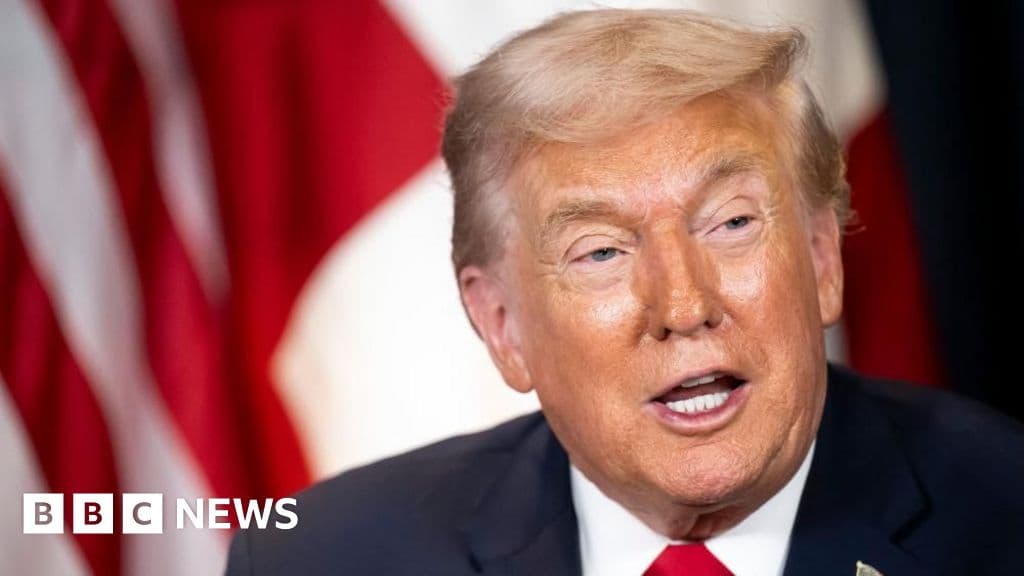
US President Donald Trump has de-escalated a brewing transatlantic trade war, announcing a "framework of a future deal" for Greenland following high-stakes talks with NATO leadership in Davos. The breakthrough, while vague on details, has immediately suspended his threat to impose punitive tariffs on European allies.
The announcement marks a sharp pivot from the weeks of bellicose rhetoric that saw the American leader demand "ownership" of the autonomous Danish territory. While the White House has backed away from threats of military intervention and immediate economic sanctions, Trump maintains that the new arrangement covers the "entire Arctic Region," signaling a continued aggressive posture in the resource-rich north.
The de-escalation came after a "very productive" meeting between President Trump and NATO Secretary-General Mark Rutte on the sidelines of the World Economic Forum in Switzerland. Writing on his Truth Social platform, Trump declared the formation of a framework that, if consummated, would be "a great one for the United States of America, and all NATO Nations."
Crucially, the deal appears to fall short of the sovereignty transfer Trump had publicly courted. Diplomatic sources confirm that Denmark has not ceded control or ownership of the island. Danish Foreign Minister Lars Løkke Rasmussen expressed cautious relief, stating, "The day is ending on a better note than it began. Now, let's sit down and find out how we can address the American security concerns in the Arctic while respecting the red lines of the Kingdom of Denmark."
This diplomatic maneuver occurs against a backdrop of intensifying competition in the High North. With Russia expanding its military footprint in the Arctic and China declaring itself a "near-Arctic state," Washington is eager to cement its influence. The "framework" likely involves expanded US military access and economic rights rather than a redraw of the map.
For global markets, the news provided immediate relief. The prospect of a trade war between the US and the EU had rattled investors, fearing a slowdown in global growth. In Nairobi, analysts are watching closely, as any disruption in US-EU trade flows invariably sends ripples through emerging markets, affecting everything from the shilling's stability to export demand.
The "ownership" demand may have been shelved, but the "Trump Doctrine" of transactional diplomacy remains in full force. By leveraging the threat of tariffs to extract security concessions, the US President has once again demonstrated his willingness to upend diplomatic norms to secure American interests. As negotiations move from Davos to Washington, the devil will undoubtedly be in the details.
Keep the conversation in one place—threads here stay linked to the story and in the forums.
Sign in to start a discussion
Start a conversation about this story and keep it linked here.
Other hot threads
E-sports and Gaming Community in Kenya
Active 9 months ago
The Role of Technology in Modern Agriculture (AgriTech)
Active 9 months ago
Popular Recreational Activities Across Counties
Active 9 months ago
Investing in Youth Sports Development Programs
Active 9 months ago



