We're loading the full news article for you. This includes the article content, images, author information, and related articles.
Donald Trump has said he will be "indirectly" involved in the talks between Iran and the United States which are due to begin in Geneva later on Tuesday. Speaking to reporters aboard Air Force One, the US president added that he believed Iran wanted to make a deal over its nuclear programme.
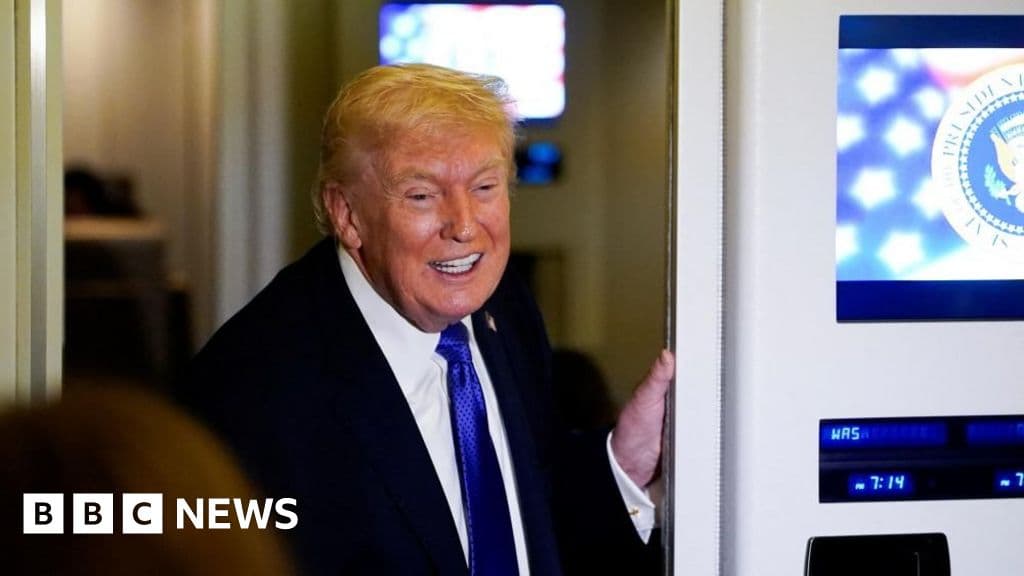
US President Donald Trump has confirmed he will play an "indirect but pivotal" role in the high-stakes nuclear negotiations with Iran commencing Tuesday in Geneva, signaling a potential diplomatic thaw just months after US bombers struck Iranian facilities.
Speaking to the White House press corps aboard Air Force One as it descended towards a refueling stop in Shannon, Ireland, President Trump did not mince words about the upcoming Geneva summit. With the characteristic bravado that has defined his second term, he framed the renewed dialogue not as a concession, but as a victory for his "maximum pressure" doctrine. "I’ll be involved, indirectly," Trump asserted, brushing aside suggestions that his absence from the negotiating table signaled disinterest. "They know where I stand. They saw the B-2s. Now, I think they’re ready to be reasonable."
The resumption of talks in Switzerland marks a critical juncture for global geopolitical stability and holds profound implications for East African economies reliant on stable energy markets. Following the collapse of the Muscat talks in early 2025 and the subsequent "Operation Midnight Hammer"—where US forces targeted nuclear infrastructure in Natanz and Fordow—the return to diplomacy suggests that Tehran is seeking an off-ramp from further escalation. For Kenya, a net importer of petroleum products, any de-escalation that stabilizes global oil prices is a welcome development, as volatility in the Persian Gulf directly impacts the pump prices in Nairobi.
The specter of the June 2025 airstrikes looms large over the Geneva proceedings. President Trump explicitly referenced the military campaign, stating, "We could have had a deal instead of sending the B-2s in to knock out their nuclear potential. And we had to send the B-2s." This statement reinforces the US position that military force remains a viable alternative if diplomacy fails.
Iranian officials, however, are presenting a face of pragmatic resilience. Deputy Foreign Minister Majid Takht-Ravanchi, speaking from Tehran, indicated a readiness for "principled compromises" provided that crippling economic sanctions are lifted. This delicate dance is being mediated by Oman, a long-time interlocutor between the adversaries. The involvement of US Special Envoy Steve Witkoff and key advisor Jared Kushner suggests Washington is looking for a comprehensive "grand bargain" rather than a piecemeal agreement.
The negotiations are expected to be grueling. Washington is demanding a permanent halt to enrichment above 3.67% and dismantling of advanced centrifuges. Tehran is demanding the unfreezing of $50 billion in assets and a guarantee against future withdrawal from the pact—a guarantee Trump is unlikely to give.
"I don't think they want the consequences of not making a deal," Trump warned in his closing remarks. As the delegations converge on Geneva, the world watches to see if the threat of force can indeed forge a lasting peace, or if it merely delays the inevitable confrontation.
Keep the conversation in one place—threads here stay linked to the story and in the forums.
Sign in to start a discussion
Start a conversation about this story and keep it linked here.
Other hot threads
E-sports and Gaming Community in Kenya
Active 9 months ago
The Role of Technology in Modern Agriculture (AgriTech)
Active 9 months ago
Popular Recreational Activities Across Counties
Active 9 months ago
Investing in Youth Sports Development Programs
Active 9 months ago



