We're loading the full news article for you. This includes the article content, images, author information, and related articles.
Former Honduran President Juan Orlando Hernández, sentenced to 45 years for trafficking 400 tonnes of cocaine, walks free, raising profound questions in Kenya about the global fight against impunity.
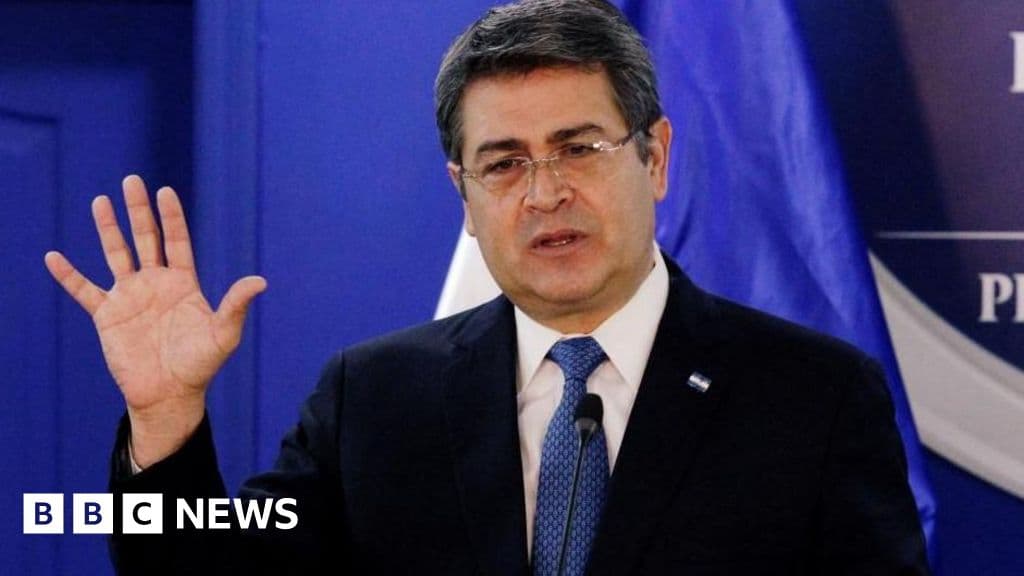
In a stunning executive decision, U.S. President Donald Trump has pardoned former Honduran President Juan Orlando Hernández, a man convicted by American courts of running his country as a narco-state and flooding the United States with cocaine. The move abruptly ends a 45-year prison sentence and has sent shockwaves across the globe.
For Kenyans, this pardon strikes a familiar and troubling chord. It highlights the complex dance of international politics, where justice for high-level corruption and organised crime can be overturned by political whim—a scenario that resonates deeply in a nation grappling with its own battles against impunity. The pardon of a leader who turned his nation's institutions into tools for crime raises critical questions for citizens demanding accountability from their own leadership.
Juan Orlando Hernández, known as JOH, was not a petty criminal. U.S. federal prosecutors painted a damning picture of a leader who, from his time as a congressman to his two terms as president, took millions in bribes to protect and assist some of the world's most violent drug cartels. His government's military and police forces were allegedly used to escort massive cocaine shipments bound for American streets.
The evidence presented during his trial was staggering. Among the most explosive allegations was that Hernández accepted a $1 million (approx. KES 130 million) bribe from the notorious Mexican drug lord Joaquín "El Chapo" Guzmán. Prosecutors noted Hernández once boasted he would "stuff the drugs right up the noses of the gringos." His brother, Tony Hernández, also a former congressman, is currently serving a life sentence in the U.S. for related drug trafficking crimes.
President Trump defended the pardon by claiming Hernández was "treated very harshly and unfairly." In statements, Trump suggested the conviction was a politically motivated "setup" by the Biden administration, a claim echoed by the White House press secretary. This justification has been met with bipartisan criticism in the U.S., with many questioning the message it sends to international criminal networks.
The pardon is a stark reversal for a U.S. administration that has prided itself on a tough-on-crime stance, particularly concerning drug flows from Latin America. Before his conviction, Hernández had ironically portrayed himself as a key U.S. partner in the war on drugs, receiving support from both the Obama and Trump administrations for his cooperation on migration and security.
The decision leaves a lingering question: If a convicted head of state can be pardoned despite overwhelming evidence, what does this mean for the global effort to hold powerful figures accountable? For nations like Kenya, where the fight for transparency and against corruption is a daily struggle, the answer is profoundly unsettling.
Keep the conversation in one place—threads here stay linked to the story and in the forums.
Sign in to start a discussion
Start a conversation about this story and keep it linked here.
Other hot threads
E-sports and Gaming Community in Kenya
Active 9 months ago
The Role of Technology in Modern Agriculture (AgriTech)
Active 9 months ago
Popular Recreational Activities Across Counties
Active 9 months ago
Investing in Youth Sports Development Programs
Active 9 months ago



