We're loading the full news article for you. This includes the article content, images, author information, and related articles.
**Washington has ordered a "total and complete" blockade of sanctioned oil tankers moving to and from Venezuela, a move that could roil global energy markets and have ripple effects on Kenyan fuel prices.**
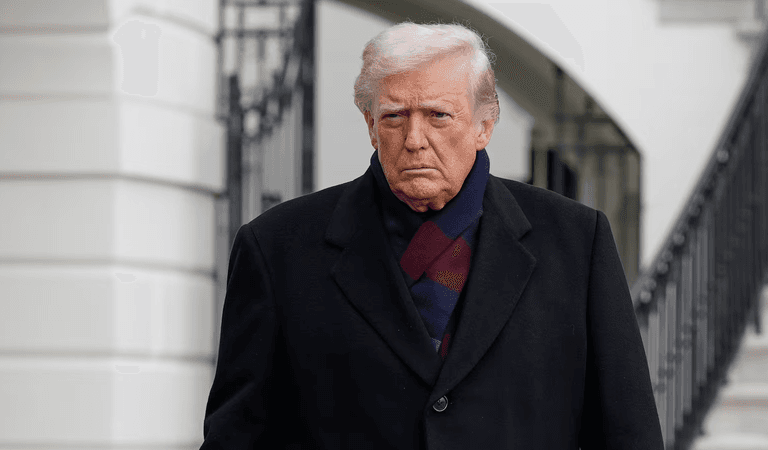
Former U.S. President Donald Trump has ordered a naval blockade of all sanctioned oil tankers entering or leaving Venezuela, a dramatic escalation of his long-running pressure campaign against the government of President Nicolás Maduro. The move, announced Tuesday evening, threatens to devastate Venezuela's already crippled economy, which is almost entirely dependent on oil exports.
This action represents a significant tightening of U.S. sanctions that have been in place since 2017. The Venezuelan government, in a statement, decried the order as a "grotesque threat" and an act of "state piracy," vowing to report the violation of international law to the United Nations. The blockade follows the recent seizure of a Venezuelan oil tanker by U.S. forces, which had already caused a sharp drop in the nation's crude exports.
While Venezuela accounts for a small fraction of the global oil market, this aggressive U.S. posture could introduce significant volatility. For Kenyans, the immediate concern is the potential impact on pump prices. Kenya is a net importer of refined oil, and its economy is highly sensitive to shifts in global crude prices and the U.S. dollar exchange rate. Petroleum imports constitute a major part of the nation's total import bill.
An escalation in the Caribbean could disrupt supply chains and drive up the cost of crude oil. Analysts note that even small shifts in global prices, when combined with local taxes and currency fluctuations, can lead to higher costs for Kenyan consumers, affecting everything from matatu fares to the price of unga. The Institute of Economic Affairs (IEA) has previously explained that because Kenya imports refined petroleum, global crude price changes don't always directly translate at the pump, but major supply shocks are inevitably felt.
The U.S. sanctions have had a devastating effect on the Venezuelan population. A United Nations expert reported that the sanctions have exacerbated a food and nutrition crisis, with a 73% decrease in food availability between 2015 and 2019. The humanitarian situation, which was dire even before the harshest oil sanctions, has seen rising maternal and infant mortality rates and critical shortages of medicine and clean water.
Trump has defended the aggressive stance, accusing the Maduro government of using oil revenues to finance "drug trafficking and other crimes." In his announcement, he claimed Venezuela was "completely surrounded by the largest Armada ever assembled in the History of South America."
Despite the geopolitical turmoil, Kenya and Venezuela have maintained diplomatic relations, which were first established in 1970. Recent engagements have focused on strengthening these ties, with discussions about establishing a Kenya-Venezuela Parliamentary Friendship Group. Venezuela has an embassy in Nairobi, and the two nations have cooperated in areas of energy and education.
The blockade, however, introduces a new level of uncertainty. Some U.S. lawmakers have called the move "unquestionably an act of war" that was not authorized by Congress. As U.S. naval forces tighten their cordon, the world watches to see how this escalation will impact not only the political future of Venezuela but also the economic stability of nations far beyond its shores, including Kenya.
Keep the conversation in one place—threads here stay linked to the story and in the forums.
Sign in to start a discussion
Start a conversation about this story and keep it linked here.
Other hot threads
E-sports and Gaming Community in Kenya
Active 10 months ago
The Role of Technology in Modern Agriculture (AgriTech)
Active 10 months ago
Popular Recreational Activities Across Counties
Active 10 months ago
Investing in Youth Sports Development Programs
Active 10 months ago



