We're loading the full news article for you. This includes the article content, images, author information, and related articles.
Former U.S. President Donald Trump’s remarks questioning presidential term limits stir debate on democratic norms, raising questions for Kenya and Africa regarding the future of U.S. foreign policy, trade, and aid.
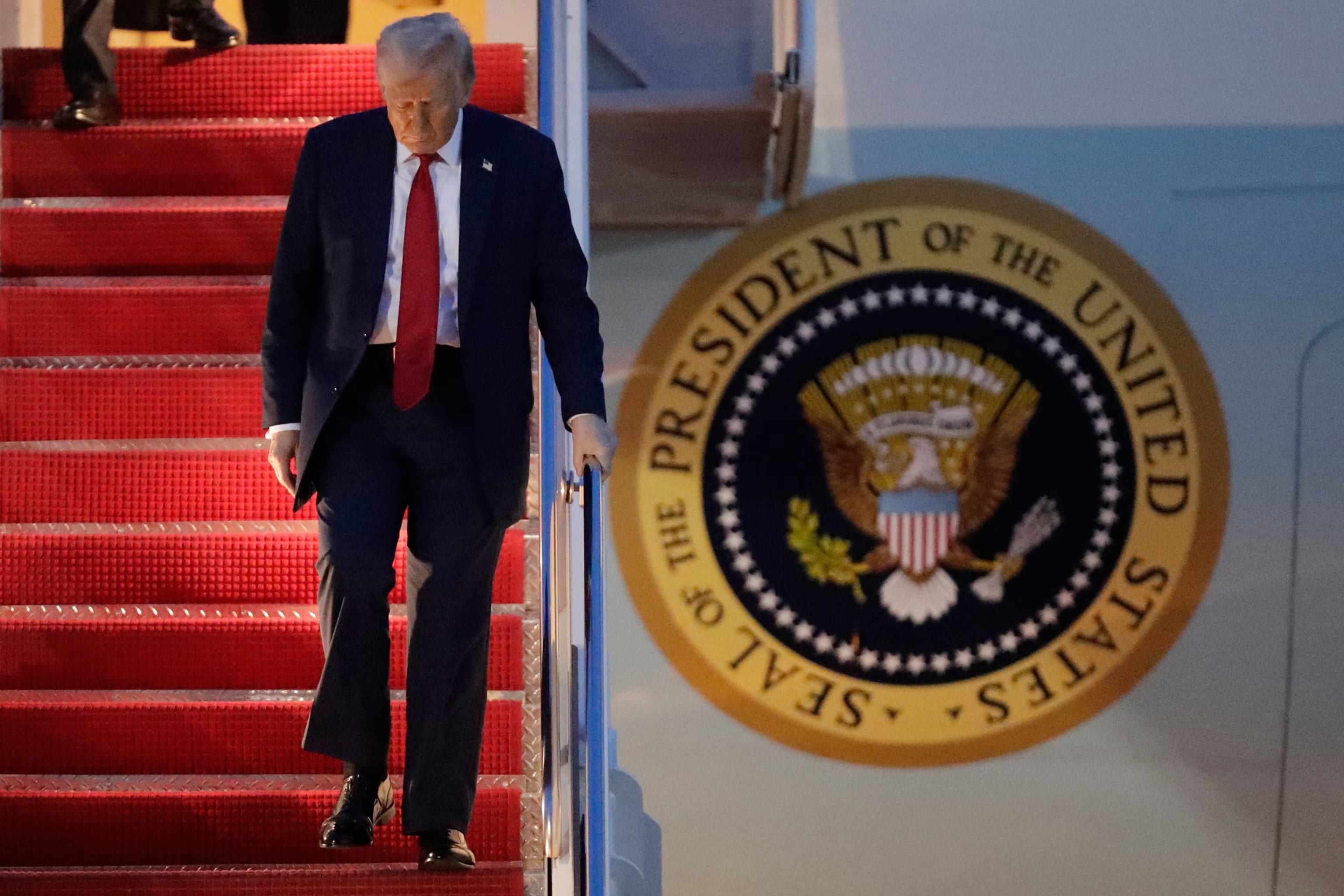
WASHINGTON D.C. – Former United States President Donald Trump has publicly entertained the idea of seeking a third presidential term, a move directly prohibited by the U.S. Constitution, while dismissing a theoretical loophole to regain power through the vice presidency. Speaking to reporters aboard Air Force One on Monday, 27 October 2025, during a trip to Asia, Mr. Trump stated he would "love to do it" when asked about a third term. His comments have ignited a significant political debate in the United States and sent ripples across the globe, prompting analysis of their potential impact on international relations, including U.S.-Africa policy.
While Mr. Trump, 79, rejected a scenario floated by some supporters in which he could run for vice-president in 2028 and then assume the presidency if the elected president were to resign, he did not definitively rule out challenging the constitutional limit on presidential terms. "I think people wouldn't like that," he said of the vice-presidential plan. "It's too cute. It wouldn't be right." However, when pressed on whether he was ruling out a third term, he responded ambiguously: "Am I not ruling it out? I mean, you'll have to tell me."
These remarks follow claims by his former strategist, Steve Bannon, who told The Economist in October 2025 that a "plan" was in place to secure a third term for Trump, stating, "Trump is going to be president in '28, and people ought to just get accommodated with that."
The Twenty-Second Amendment to the U.S. Constitution, ratified on 27 February 1951, explicitly states: "No person shall be elected to the office of the President more than twice." This amendment was passed after President Franklin D. Roosevelt was elected to four terms, breaking the two-term tradition established by George Washington. Legal scholars overwhelmingly agree that the amendment presents a clear and formidable barrier to a third presidential election for Mr. Trump. Furthermore, the Twelfth Amendment stipulates that "no person constitutionally ineligible to the office of President shall be eligible to that of Vice-President," legally precluding a two-term president from running for vice president.
Despite the constitutional prohibitions, Mr. Trump asserted he has "the best poll numbers that I've ever had." However, recent polling data presents a mixed picture. An Emerson College Polling national survey from 17 October 2025, found his job approval at 45%, with 48% disapproving. A Gallup poll from 1-16 October 2025, placed his approval at 41% and disapproval at 54%. Other polls from Quinnipiac and Reuters/Ipsos in October also showed his disapproval ratings outpacing approval. While his support among Republicans remains strong, these figures do not universally reflect his claim of having his "best numbers ever."
For Kenya and the broader East Africa region, the prospect of a Trump presidency unbound by traditional norms raises significant questions about the future of U.S. engagement. During his first and second terms, the Trump administration's "America First" foreign policy led to reviews of foreign aid and a more transactional approach to international partnerships. Analysts suggest a third term could intensify this unpredictability, potentially impacting crucial areas such as the African Growth and Opportunity Act (AGOA), security cooperation against groups like Al-Shabaab, and funding for health initiatives like PEPFAR.
In August 2025, the Trump administration initiated a 90-day review of Kenya's strategic partnership, citing concerns over its relationships with U.S. rivals. This move signaled a tougher foreign policy stance that could see a recalibration of diplomatic and economic ties. A departure from established democratic processes in the U.S., such as challenging term limits, could also complicate America's position as a promoter of democracy abroad, potentially altering its diplomatic leverage and relationships with African nations that are themselves grappling with constitutional and governance challenges.
During the Air Force One discussion, Mr. Trump also pointed to potential successors within the Republican Party, naming Vice President JD Vance and Secretary of State Marco Rubio as an "unstoppable" team. This suggests that even as he speculates about his own future, the political landscape for the 2028 election is actively being shaped. The ongoing debate ensures that the constitutional limits of presidential power will remain a central issue in American politics, with significant implications for its partners worldwide.
Keep the conversation in one place—threads here stay linked to the story and in the forums.
Sign in to start a discussion
Start a conversation about this story and keep it linked here.
Other hot threads
E-sports and Gaming Community in Kenya
Active 9 months ago
The Role of Technology in Modern Agriculture (AgriTech)
Active 9 months ago
Popular Recreational Activities Across Counties
Active 9 months ago
Investing in Youth Sports Development Programs
Active 9 months ago



