We're loading the full news article for you. This includes the article content, images, author information, and related articles.
In a sharp pivot from containment to profit-sharing, the White House lifts the ban on advanced AI chips for Beijing—but the federal government wants a quarter of the cash.

In a stunning reversal of American foreign policy that dismantles strict barriers erected by his predecessor, President Donald Trump has greenlit the sale of Nvidia’s advanced AI chips to Beijing. The move signals a dramatic thaw in the tech cold war, but it comes with a stipulation that has left economists and policy analysts stunned: the US government intends to pocket a significant share of the revenue.
This is not merely a story about silicon wafers; it represents a fundamental rewrite of global trade rules. By demanding a 25% government share of the proceeds, the White House is blurring the lines between regulation and profit-sharing. For observers in Nairobi’s Silicon Savannah, where the balance between government intervention and private enterprise is constantly debated, this unorthodox approach marks a volatile new era in international commerce.
The announcement, made via Trump’s Truth Social platform, confirmed that the Department of Commerce is finalizing a deal to allow the export of the powerful H200 chips. These processors are the workhorses of the artificial intelligence revolution, powering everything from ChatGPT to complex military simulations.
However, the financial terms are unprecedented. Trump stated that the US Treasury would receive 25% of the proceeds from these sales. This figure is significantly higher than the 15% previously mooted in earlier negotiations.
To put this in perspective, if a bulk shipment of chips is valued at $100 million (approx. KES 13 billion), the US government would effectively garnish $25 million (approx. KES 3.25 billion) directly from the transaction. This follows a similar pattern established in August, where the administration sought a 10% equity stake in chipmaker Intel, signaling a shift toward state-capitalism tactics rarely seen in Western democracies.
The decision effectively overturns the Biden administration's strategy, which viewed the sale of such high-performance computing power as a direct threat to national security. The fear has long been that China could utilize these chips to accelerate its military modernization and surveillance capabilities.
Reaction from Capitol Hill has been swift and sharp. In a letter to Commerce Secretary Howard Lutnick, Democratic Senators Elizabeth Warren and Andy Kim warned that the deal risks powering China’s “surveillance, censorship, and military applications.”
“I urge you to stop ignoring the input of bipartisan members of Congress and your own experts in order to cut deals that trade away America’s national security,” the senators wrote, highlighting the friction between the President's transactional approach and traditional security protocols.
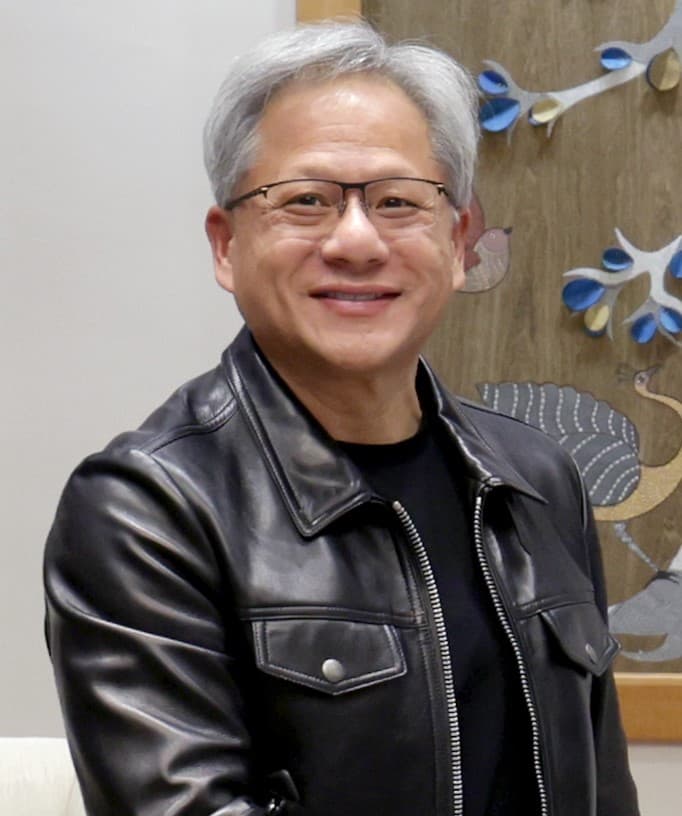
For Nvidia and its CEO Jensen Huang, the decision is a massive commercial victory. Huang has spent months lobbying Washington to reopen the Chinese market, which historically accounted for a massive slice of the company's revenue. The H200 chip is vastly superior to the H20—a watered-down version previously designed for China that was subsequently banned in April.
The implications of this policy shift include:
While details remain scarce on how exactly the "25% cut" will be collected or audited, the message from Washington is clear: everything is for sale, provided the government gets its cut. As the US government steps into the boardroom as a profit-sharing partner, the definition of a "free market" is being rewritten in real-time.
Keep the conversation in one place—threads here stay linked to the story and in the forums.
Sign in to start a discussion
Start a conversation about this story and keep it linked here.
Other hot threads
E-sports and Gaming Community in Kenya
Active 9 months ago
The Role of Technology in Modern Agriculture (AgriTech)
Active 9 months ago
Popular Recreational Activities Across Counties
Active 9 months ago
Investing in Youth Sports Development Programs
Active 9 months ago
Key figures and persons of interest featured in this article