We're loading the full news article for you. This includes the article content, images, author information, and related articles.
Sixteen military officers, including a Brigadier General, face court-martial for a plot to overthrow President Tinubu, as the military moves to crush dissent in the ranks.
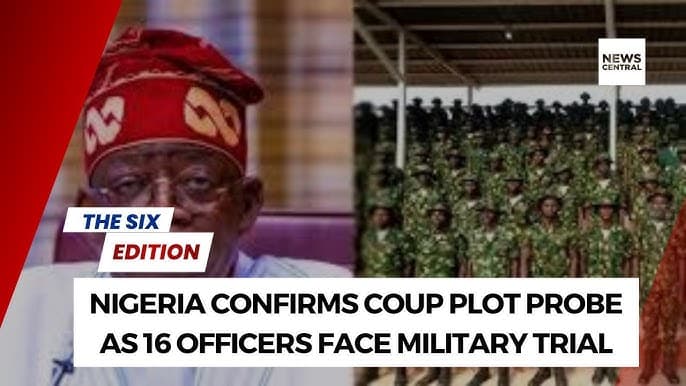
The Nigerian military has taken the extraordinary step of arraigning 16 officers, including a Brigadier General, before a court-martial on grave charges of plotting to overthrow the government of President Bola Tinubu.
The Defence Headquarters (DHQ) confirmed that the officers, led by the suspected ringleader Brigadier General Musa Abubakar Sadiq, have been indicted by a Special Investigative Panel. The charges are not merely for indiscipline but touch on the third rail of Nigerian politics: treason. This development confirms months of hushed rumors about unrest within the barracks and represents the most significant challenge to the military's loyalty since the return to democracy.
According to military sources, the plot was not a spur-of-the-moment rebellion but a coordinated conspiracy involving officers from the Infantry, Signals, and Ordnance Corps. The investigation, which has been described as "forensic and exhaustive," uncovered a network of communication and unauthorized movements that pointed to a destabilization agenda.
"These actions are inconsistent with the ethics, values, and professional standards of the Armed Forces," stated Major General Samaila Uba, Director of Defence Information. The language is bureaucratic, but the implication is lethal: the accused officers have broken the sacred covenant of subordination to civil authority.
While the DHQ insists the situation is under control, the arrests have rattled the political establishment in Abuja. In a region where coups have become fashionable again—from Niger to Mali—Nigeria's ability to inoculate its military against political ambition is critical for regional stability.
The trial of General Sadiq and his co-conspirators will be held behind the fortified walls of the military judicial system, but its verdict will resonate far beyond. It is a stress test for Nigeria's democracy, proving that the threat of praetorian intervention remains a dormant virus in the body politic.
Keep the conversation in one place—threads here stay linked to the story and in the forums.
Sign in to start a discussion
Start a conversation about this story and keep it linked here.
Other hot threads
E-sports and Gaming Community in Kenya
Active 9 months ago
The Role of Technology in Modern Agriculture (AgriTech)
Active 9 months ago
Popular Recreational Activities Across Counties
Active 9 months ago
Investing in Youth Sports Development Programs
Active 9 months ago



