We're loading the full news article for you. This includes the article content, images, author information, and related articles.
Lebanon accuses Israel of spraying southern villages with glyphosate at 30 times the normal concentration, terming it an environmental crime and a violation of sovereignty.
Beirut has escalated its diplomatic offensive, accusing Tel Aviv of unleashing a "chemical war" by drenching southern villages in lethal concentrations of crop-killing herbicides.
Lebanon has accused Israel of waging chemical warfare by drenching southern border villages in dangerously concentrated doses of glyphosate herbicide. This environmental aggression threatens to poison the region's soil and water for generations, escalating the conflict from conventional weapons to ecological destruction. The allegations, backed by laboratory results, paint a grim picture of a scorched-earth policy aimed at rendering the border zone uninhabitable.
The Lebanese Agriculture and Environment Ministries released a joint statement citing laboratory tests that confirmed the substance sprayed was glyphosate. However, it was not a standard agricultural application. The tests revealed concentrations "between 20 and 30 times the levels usually accepted" for farming. Such saturation levels are capable of stripping the land bare, destroying ancient olive groves, and seeping into the water table, posing severe health risks to the local population.
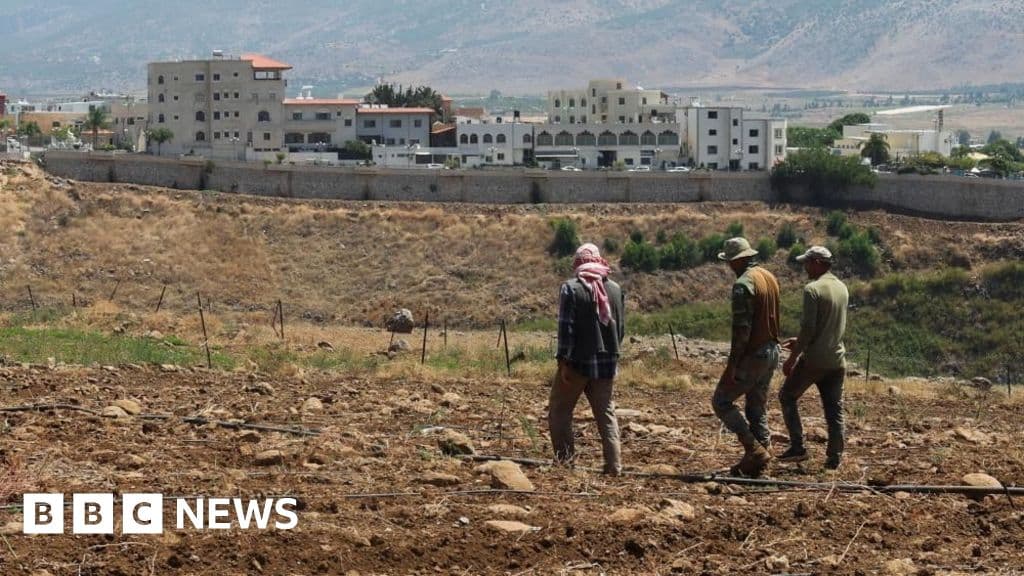
The spraying reportedly targeted the villages of Aita al-Shaab, Ramieh, and Marwanieh. Residents described seeing Israeli aircraft releasing thick mists over their fields, followed by the rapid wilting of vegetation. President Joseph Aoun did not mince words, condemning the act as a "flagrant violation of Lebanese sovereignty" and an "environmental and health crime." He has instructed the foreign ministry to file a formal complaint with the United Nations Security Council.
This incident is the latest flashpoint in a volatile border region that has seen exchanged fire, airspace violations, and psychological warfare. However, the use of chemical agents marks a sinister turn. "This is not just about clearing sightlines for the military," said Ramzi Kaiss, a researcher with Human Rights Watch. "It is about making the land impossible to live on. It complicates people's ability to return to their homes and maintain their livelihoods."
The Israel Defense Forces (IDF) have declined to comment on the specific allegations. Historically, Israel has cleared vegetation along the border to prevent Hezbollah fighters from using cover to launch attacks. Yet, the scale and toxicity of this operation suggest a strategy of long-term area denial rather than immediate tactical security. As the chemicals settle into the soil, the people of southern Lebanon face a new, invisible enemy that may linger long after the drones have flown away.
Keep the conversation in one place—threads here stay linked to the story and in the forums.
Sign in to start a discussion
Start a conversation about this story and keep it linked here.
Other hot threads
E-sports and Gaming Community in Kenya
Active 9 months ago
The Role of Technology in Modern Agriculture (AgriTech)
Active 9 months ago
Popular Recreational Activities Across Counties
Active 9 months ago
Investing in Youth Sports Development Programs
Active 9 months ago



