We're loading the full news article for you. This includes the article content, images, author information, and related articles.
The pioneering zoologist who proved elephants possess consciousness and led the global fight against the ivory trade leaves a towering legacy in Kenya’s conservation history.
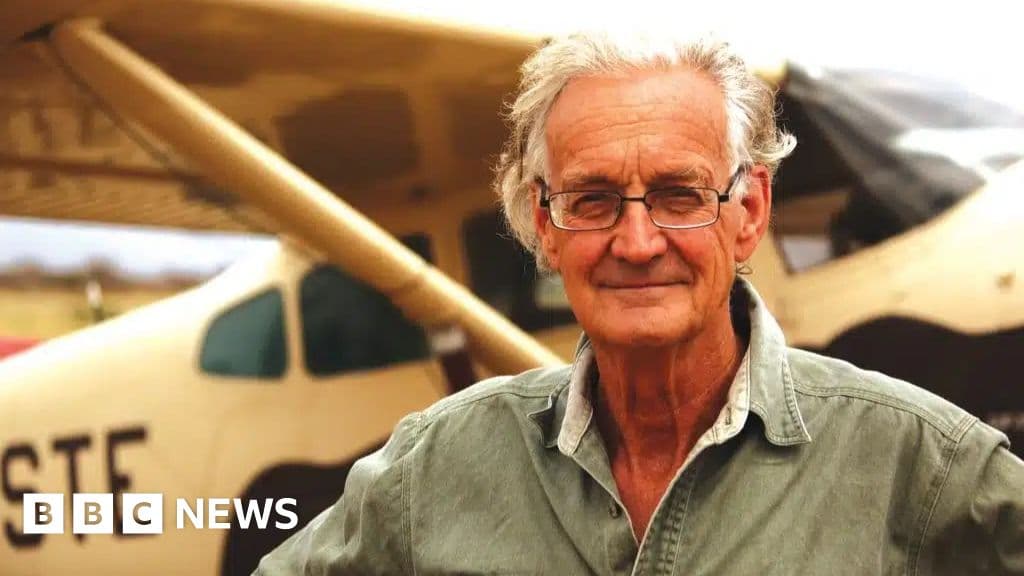
Iain Douglas-Hamilton, the visionary zoologist who fundamentally shifted humanity’s understanding of the African elephant, has died at his home in Nairobi aged 83.
For Kenya, his death is not merely the loss of a scientist, but the departure of a guardian. Douglas-Hamilton’s six decades of research provided the irrefutable evidence needed to ban the international ivory trade, directly safeguarding the natural heritage that anchors our tourism economy.
Born in England in 1942 but forged in the East African bush, Douglas-Hamilton arrived in Tanzania’s Lake Manyara National Park in the 1960s. At the time, elephants were viewed largely as agricultural pests or trophies. He upended this perception by living among them, becoming the first biologist to focus on the social interactions of individual animals.
His methodology was radical yet intimate. By memorizing the unique tear patterns in their ears and the wrinkles on their skin, he identified individuals, proving that elephants live in complex, matriarchal societies defined by deep emotional bonds. His work demonstrated that these giants mourn their dead and protect their kin with a ferocity that mirrors human devotion.
Douglas-Hamilton’s career shifted from pure observation to urgent activism in the 1970s and 80s, as he witnessed the devastation of the great herds by poachers. He did not sit in an ivory tower; he flew low over the savannah to conduct aerial counts, often risking his life to document the slaughter.
His contributions to the survival of the species include:
Tributes have poured in from across the globe, reflecting the universal respect Douglas-Hamilton commanded. The Prince of Wales, a longtime ally in conservation, described him as a man whose work left a "lasting impact on our appreciation for, and understanding of, elephants."
Prince William, who serves as patron for the Tusk Trust—where Douglas-Hamilton was an ambassador—recalled their time together in the bush. "The memories of spending time in Africa with him will remain with me forever," the Prince noted.
Charles Mayhew, founder of Tusk, echoed these sentiments, stating, "The world has lost a true conservation legend today, but his extraordinary legacy will continue."
That legacy is visible today in the recovering herds of Samburu and the protected landscapes across the continent. As the sun sets on his life, the herds he loved continue to roam, safer because he walked among them.
Keep the conversation in one place—threads here stay linked to the story and in the forums.
Sign in to start a discussion
Start a conversation about this story and keep it linked here.
Other hot threads
E-sports and Gaming Community in Kenya
Active 10 months ago
The Role of Technology in Modern Agriculture (AgriTech)
Active 10 months ago
Popular Recreational Activities Across Counties
Active 10 months ago
Investing in Youth Sports Development Programs
Active 10 months ago



