We're loading the full news article for you. This includes the article content, images, author information, and related articles.
The President moves to elevate his 2001 judicial discovery, sparking debate on the fine line between merit and political patronage in the apex court.
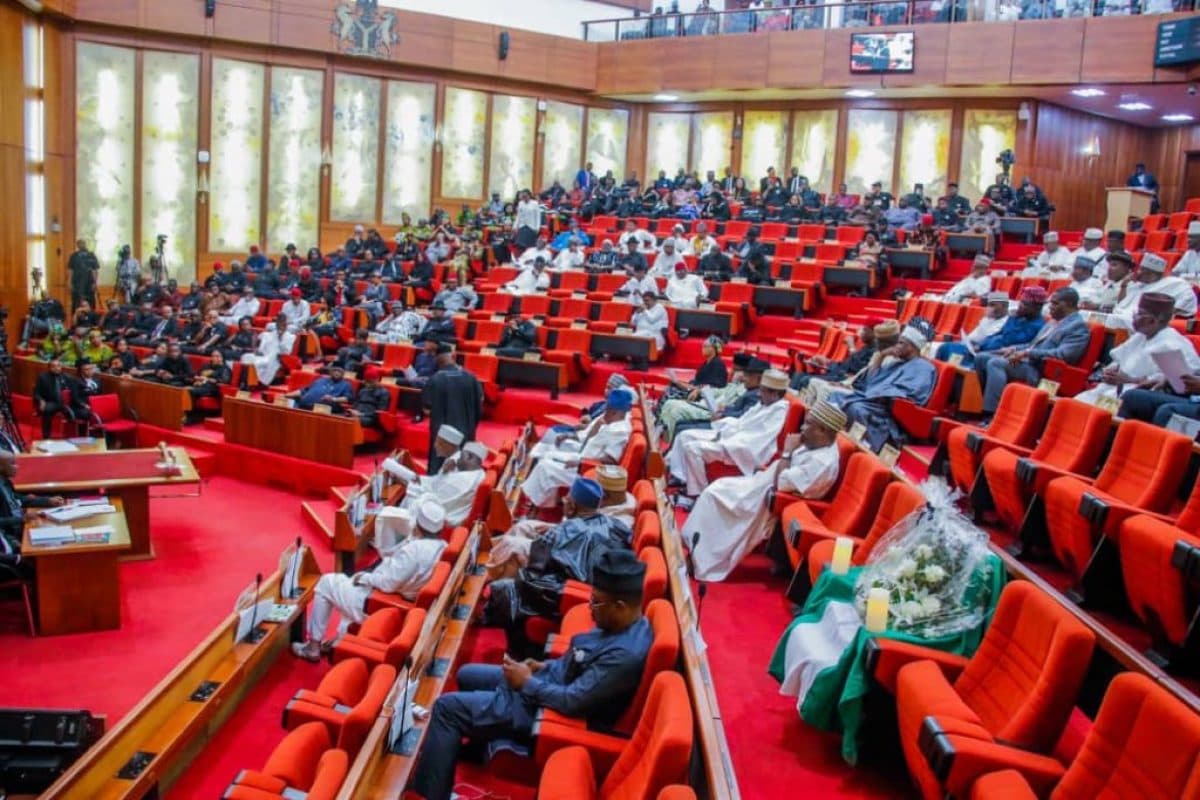
President Bola Tinubu has played a decisive card in the reshaping of Nigeria’s judiciary, formally requesting the Senate to confirm Justice Olubunmi Oyewole to the Supreme Court. It is a move that threads the needle between meritocratic elevation and the consolidation of loyalist networks.
In a letter read by Senate President Godswill Akpabio this Tuesday, Tinubu presented Oyewole’s nomination to fill the vacant Southwest slot on the apex court bench. While the nomination comes with the stamp of approval from the National Judicial Council (NJC), the historical subtext is impossible to ignore: Oyewole is a "Tinubu original," a judge whose ascent tracks closely with the President’s own political timeline.
Justice Oyewole’s history with the President runs deep. He was first appointed to the Lagos State bench in May 2001—by none other than Bola Tinubu, who was then the Governor of Lagos. For over two decades, Oyewole has been a fixture in the judiciary, known for handling high-profile financial fraud cases, including the conviction of Bode George, a landmark ruling that earned him a reputation for fearlessness.
"He is a judge who knows where the bodies are buried, and more importantly, how the law applies to them," remarked a legal analyst in Abuja. His elevation to the Court of Appeal in 2014 was seen as a stepping stone; his arrival at the Supreme Court feels like a destiny fulfilled.
While Oyewole’s credentials—spanning service in Makurdi, Calabar, Enugu, and Abuja divisions—are unimpeachable, his promotion reinforces the perception of the "Lagosification" of federal power. Tinubu is systematically elevating the cadre of technocrats and officials he groomed two decades ago.
As Justice Oyewole prepares to don the robe of a Supreme Court Justice, he carries with him not just the weight of the law, but the shadow of his patron. In a judiciary fighting for its independence, he will have to prove he serves the Constitution, not just the man who appointed him.
Keep the conversation in one place—threads here stay linked to the story and in the forums.
Sign in to start a discussion
Start a conversation about this story and keep it linked here.
Other hot threads
E-sports and Gaming Community in Kenya
Active 9 months ago
The Role of Technology in Modern Agriculture (AgriTech)
Active 9 months ago
Popular Recreational Activities Across Counties
Active 9 months ago
Investing in Youth Sports Development Programs
Active 9 months ago



