We're loading the full news article for you. This includes the article content, images, author information, and related articles.
Analysis: The 2025 KCSE candidates face a perfect storm of challenges, from a punishing new university funding model to the resource shift towards CBC.
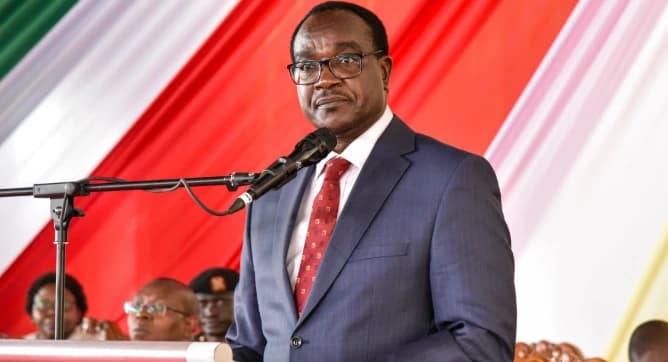
ELDORET, Kenya, Jan. 9 — As the dust settles on the long-awaited release of the 2025 Kenya Certificate of Secondary Education (KCSE) results, a sobering reality is coming into focus for the 996,078 candidates who sat the exams: they represent the “Sunset Cohort” of the 8-4-4 system — the last generation to complete secondary school under the traditional curriculum before Kenya transitions fully to Competency-Based Education (CBC). Their results, officially released today Friday, January 9, 2026, by Education Cabinet Secretary Julius Migos Ogamba at Chebisas High School in Eldoret, Uasin Gishu County, mark both an ending and a beginning in the nation’s education landscape.
After examinations were administered between October 21 and November 21, 2025, and marking was completed by mid-December, Education CS Ogamba presided over a symmetrical release timed at 9:30 a.m. in Eldoret, confirming that the results would be made public after extensive verification and system testing — including early activation of the KNEC results checking portal to ensure readiness for high nationwide demand.
The release followed high-level consultations, including a State House briefing with President William Ruto, underscoring the political and administrative importance of the KCSE as Kenya navigates educational reform.
Amid release preparations, CS Ogamba had previously dismissed widespread social media claims that the results were already out, reminding the public that only the Ministry of Education and the Kenya National Examinations Council (KNEC) are authorised to confirm formal release dates and outcomes.
Upon release:
Approx. 996,078 candidates from more than 10,755 examination centres nationwide now have access to their provisional results.
Results can be accessed online through the official KNEC portal by entering an index number and selecting the examination year.
SMS access remains available; candidates can send their index number to 20076 to receive provisional results.
Individual schools receive official print-ready results slips for distribution, with the Ministry urging parents and candidates to rely only on official channels and avoid misinformation.
President Ruto — briefed before the official announcement — highlighted encouraging trends including that about 270,000 candidates achieved a mean grade of C+ and above, qualifying for direct university entry, and noted strong performance among female candidates.
While top performers celebrate, education analysts warn the 2025 cohort confronts a complex post-secondary landscape shaped by three converging pressures:
Kenya has shifted to a new Higher Education Funding Model that allocates support based on assessed need rather than automatic full government sponsorship. Under this framework:
Scholarships and loans are means-tested and programme-specific, potentially reducing subsidy levels for families deemed capable of contributing more.
Funding amounts vary by degree cost and household capacity, meaning even high-achieving students may incur significant out-of-pocket costs for competitive courses such as Medicine or Engineering.
The change responds to long-standing fiscal pressures on traditional student support systems, including HELB, but has triggered concern among parents who fear higher costs and heavier debt burdens for their children.
Macroeconomic data suggest that youth unemployment remains elevated even as Kenya’s economy grows, meaning that academic success and university placement do not automatically translate to secure employment. Employers are increasingly seeking job-ready, technical and digital competencies — skills emphasised under CBC. Analysts argue that students graduating from the 8-4-4 system may lack some of these competencies, complicating their labour market prospects.
This cohort exits just as Grade 10 learners begin CBC senior school. Although CBC infrastructure — including laboratories, teacher training, and digital curricula — is being prioritised, some educators caution that resources may be unevenly distributed between the outgoing KCSE cohort and the growing CBC streams. This dynamic risks leaving the final 8-4-4 graduates navigating reforms without full policy and resource support.
KNEC reported 418 cases of malpractice during the KCSE cycle, highlighting ongoing challenges in safeguarding examination integrity. While overall irregularities appear lower than in previous years, the sophistication of malpractice — including the use of mobile devices and online communication channels — continues to test regulatory frameworks. Critics argue that perceived grade inflation from irregular results may diminish confidence in outcomes and pressure honest candidates, especially those with mid-range grades.
With results out, candidates now turn to the Kenya Universities and Colleges Central Placement Service (KUCCPS)process, which will determine placements into universities, technical institutions, and TVET programmes. This stage is critical, as direct entry thresholds and funding packages will play a major role in shaping each student’s next steps.
Alternative pathways — including TVET and skill-based programmes — are also gaining prominence, offering practical routes into employment and entrepreneurship for students who do not meet traditional university thresholds.
The 2025 KCSE results release represents more than an academic milestone; it encapsulates a transitional moment in Kenyan education. For the “Sunset Cohort,” scores open doors — but they also signal entry into an evolving ecosystem where policy reform, economic realities, and curriculum shifts will define opportunity and challenge in equal measure.
Keep the conversation in one place—threads here stay linked to the story and in the forums.
Other hot threads
E-sports and Gaming Community in Kenya
Active 7 months ago
Popular Recreational Activities Across Counties
Active 7 months ago
The Role of Technology in Modern Agriculture (AgriTech)
Active 7 months ago
Investing in Youth Sports Development Programs
Active 7 months ago