We're loading the full news article for you. This includes the article content, images, author information, and related articles.
A burgeoning industry of pre-packaged sacrament kits is transforming a sacred church ritual into a profitable business, sparking a quiet debate between tradition, convenience, and theology across Kenyan denominations.
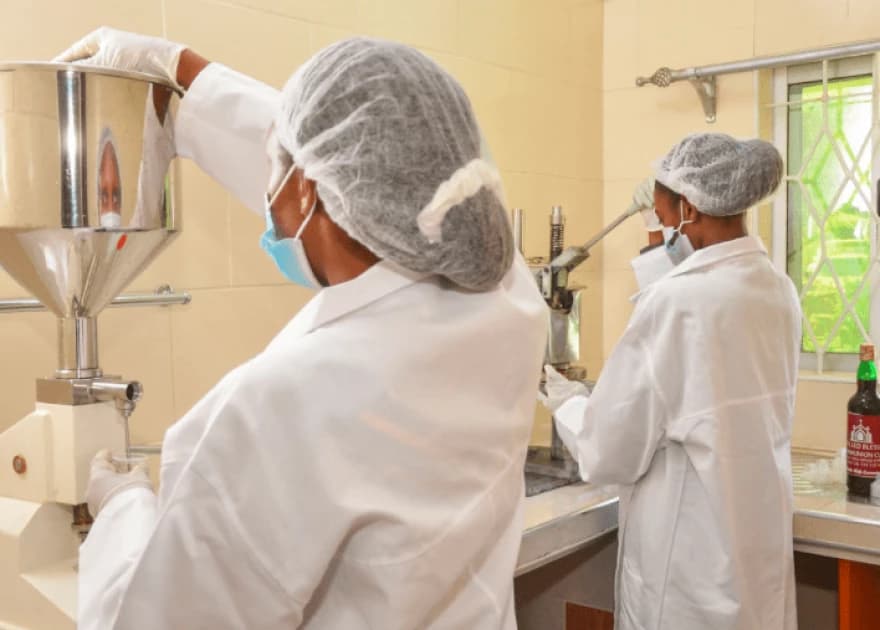
A discreet but thriving business is changing how thousands of Kenyans receive Holy Communion. Single-use, pre-packaged cups containing both a wafer and grape juice are becoming a common sight in churches, a shift driven by entrepreneurs who saw a market in the sacred.
This commercialization of the Eucharist is a direct response to modern Kenyan realities: the demand for hygiene, heightened during the pandemic, and the logistical needs of a burgeoning non-Catholic church landscape. For a growing number of pastors and worshippers, the convenience of a factory-sealed sacrament outweighs traditional preparation methods. This has created a reliable revenue stream for a new class of faith-based entrepreneurs.
The industry's origins are rooted in a practical challenge. Pastor Moses Mwicigi of Bethany House, a major church supplies shop in Nairobi, noted that his business venture began in 2014 after observing that non-Catholic churches struggled to source communion elements. "At the time, Catholics were the main providers, and they were not supplying other churches," he explained. This forced some churches to use "false documents to access communion items," a situation he found untenable.
What started as a service has since formalized into a significant enterprise. Businesses now import supplies from countries like Israel and the United States, while others have localized production. Mugo Keiyoro, founder of Holy Communion Elements, a firm that manufactures the all-in-one kits locally, emphasized the focus on hygiene. "As a ship captain, hygiene is drilled into you. I used to feel uncomfortable with how communion was prepared and shared," he stated, explaining the motivation behind his pre-packaged solution.
The adoption of these products has not been uniform. The Kenya Conference of Catholic Bishops (KCCB) has taken a firm stance to protect the sanctity of its sacraments from commercialization. Recently, the KCCB introduced a new, proprietary brand of altar wine, imported exclusively for Mass and unavailable in commercial outlets. This decision came after their previous wine became common in bars. "The newly approved wine is not for sale at any business outlet," emphasized Nyeri Archbishop Anthony Muheria, noting the move was to restore reverence.
In contrast, the Pentecostal and evangelical churches appear to be the primary market. A testimonial from a member of Christ is the Answer Ministries (CITAM) praises a supplier for "fast delivery and Great service," indicating congregational-level adoption within one of Kenya's largest Pentecostal movements. However, official public statements from the leadership of major Pentecostal bodies or the Anglican Church of Kenya (ACK) on the theological implications of using commercially produced, pre-packaged kits remain scarce. This suggests a practice that is growing from the ground up, with individual churches making decisions based on practicality.
Analysts note this trend raises deeper questions about the nature of the sacrament itself. While proponents argue the change is merely in the delivery method, not the meaning, some theologians express concern that outsourcing and commercializing the elements could diminish the communal and sacred aspects of the ritual. The debate touches on whether the focus should be on the elements' origins or the faith of the congregant partaking.
As this industry expands, driven by convenience and a ready market, Kenyan churches find themselves at a crossroads. They must weigh the practical benefits of this new cottage industry against the ancient traditions of a sacred meal, deciding whether the body of Christ can, or should, be a commercial product.
Keep the conversation in one place—threads here stay linked to the story and in the forums.
Sign in to start a discussion
Start a conversation about this story and keep it linked here.
Other hot threads
E-sports and Gaming Community in Kenya
Active 9 months ago
The Role of Technology in Modern Agriculture (AgriTech)
Active 9 months ago
Popular Recreational Activities Across Counties
Active 9 months ago
Investing in Youth Sports Development Programs
Active 9 months ago