We're loading the full news article for you. This includes the article content, images, author information, and related articles.
The untold mechanics of the 2007 Kenyan election blackout, and how the manipulation of KICC events crippled democratic trust for a generation.

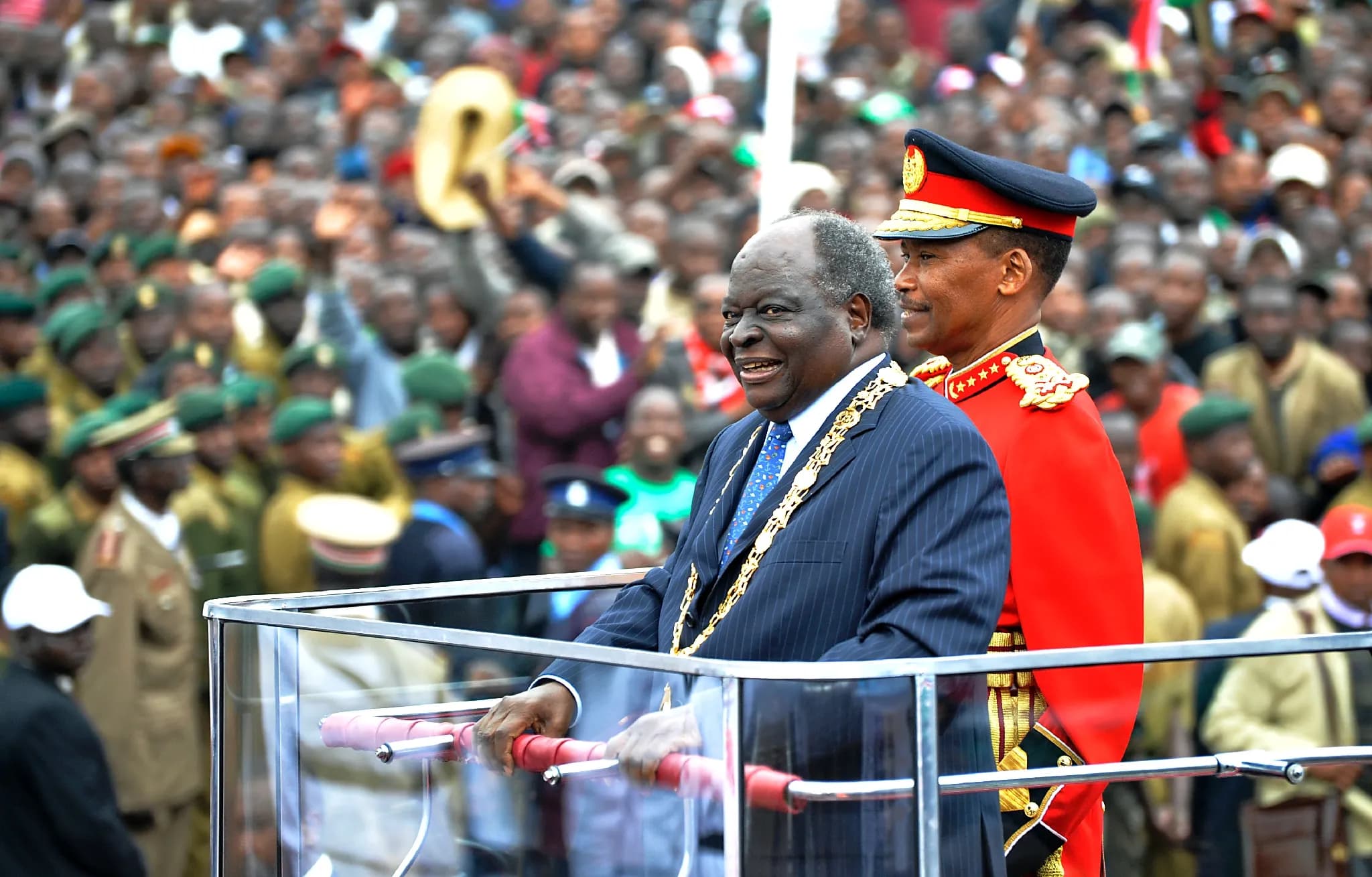
The lights at the Kenyatta International Convention Centre did not merely flicker on December 30, 2007 they dimmed on Kenyan democracy. As the Electoral Commission of Kenya (ECK) chairman Samuel Kivuitu prepared to announce the winner of one of the most fiercely contested presidential elections in the nation's history, the air inside the tallying hall was thick with exhaustion, suspicion, and the smell of impending crisis. By the time the final, disputed figures were read aloud, the country was not just witnessing the end of an electoral process—it was witnessing the deliberate severance of information, a strategic blackout designed to shroud a transition of power that would soon leave over 1,000 Kenyans dead and hundreds of thousands displaced.
Eighteen years later, the anatomy of that blackout remains a masterclass in how institutional failure can be engineered to override the democratic will. For the modern Kenyan reader, the 2007 election is more than a historical footnote it is the trauma that birthed the 2010 Constitution. Understanding how the cover of a media blackout was used to declare Emilio Stanley Mwai Kibaki the winner—amidst significant irregularities—is essential to ensuring that the electoral mechanisms of today remain robust enough to withstand the pressures of tomorrow.
By the afternoon of December 30, 2007, the KICC was effectively a pressure cooker. Politicians from the Orange Democratic Movement (ODM) and the Party of National Unity (PNU) were trading accusations of "cooked" results across the stage. Former ECK Commissioner Jack Tumwa later recalled the palpable confusion as the commission struggled to process results that were arriving with suspicious discrepancies. The tension was not merely atmospheric it was procedural. Returning officers in certain constituencies were unreachable, and the numbers being reported to the central tallying office defied statistical logic.
Samuel Kivuitu, caught in the crosshairs of a polarized political class, became the face of a sinking ship. He famously insinuated that his own officers were tampering with the data, yet he proceeded to announce the results under immense pressure. The hall, meant to be the temple of electoral integrity, had devolved into a cacophony of shouting matches. Security officers surrounded the commission, not to protect the truth, but to facilitate a predetermined outcome.
The blackout was not an accident it was a calibrated strategy. Shortly after Kivuitu began reading the results, private media houses were ordered to cease live broadcasts. The government, citing threats to public safety, effectively silenced the independent press, leaving only the national broadcaster, the Kenya Broadcasting Corporation (KBC), to transmit the announcement. This manipulation of the airwaves ensured that the declaration of Kibaki as president would occur in a curated vacuum, unscrutinized by a free press or the public at large.
The consequences of this suppression were instantaneous and catastrophic:
The Independent Review Commission (IREC), led by South African Judge Johann Kriegler, later provided a devastating post-mortem of the process. The Kriegler Commission report concluded that the 2007 elections were so materially defective that it was impossible to establish true or reliable results. It noted that the failure was systemic—ranging from ballot stuffing at the polling station level to the manipulation of tallying at the constituency level.
Professor Rok Ajulu, writing on the political economy of the crisis, argued that the violence was a symptom of deeper, structural injustices that had been ignored by successive post-independence governments. The electoral failure was merely the spark that ignited a long-simmering fuse of landlessness, poverty, and ethnic marginalization. The Kriegler report was not just a critique of the ECK it was an indictment of a society that had long condoned electoral impunity.
The aftermath was a grim ledger of human suffering. More than 1,000 lives were lost, and upwards of 600,000 people were displaced from their homes. The trauma of those months forced the international community to intervene, ultimately leading to the National Accord and Reconciliation Act 2008 and the formation of a Grand Coalition Government. Yet, the cost of that transition was a permanent scar on the nation's social fabric.
The events of 2007 underscore a critical lesson for contemporary Kenya: the integrity of an election is not merely determined on polling day. It is determined by the independence of the institutions tasked with managing the process, the transparency of the tallying system, and the willingness of the state to respect the flow of information. The blackout was the final tool in the arsenal of those who sought to bypass the electorate it was the mechanism that broke the bridge between the state and the people.
As Kenya moves further from that dark December, the question remains whether the lessons of 2007 have been fully internalized or merely buried under the weight of more recent electoral cycles. The silence imposed on the airwaves in 2007 was a warning that a democracy is only as strong as its information environment. When the lights go out on transparency, the path to autocracy becomes dangerously short.
Keep the conversation in one place—threads here stay linked to the story and in the forums.
Sign in to start a discussion
Start a conversation about this story and keep it linked here.
Other hot threads
E-sports and Gaming Community in Kenya
Active 10 months ago
Popular Recreational Activities Across Counties
Active 10 months ago
The Role of Technology in Modern Agriculture (AgriTech)
Active 10 months ago
Investing in Youth Sports Development Programs
Active 10 months ago
Key figures and persons of interest featured in this article