We're loading the full news article for you. This includes the article content, images, author information, and related articles.
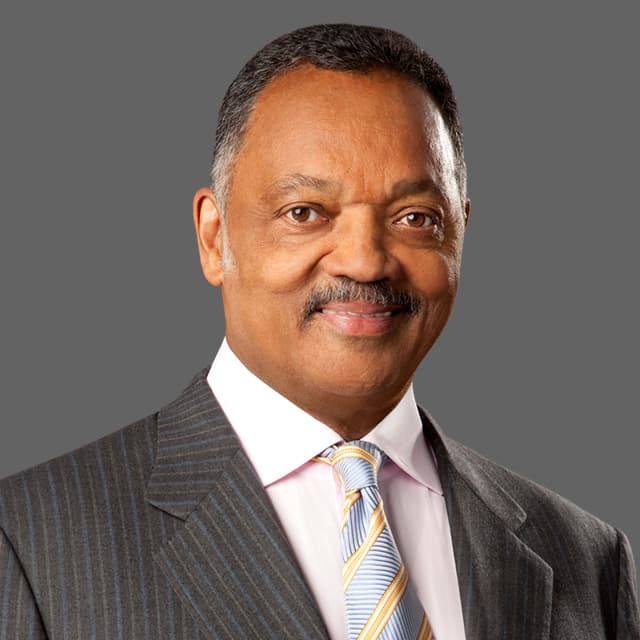
The Reverend Jesse Louis Jackson, the fiery orator who marched with King and dared to believe a Black man could be President long before Obama, has died.
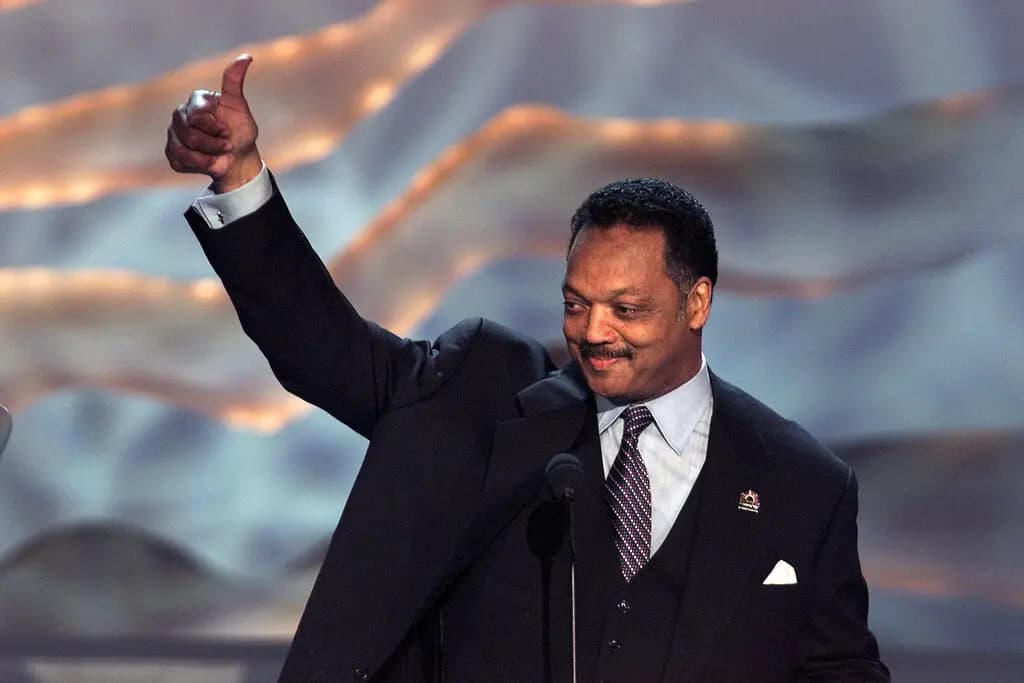
The Reverend Jesse Louis Jackson, the fiery orator who marched with King and dared to believe a Black man could be President long before Obama, has died.
The voice that thundered from the pulpit to the pavement, demanding that America "Keep Hope Alive," has been silenced. The Reverend Jesse Jackson, a titan of the American Civil Rights Movement and a figure whose influence rippled across the Atlantic to the liberation struggles of East Africa, died this morning, Tuesday, February 17, 2026.He was 84 years old.
His family confirmed the passing of the "servant leader," noting he died peacefully surrounded by loved ones. For years, Jackson had waged a quiet, dignified battle against progressive supranuclear palsy (PSP), a Parkinson’s-like disorder that robbed him of his physical mobility but never his moral stature.
To understand Jesse Jackson is to understand the arc of the 20th century. He was there, standing on the balcony of the Lorraine Motel in Memphis on that blood-soaked day in 1968 when Martin Luther King Jr. was assassinated. While others despaired, Jackson picked up the mantle. He did not just inherit the movement; he modernized it.
He transformed the struggle from a purely moral crusade into a potent political machine. His "Rainbow Coalition" was a revolutionary concept—a union of the "desperate, the damned, the disinherited, the disrespected, and the despised." It was a coalition that transcended race, bringing together Black Americans, poor whites, Latinos, and progressives.
For Kenya and the wider East African region, Jackson was more than just an American politician. He was a symbol of Pan-African solidarity. He was a vocal opponent of apartheid in South Africa, pushing the U.S. government to sanction the Pretoria regime when it was unpopular to do so. His message of economic empowerment resonated in Nairobi’s boardrooms and informal settlements alike.
Jackson’s two presidential runs in 1984 and 1988 were not quixotic adventures; they were battering rams that shattered the glass ceiling. He won state primaries. He commanded the debate stage. He proved that a Black man could be a serious contender for the most powerful office on earth. It is no exaggeration to say that without Jesse Jackson in 1984, there would have been no Barack Obama in 2008.
Jackson was not without his flaws. He was a man of immense ego and sharp elbows, often clashing with contemporaries. His "Hymietown" remark in 1984 remains a stain on his record, one for which he spent decades apologizing. Yet, his ability to evolve was his superpower. He moved from radical activist to special envoy, negotiating the release of hostages in Syria, Cuba, and Iraq, using nothing but his presence and his pulpit.
In his later years, as his body failed him, his presence became ceremonial but no less powerful.He passed the torch to his children, including Congressman Jonathan Jackson. But the fire was his. The cadence—that rhythmic, poetic, Baptist preacher cadence—was inimitable.
“I am – Somebody,” he famously made crowds chant. Today, the world mourns a man who forced it to recognize the "somebodiness" of the invisible. The lion of civil rights has gone to sleep, but the forest still trembles from his roar.
Keep the conversation in one place—threads here stay linked to the story and in the forums.
Sign in to start a discussion
Start a conversation about this story and keep it linked here.
Other hot threads
E-sports and Gaming Community in Kenya
Active 9 months ago
The Role of Technology in Modern Agriculture (AgriTech)
Active 9 months ago
Popular Recreational Activities Across Counties
Active 9 months ago
Investing in Youth Sports Development Programs
Active 9 months ago
Key figures and persons of interest featured in this article