We're loading the full news article for you. This includes the article content, images, author information, and related articles.
The 2026 Forbes list reveals a persistent truth: female wealth remains dominated by inheritance, contrasting sharply with the struggles of Kenya’s MSMEs.

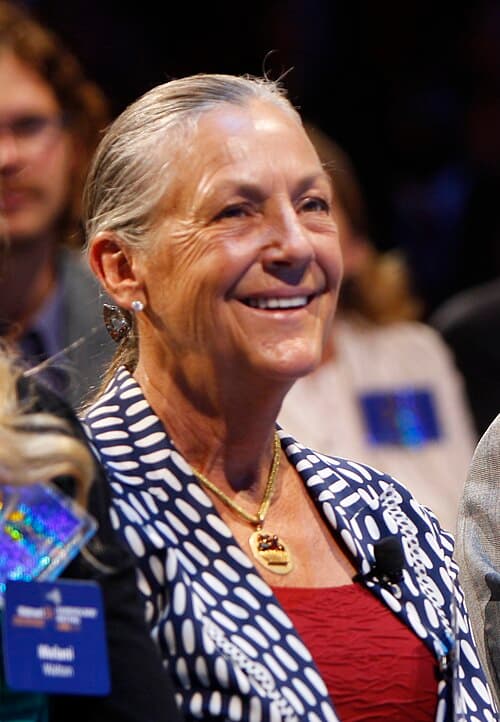
At the pinnacle of global finance, the 2026 Forbes World’s Billionaires list reveals a persistent, structural truth: female wealth remains largely defined by the past. Alice Walton, heiress to the Walmart retail empire, retains her position as the wealthiest woman on the planet with an estimated net worth of $134 billion (approximately KES 17.4 trillion). Her continued dominance, alongside the concentration of wealth among heiresses like Françoise Bettencourt Meyers and Julia Koch, highlights a global economic architecture where intergenerational transfer—not enterprise—remains the primary vehicle for female billionaire status.
For the average informed citizen in Nairobi, these figures represent more than mere headlines they serve as a stark indicator of global wealth consolidation. While global conversations focus on the rise of female billionaires, the reality for women entrepreneurs—from Westlands to rural Siaya—is defined by the opposite struggle: the fight for basic credit, the formalization of small-scale ventures, and the battle to survive in an informal sector that frequently operates outside the safety nets afforded to the global elite. The disparity between the $134 billion command of a single retail heir and the constraints facing Kenya’s women-led MSMEs, which account for 31.4 percent of the national business landscape, underscores a widening chasm in how capital is accessed, held, and compounded across borders.
The 2026 data from Forbes presents a sobering metric: of the 481 female billionaires identified globally, representing roughly 14 percent of the total billionaire population, the vast majority continue to derive their fortune from inherited family holdings. This is not merely a statistical quirk it is a structural reality of the global economy. In industries ranging from cosmetics and luxury goods to energy and retail, wealth is crystallized in corporate equity that remains within dynastic families for generations.
Analysts at the World Inequality Lab have noted that this trend is reinforced by the way capital flows in modern markets. Wealthy dynasties utilize sophisticated estate planning, charitable trusts, and offshore holding structures to insulate their fortunes from the volatility that affects the common market. For these women, wealth is a fixed asset—a stake in a legacy business that grows regardless of their direct operational management. This model stands in direct contrast to the self-made narrative often presented in media, which accounts for only a minority of the world’s ultra-wealthy women.
In Nairobi, the conversation around wealth looks fundamentally different. Data from the Kenya National Bureau of Statistics and recent research by the Mastercard Foundation reveals that while Kenyan women possess a high level of entrepreneurial ambition—with over 90 percent of women considering starting a business—their capacity to scale is severely hampered. Unlike the dynasty-backed fortunes dominating the Forbes list, Kenyan women are disproportionately clustered in the informal economy, where they manage micro, small, and medium-sized enterprises (MSMEs) with limited access to formal banking or equity markets.
The structural bottleneck is credit. Research from 2025 indicates that only 32 percent of women-owned MSMEs in Kenya can access formal credit. The systemic bias in lending institutions often treats these businesses as high-risk, a stark contrast to the institutional support that safeguards the assets of the global billionaire class. While international wealth is preserved through complex financial shielding, local wealth creation is stifled by a lack of collateral, high interest rates, and the systemic under-valuation of "unpaid labor"—the invisible work that supports the entire national economy.
There is a growing recognition that this global wealth gap is not merely a social issue but an economic failure. International policy frameworks are increasingly advocating for gender-responsive procurement (GRP) to bridge these divides. In Kenya, initiatives like the Access to Government Procurement Opportunities (AGPO) program have sought to reserve 30 percent of public contracts for women, youth, and persons with disabilities. Yet, usage of this allocation has remained low, with reports showing that only 17 percent of these opportunities were utilized by 2024, revealing that the bridge between policy and implementation is still under construction.
True progress will not be measured by the number of women on a billionaire list, but by the ability of the average businesswoman to access the liquidity required to expand her operation. As the global economy continues to navigate the complexities of 2026, the contrast remains vivid: the few at the top represent the consolidation of the old world, while the women building businesses in Nairobi’s diverse markets represent the actual, untapped potential of the new one.
As these global wealth hierarchies harden, the question for policymakers and citizens alike is whether the economic systems of the future will continue to reward historical inheritance, or finally unlock the capital necessary to empower the real-world innovators currently waiting for their chance to compete on a level playing field.
Keep the conversation in one place—threads here stay linked to the story and in the forums.
Sign in to start a discussion
Start a conversation about this story and keep it linked here.
Other hot threads
E-sports and Gaming Community in Kenya
Active 9 months ago
The Role of Technology in Modern Agriculture (AgriTech)
Active 9 months ago
Popular Recreational Activities Across Counties
Active 9 months ago
Investing in Youth Sports Development Programs
Active 9 months ago
Key figures and persons of interest featured in this article