We're loading the full news article for you. This includes the article content, images, author information, and related articles.
President Ruto champions a rules-based world while fighting its inequalities, forcing Kenyans to ask: Do these global systems build our future or trap us in debt and dependency?
A quiet announcement at the United Nations headquarters in Nairobi this week recognized three global projects for restoring nature. While the news celebrated environmental progress, it underscored a deeper, more urgent question facing Kenya: Are the global rules of engagement—in trade, security, and finance—truly working for us?
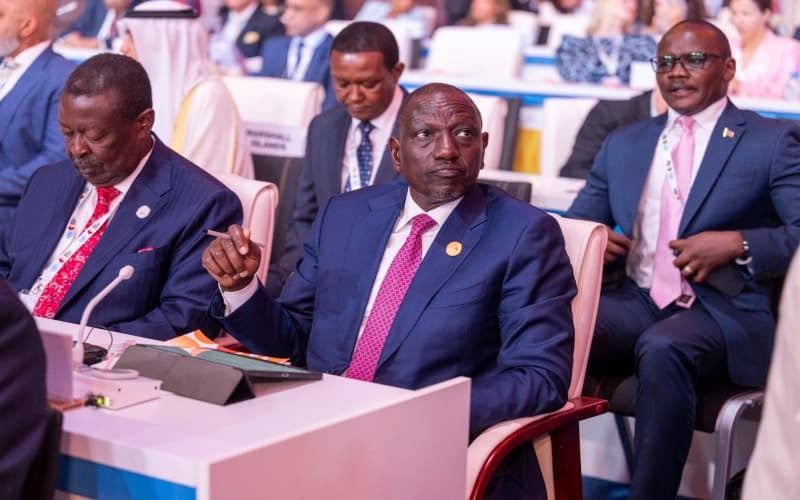
This is the central paradox of Kenya's foreign policy. On one hand, Nairobi is a major hub for multilateral diplomacy, hosting the UN's top environment body and positioning itself as a staunch defender of a rules-based international order. Yet, President William Ruto has become one of the most vocal critics of that very system, blasting its inequalities from podiums in New York and Beijing and demanding urgent reform.
For Kenyan farmers and entrepreneurs, multilateralism isn't an abstract theory; it's about market access. The recently enforced Economic Partnership Agreement (EPA) with the European Union, for instance, grants Kenya's exports duty-free, quota-free access to the massive EU market. This is a lifeline for the horticultural sector, with earnings from exports to the EU, particularly flowers and avocados, jumping nearly 40% in the first quarter of 2024. The deal promises to boost local production, attract European investment, and improve Kenya's balance of trade.
But these rules can cut both ways. Many small-scale farmers argue that World Trade Organization (WTO) agreements force them to compete with heavily subsidized produce from the Global North. This dynamic can expose local farmers to volatile prices and undercut their ability to make a living, a sentiment that has fueled protests and a growing call for a system that prioritizes food sovereignty over unfettered market liberalization.
Kenya's commitment to multilateralism extends to regional security, most visibly through its long-standing military presence in Somalia. What began as Operation Linda Nchi in 2011 to counter the threat from Al-Shabaab was formally integrated into the African Union Mission in Somalia (AMISOM). This move provided a veneer of international legitimacy and framed Kenya's intervention as a contribution to regional stability.
This multilateral security effort has come at a significant cost. While it has degraded Al-Shabaab's capabilities and protected Kenya's borders, it has also embroiled the nation in a protracted conflict. The financial burden is substantial; Kenya now has the highest military expenditure in East Africa, partly driven by these long-term security commitments.
Nairobi's status as the only UN headquarters in the Global South has made it a critical center for environmental multilateralism. The United Nations Environment Programme (UNEP) has directly supported projects in Nairobi to improve air quality, manage waste, and develop sustainable transport. This presence has not only improved the local environment but also cemented Kenya's role as a leader on African environmental issues and facilitated access to international climate funding.
This leadership role has given President Ruto a powerful platform to challenge the global financial architecture. In a series of fiery speeches in late 2025, he argued that institutions like the International Monetary Fund (IMF) and the World Bank perpetuate inequality. His criticisms are echoed on the streets, where civil society groups and youth-led protests have linked IMF-backed austerity measures and high taxes to a crushing cost of living crisis and a ballooning national debt. Critics argue that while Kenya champions global rules, the current financial system drains the economy and stifles local investment, benefiting a small elite.
As Kenya navigates this complex landscape, its leaders are attempting a delicate balancing act: upholding a system they see as essential for global stability while demanding it be fundamentally rewired. For the average Kenyan, the outcome of this struggle will determine whether global rules create pathways to prosperity or pave a road to deeper hardship.
Keep the conversation in one place—threads here stay linked to the story and in the forums.
Sign in to start a discussion
Start a conversation about this story and keep it linked here.
Other hot threads
E-sports and Gaming Community in Kenya
Active 9 months ago
The Role of Technology in Modern Agriculture (AgriTech)
Active 9 months ago
Popular Recreational Activities Across Counties
Active 9 months ago
Investing in Youth Sports Development Programs
Active 9 months ago



