We're loading the full news article for you. This includes the article content, images, author information, and related articles.
With less than 48 hours to the New Year, importers are scrambling to clear thousands of 2018-manufactured vehicles before they are banned from entry—a gamble worth billions of shillings.
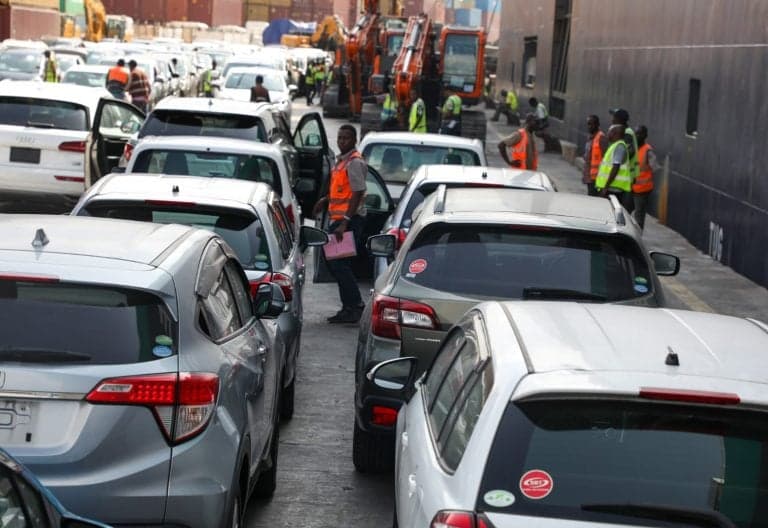
The air at the Kilindini Harbour is thick with humidity and anxiety. It is Tuesday, December 30, and for Kenya’s car importers, the clock is ticking louder than the heavy machinery offloading containers from the Glovis car carrier docked at Berth 19. In less than 48 hours, the calendar flips to 2026, and with it, a regulatory guillotine drops.
Under Kenya’s strict “eight-year rule,” any vehicle manufactured in 2018 must be cleared and entered into the country by midnight on December 31. If a 2018 Toyota Premio or Mazda Demio is still sitting on a ship or the wrong side of the customs gate at 12:01 AM on January 1, it ceases to be a valuable asset. It becomes prohibited cargo—rejected at the importer’s expense, with options limited to costly re-exportation or destruction.
“It is a blood pressure moment,” says Peter Otieno, Chairman of the Car Importers Association of Kenya (CIAK), his phone buzzing incessantly with calls from panicked clearing agents. “We have over 4,700 units arriving in this final two-week window. If a vessel is delayed by tides or bureaucracy, someone loses their life savings.”
Why the last-minute scramble? As always in Kenya, it comes down to the shilling. A 2018 model is significantly cheaper than its 2019 counterpart—often by a margin of KES 300,000 to KES 500,000 depending on the model. For the average Kenyan middle-class family or a digital taxi driver trying to upgrade, that half-million shillings is the difference between owning a car and remaining a pedestrian.
The math driving this frenzy is brutal but simple:
“Importers are business people; they want to buy the cheapest allowable unit to maximize profit,” notes an analyst at the Kenya Institute for Public Policy Research and Analysis (KIPPRA). “But this year, the volume is higher because the shilling has finally given them some breathing room after the volatility of 2023 and 2024.”
The Kenya Bureau of Standards (KEBS) has been unequivocal: there will be no extensions. Managing Director Esther Ngari has reiterated that the KS 1515:2000 standard is non-negotiable. The standard dictates that imported used cars must not be more than eight years old.
This year, the stakes are heightened by the looming shadow of the National Automotive Bill 2025, a piece of legislation that has rattled the industry with proposals to further restrict age limits in the future to support local assembly. While that battle is political, the current deadline is technical and absolute.
“We have seen years like 2014 where thousands of cars were locked out,” recalls a senior clearing agent at the port who requested anonymity. “Families lost money. You see a car that you paid $8,000 (approx. KES 1.03 million) for, and you cannot touch it. It is heartbreaking. This week, we are working 24-hour shifts to ensure that doesn't happen.”
While the drama unfolds in Mombasa, the impact will be felt in Nairobi, Eldoret, and Kisumu. The influx of these 2018 units is expected to temporarily stabilize used car prices in January and February, providing a brief window of affordability before the market adjusts to the more expensive 2019 stock.
However, for the wananchi, the risk of buying a “time-barred” car is real. Buyers are advised to verify the Year of Manufacture and the validity of the QISJ (Quality Inspection Services Japan) certificate before committing funds. If a dealer is offering a 2018 unit that hasn't cleared the port by tomorrow night, it is a ghost car.
As the sun sets over Mombasa this evening, the cranes are still moving. It is a race against time, tide, and the unforgiving rigidity of the calendar.
Keep the conversation in one place—threads here stay linked to the story and in the forums.
Sign in to start a discussion
Start a conversation about this story and keep it linked here.
Other hot threads
E-sports and Gaming Community in Kenya
Active 9 months ago
The Role of Technology in Modern Agriculture (AgriTech)
Active 9 months ago
Popular Recreational Activities Across Counties
Active 9 months ago
Investing in Youth Sports Development Programs
Active 9 months ago