We're loading the full news article for you. This includes the article content, images, author information, and related articles.
Thai PM Anutin faces immediate economic and legal hurdles following his recent reelection, as a global energy shock threatens the nation`s stability.

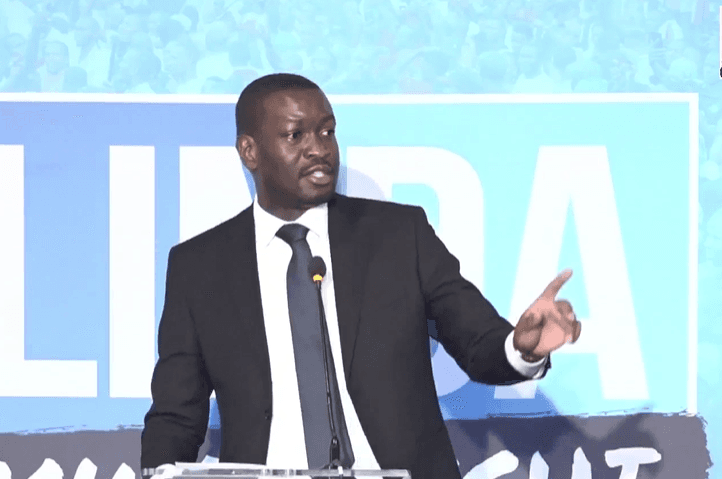
Anutin Charnvirakul stands at the helm of Thailand once more, but the celebratory atmosphere at the Bhumjaithai Party headquarters in Bangkok has rapidly dissolved into a state of high-stakes crisis management. Following his formal appointment as the 32nd Prime Minister of Thailand on March 20, 2026, the political veteran now faces an unforgiving combination of geopolitical instability and domestic economic fragility that threatens to derail his second term before it truly begins.
The Prime Minister’s return to power, confirmed by a parliamentary vote of 293 in favor, was supposed to signal a new era of stability for the Southeast Asian nation. Instead, his administration is immediately confronted by an escalating energy shock triggered by conflict in the Middle East, which has sent crude oil prices soaring and exposed Thailand’s deep-seated reliance on imported liquefied natural gas. For a nation that relies on gas for roughly 60 percent of its electricity generation, the implications for the national budget, manufacturing competitiveness, and household costs are severe, with ripple effects expected to reach global trading partners, including Kenya.
The path to Anutin’s reelection was decisive on paper but fragile in practice. Leading a sprawling 16-party coalition, the Prime Minister must balance competing interests while navigating a legislative landscape that has already seen three prime ministers in the span of three years. While the 293 votes secured in the House of Representatives provide a mathematical majority, the coalition’s longevity remains a point of intense scrutiny. The opposition, led by the People’s Party, has already signaled its intent to aggressively challenge the government’s policy direction, particularly regarding fiscal spending.
The Prime Minister’s mandate is further complicated by the reality that Thailand’s economic growth has stalled, with projections revised downward to approximately 1.3 percent for the year. Business leaders are no longer satisfied with stop-gap measures. They are demanding immediate, deep-seated structural reforms that have been delayed by years of political turnover. Anutin’s government must now deliver on promises of modernizing production and supporting high-tech manufacturing, all while holding a fractious coalition together against the backdrop of potential legal and parliamentary challenges.
The most immediate crisis facing the administration is the skyrocketing cost of energy. As global oil prices hover above 110 dollars (approximately KES 14,300) per barrel, the government’s fuel subsidy mechanisms are nearing exhaustion. Thailand imports a significant portion of its liquefied natural gas from the Middle East, and prolonged supply chain disruptions are threatening to ignite inflation across the board.
The following data highlights the critical pressures currently weighing on the Thai economy:
Economists at the Thailand Development Research Institute warn that if prices remain elevated, the fiscal burden will weigh heavily on the country’s credit standing. Furthermore, the government’s attempt to manage the crisis through emergency fuel injection and reduced export quotas is viewed by some analysts as a temporary fix that risks distorting market mechanisms and driving up public debt.
For an informed reader in Nairobi, the political and economic turbulence in Bangkok is not a distant concern it is a direct factor in the global cost of goods. Thailand serves as a crucial partner in the electronics and agricultural supply chains. As Thailand grapples with high energy costs, the landed price of imported Thai goods—ranging from essential electronic components to consumer appliances used in Kenyan households—is likely to rise.
Furthermore, global trade tensions are exacerbating the situation. Thailand is currently under pressure to negotiate favorable terms in response to US Section 301 trade measures, a process that requires public hearings and significant diplomatic maneuvering. Any instability in Thailand’s trade policy affects the wider network of Southeast Asian exports upon which East African markets rely. The disruption to manufacturing and logistics in Southeast Asia creates an inflationary environment that travels through global shipping lanes, eventually impacting the price of imports at the Port of Mombasa.
The Prime Minister’s challenge is to balance the immediate need for energy security with the long-term necessity of joining international economic frameworks like the Organisation for Economic Co-operation and Development. If the administration prioritizes short-term populist subsidies over structural adjustment, it risks missing a window to modernize the economy. However, with the public already weary of legislative volatility and rising costs of living, the margin for error is non-existent. Anutin’s second term has begun not with a honeymoon period, but with an urgent mandate to stabilize a nation that remains on a knife-edge between regional leadership and economic stagnation.
Keep the conversation in one place—threads here stay linked to the story and in the forums.
Sign in to start a discussion
Start a conversation about this story and keep it linked here.
Other hot threads
E-sports and Gaming Community in Kenya
Active 10 months ago
Popular Recreational Activities Across Counties
Active 10 months ago
The Role of Technology in Modern Agriculture (AgriTech)
Active 10 months ago
Investing in Youth Sports Development Programs
Active 10 months ago