We're loading the full news article for you. This includes the article content, images, author information, and related articles.
The US introduces a technocratic committee to run Gaza, aiming to sideline Hamas and focus on reconstruction, though legitimacy challenges loom.
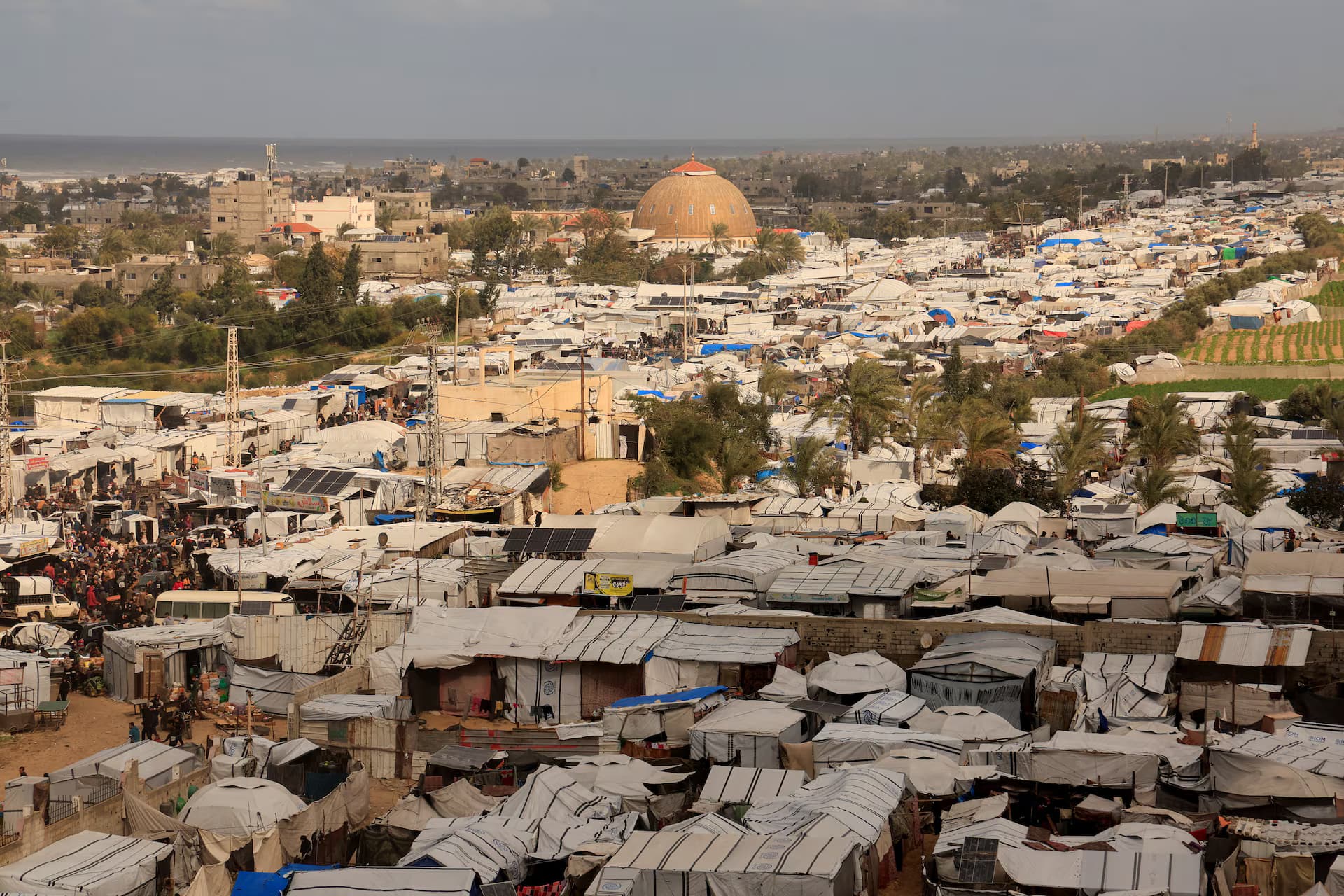
The United States has laid out its clearest vision yet for a post-Hamas Gaza, announcing the creation of a “Technocratic Committee” to administer the territory as part of Phase Two of President Donald Trump’s Middle East peace plan.
The proposed body, according to U.S. officials, will be made up of non-partisan professionals tasked with overseeing reconstruction, humanitarian aid distribution, and basic civil administration in Gaza once active hostilities subside. Washington says the aim is to depoliticize governance in the devastated enclave and prevent a power vacuum that could allow militant groups to re-emerge.
“This is about stabilisation, not politics,” a senior U.S. official said, describing the committee as a temporary mechanism to restore services and rebuild infrastructure without empowering armed factions.
Under the plan, the technocratic body would manage donor funds, coordinate international aid, and supervise essential services while longer-term political arrangements are negotiated. U.S. officials argue that decades of factional rule have turned humanitarian assistance into a tool of control—and that removing politics from administration is the only way to break the cycle.
The move signals a shift from military objectives to governance engineering, reflecting Washington’s belief that Gaza’s crisis cannot be solved by security measures alone.
“This is the first time the U.S. has put forward a concrete administrative model for Gaza after Hamas,” said a Middle East analyst. “It’s ambitious—and risky.”
Israel has reacted cautiously but positively, with officials indicating conditional acceptance of the proposal. Israeli leaders have long insisted that Hamas must play no role in Gaza’s future governance, and the technocratic model aligns with that red line.
However, Israeli security officials have privately raised concerns about enforcement, intelligence coordination, and security guarantees, particularly if the committee lacks armed authority or local legitimacy.
That legitimacy question looms largest.
While the U.S. describes the committee as neutral and professional, Palestinian factions have not endorsed the plan, and there is skepticism about whether any governing body can function in Gaza without buy-in from local political and social networks.
“Hospitals, water systems, and aid convoys don’t operate in a vacuum,” said a regional diplomat. “You need acceptance on the ground. Otherwise, technocracy becomes occupation by another name.”
Hamas has not formally responded, but allied voices have already rejected the idea of externally imposed administration. The Palestinian Authority, meanwhile, remains sidelined—raising questions about whether the plan further fragments Palestinian political representation.
Supporters of the initiative argue that Gaza’s scale of destruction leaves little room for ideological purity. With infrastructure shattered and humanitarian needs overwhelming, they say pragmatism must come first.
Critics counter that governance without political roots rarely survives, especially in conflict zones where authority is contested not just administratively, but symbolically.
“This is a blueprint built on expertise,” said one observer. “The question is whether expertise can substitute for legitimacy.”
The technocratic committee marks the formal opening of Phase Two of Trump’s peace framework: moving from war termination toward post-conflict order. Whether it becomes a bridge to stability or another short-lived experiment will depend on factors far beyond Washington’s control—security, funding, regional diplomacy, and the willingness of Gazans themselves to accept a new governing reality.
For now, the plan represents a bold attempt to redraw Gaza’s future without Hamas. Whether Gaza will accept a future administered by technocrats rather than politicians—or militants—remains the unanswered question at the heart of the proposal.
Keep the conversation in one place—threads here stay linked to the story and in the forums.
Sign in to start a discussion
Start a conversation about this story and keep it linked here.
Other hot threads
E-sports and Gaming Community in Kenya
Active 9 months ago
The Role of Technology in Modern Agriculture (AgriTech)
Active 9 months ago
Popular Recreational Activities Across Counties
Active 9 months ago
Investing in Youth Sports Development Programs
Active 9 months ago