We're loading the full news article for you. This includes the article content, images, author information, and related articles.
Kenyans face a staggering financial penalty following former President Uhuru Kenyatta's controversial refusal to appoint six judges, exposing the costly consequences of executive overreach.
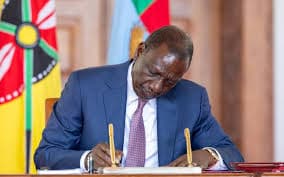
Kenyans face a staggering financial penalty following former President Uhuru Kenyatta's controversial refusal to appoint six judges, exposing the costly consequences of executive overreach.
The ghosts of past political decisions have returned to haunt the Kenyan taxpayer. A staggering $1.3 million (approx. KES 175 million) bill has materialized, the direct fallout of a high-stakes constitutional standoff.
This financial burden underscores the profound economic impact of political brinkmanship. When former President Uhuru Kenyatta defied constitutional mandates by rejecting judicial nominees based on undisclosed intelligence, he triggered a chain of litigation and compensation claims that ordinary citizens must now fund. It is a harsh lesson in the true cost of executive impunity and the necessity of adhering strictly to the rule of law within East Africa's largest economy.
The saga began when the Judicial Service Commission (JSC) forwarded a list of 40 nominees to the President for formal appointment to various courts, including the Court of Appeal and the Environment and Land Court. In an unprecedented move that sent shockwaves through the legal fraternity, the then-Head of State cherry-picked 34 names, deliberately leaving out six prominent judicial officers. The official justification leaned heavily on vague intelligence reports questioning their suitability, integrity, and temperament. This executive action immediately sparked a fierce constitutional debate regarding the President's role in the judicial appointment process—specifically, whether his function was purely ceremonial or inherently discretionary.
Legal scholars and civil society organizations rapidly mobilized, arguing that the President had grossly overstepped his constitutional boundaries. The resulting legal battles paralyzed the judicial progression of the affected individuals for years, inflicting severe professional and psychological damage. The courts repeatedly ruled against the executive, asserting that the President could not amend or reject the JSC's recommendations. Despite these binding judgments, the stalemate persisted until the transition of power. It was only upon President William Ruto taking office that the remaining judges were finally sworn in, closing a dark chapter of executive interference but opening the door to massive financial liabilities.
The refusal to appoint the judges was not merely a political talking point; it constituted a direct violation of their fundamental rights. Recognizing this egregious breach, the judicial system awarded substantial damages to the affected individuals. The total compensation package, encompassing lost earnings, general damages for constitutional violations, and hefty legal fees, has ballooned to an eye-watering KES 175 million. This colossal sum is not drawn from the personal accounts of those who orchestrated the crisis, but directly from the exchequer, meaning the Kenyan taxpayer is ultimately footing the bill.
This scenario highlights a systemic flaw in holding public officers accountable for decisions made during their tenure. While the individuals whose rights were trampled upon receive long-overdue justice, the broader economic consequences are severe. Funds that could have been allocated to pressing national needs—such as healthcare, education, or infrastructure development—are instead diverted to settle legal penalties born of executive obstinacy. This situation demands a rigorous re-evaluation of how state officers are held personally liable for actions that contravene the Constitution.
The repercussions of this saga extend far beyond the immediate financial hit. It serves as a stark warning to current and future administrations regarding the sanctity of independent institutions.
"The constitution is not a mere suggestion; it is the absolute law of the land, and violating it carries a very real, very heavy price," a prominent constitutional lawyer asserted, summarizing the costly lesson the nation has been forced to learn.
Keep the conversation in one place—threads here stay linked to the story and in the forums.
Sign in to start a discussion
Start a conversation about this story and keep it linked here.
Other hot threads
E-sports and Gaming Community in Kenya
Active 9 months ago
The Role of Technology in Modern Agriculture (AgriTech)
Active 9 months ago
Popular Recreational Activities Across Counties
Active 9 months ago
Investing in Youth Sports Development Programs
Active 9 months ago



