We're loading the full news article for you. This includes the article content, images, author information, and related articles.
GEITA: THE Canadian Ambassador to Tanzania, Emily Burns, has said that the Keeping Adolescent Girls in School (KAGIS) project has helped strengthen the education sector in the country.
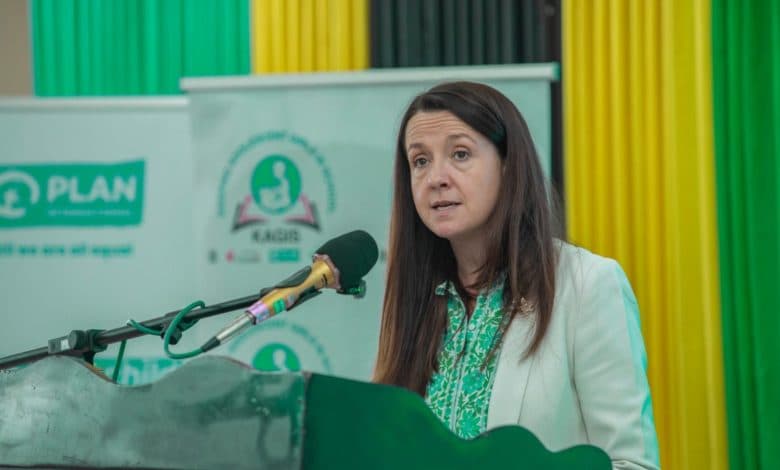
As the transformative Keeping Adolescent Girls in School (KAGIS) project reaches its official conclusion, the collaborative triumph between Canada and Tanzania stands as a powerful blueprint for dismantling the deep-rooted cultural and economic barriers that have historically locked young East African women out of the classroom.
During a high-profile closing ceremony in the Geita and Kigoma regions, Canadian Ambassador to Tanzania, Emily Burns, lauded the five-year initiative. Implemented by Plan International, the project targeted the critical intersection of safety, inclusivity, and financial support, successfully ensuring that thousands of adolescent girls could pursue their secondary education without the looming threat of early marriage or forced truancy.
This initiative matters urgently. In East Africa, educating a girl is not merely a social justice imperative; it is the most potent economic catalyst available. When adolescent girls remain in school, maternal mortality drops, child marriage rates plummet, and the broader gross domestic product of the community rises exponentially. KAGIS proves that targeted, community-integrated interventions can reverse generations of marginalization.
The success of the KAGIS project in drastically reducing truancy was not achieved through simple infrastructure building. It required a surgical approach to the socioeconomic realities of rural Tanzania. Plan International Country Director, Jane Sembuche, hit upon the core mechanism: alleviating the hidden financial burdens.
Even when tuition is ostensibly free, the ancillary costs—uniforms, safe transport, and critically, menstrual hygiene products—force vulnerable families to make brutal economic choices, almost always at the expense of the girl child. By subsidizing these costs, KAGIS removed the primary economic justification for pulling girls out of the education system.
Geita Regional Commissioner Martine Shigela issued a stark warning during the ceremony, acknowledging that specific traditional and cultural practices remain the greatest enemy of the girl child. This is a regional crisis. From the rural hinterlands of Tanzania to the pastoralist communities of Northern Kenya, the battle is not just against poverty, but against deeply entrenched patriarchal norms.
The strategies utilized by KAGIS offer vital lessons for neighboring nations like Kenya, which is currently navigating the complexities of its Competency-Based Curriculum (CBC) transition:
The KAGIS project, funded by the Government of Canada and executed in partnership with local NGOs RAFIKI SDO and WPC, demonstrated that international funding works best when deployed through hyper-local, culturally fluent organizations.
While the KAGIS project has officially closed, its legacy must be institutionalized into national policy. Foreign aid can pilot successful interventions, but sovereign governments must ultimately absorb the financial responsibility of keeping their girls in school.
"When families are able to meet the costs associated with educating adolescent girls, the girls are more likely to remain in school and continue with secondary education, fundamentally altering the trajectory of their lives," concluded Sembuche.
Keep the conversation in one place—threads here stay linked to the story and in the forums.
Sign in to start a discussion
Start a conversation about this story and keep it linked here.
Other hot threads
E-sports and Gaming Community in Kenya
Active 9 months ago
The Role of Technology in Modern Agriculture (AgriTech)
Active 9 months ago
Popular Recreational Activities Across Counties
Active 9 months ago
Investing in Youth Sports Development Programs
Active 9 months ago