We're loading the full news article for you. This includes the article content, images, author information, and related articles.
The newly launched Rironi-Mau Summit superhighway project is projected to cut the grueling 10-hour journey to the Malaba border to just five hours, promising a significant economic boost for Kenya and the wider East African region.
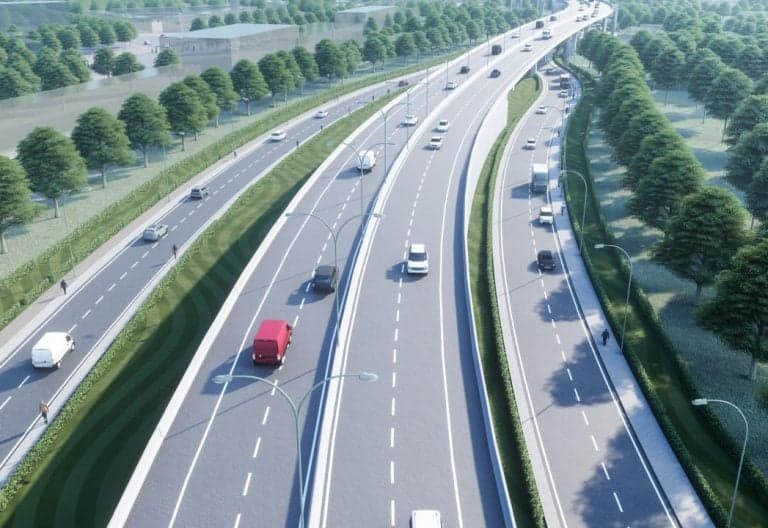
The government has officially launched the construction of the Rironi-Mau Summit superhighway, a project poised to slash travel time and unlock economic potential along the vital Northern Corridor. Prime Cabinet Secretary Musalia Mudavadi emphasized that the modern dual carriageway will significantly reduce the journey from Nairobi to the Malaba border, a critical artery for regional trade.
This ambitious infrastructure project, estimated to cost between KES 170 billion and KES 200 billion (approx. $1.3 billion to $1.5 billion), is the cornerstone of the government's strategy to enhance connectivity and stimulate growth. By easing congestion on a route that carries nearly 40% of Kenya's trade traffic, the highway is expected to lower transport costs, which could translate to more affordable food prices and higher incomes for farmers in Western Kenya.
The project is more than just a road; it's an economic enabler for the entire East and Central African region. Landlocked nations like Uganda, Rwanda, and South Sudan, which rely on the Port of Mombasa, are expected to see freight times to Kampala reduced by as much as 20%. President William Ruto, speaking at the launch, described the highway as a "gateway to prosperity, unity and transformation," highlighting its role in positioning Kenya as a leader in modern transport and innovative financing through its Public-Private Partnership (PPP) model.
The construction will be undertaken in phases by two consortia involving Chinese state firms and Kenya's National Social Security Fund (NSSF). The project will feature:
The construction phase is anticipated to be a significant source of employment, with President Ruto noting that it will create over 15,000 jobs for young Kenyans. This influx of employment and the expected long-term benefits of improved infrastructure are central to the project's justification. The upgrade is projected to handle the current daily traffic of 20,000 vehicles, a figure expected to grow annually.
However, the project is not without its complexities. The financing is structured as a PPP, meaning motorists will be required to pay toll fees to use the new superhighway. While the government has assured that alternative, toll-free routes will remain available, some leaders and motorist associations have raised concerns about the potential financial burden on ordinary Kenyans.
Despite these concerns, the overarching sentiment is one of optimism. The project, scheduled for completion by June 2027, is seen as a critical step in modernizing Kenya's infrastructure, reducing the frequent and costly traffic gridlocks, and curbing the high rate of accidents that have plagued the corridor for decades. As construction begins, all eyes will be on the timely delivery of a highway that promises to reshape the nation's economic future.
Keep the conversation in one place—threads here stay linked to the story and in the forums.
Sign in to start a discussion
Start a conversation about this story and keep it linked here.
Other hot threads
E-sports and Gaming Community in Kenya
Active 9 months ago
The Role of Technology in Modern Agriculture (AgriTech)
Active 9 months ago
Popular Recreational Activities Across Counties
Active 9 months ago
Investing in Youth Sports Development Programs
Active 9 months ago