We're loading the full news article for you. This includes the article content, images, author information, and related articles.
The paramilitary group's announcement offers a potential opening for humanitarian aid amid a catastrophic famine, but the Sudanese army's lack of response and a history of failed truces temper hope for an end to a conflict destabilising East Africa.
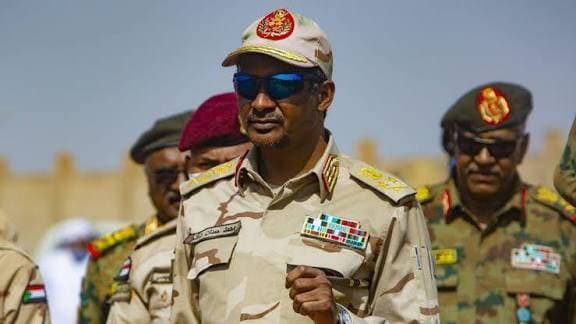
Sudan’s paramilitary Rapid Support Forces (RSF) on Thursday, 6th November 2025, announced it had agreed to a humanitarian ceasefire proposal, a move that followed its recent capture of the strategic city of el-Fasher and mounting international pressure over alleged atrocities. However, the military-led government under General Abdel Fattah al-Burhan has remained silent, casting significant doubt on the truce's viability and leaving the region, including neighbouring Kenya, on high alert.
The proposal, brokered by the United States, Saudi Arabia, the United Arab Emirates, and Egypt—known as the Quad—calls for an initial three-month humanitarian truce to allow for the urgent delivery of aid, intended to lead to a permanent ceasefire and a nine-month transition to civilian rule. In a statement, the RSF said it agreed to the truce “in order to address the catastrophic humanitarian consequences of the war” and was ready to begin discussions on a permanent cessation of hostilities.
This development comes just over a week after the RSF seized el-Fasher, the capital of North Darfur and the last stronghold of the Sudanese Armed Forces (SAF) in the vast western region, after a brutal 18-month siege. The city's fall on 26th October 2025 triggered a new wave of humanitarian disaster, with reports of mass killings, summary executions, and the displacement of tens of thousands of civilians already facing starvation.
The siege and subsequent fall of el-Fasher have culminated in a humanitarian catastrophe. On 4th November 2025, a UN-backed report from the Integrated Food Security Phase Classification (IPC) officially confirmed that famine conditions (IPC Phase 5) are present in el-Fasher and Kadugli in South Kordofan. Trapped civilians were reportedly surviving on leaves and animal feed. The UN humanitarian office, OCHA, has condemned the obstruction of aid as "unacceptable."
The RSF's capture of the city was followed by widespread international condemnation over alleged war crimes. Reports and videos have emerged showing mass killings, including the execution of nearly 500 people at a maternity hospital. Satellite imagery analyzed by Yale University's Humanitarian Research Lab showed activity consistent with the digging of mass graves. While the RSF has denied orchestrating mass killings, it admitted some violations were committed by individuals and announced arrests.
The protracted conflict, which erupted in April 2023, has profound implications for regional stability, creating the world's largest displacement crisis and straining resources in neighbouring countries. The UNHCR reported in April 2025 that over four million Sudanese have fled to neighbouring countries, making it the largest refugee crisis in Africa.
Kenya has played a significant, though at times contentious, diplomatic role through the Intergovernmental Authority on Development (IGAD). President William Ruto has been a vocal critic of the warring generals and was appointed to chair an IGAD quartet to mediate the crisis. However, the SAF government has previously accused Kenya of favouring the RSF, complicating mediation efforts. A stable Sudan is critical for Kenya's economic and security interests, and the ongoing war threatens to further destabilise the Horn of Africa.
Skepticism surrounding the latest ceasefire announcement is rooted in a consistent history of failed agreements. Since the war began, numerous truces, including those brokered during the Jeddah talks in May 2023, have collapsed almost immediately, with both sides accusing the other of violations. These failures have often allowed the belligerents to regroup and rearm, rather than paving the way for genuine peace.
The SAF's current position remains the most critical unknown. Earlier this week, before the RSF's announcement, Sudan's Security and Defence Council met to discuss the Quad proposal but gave no definitive answer, with influential military leaders expressing disapproval. Defence Minister Hassan Kabroon stated the council resolved to rally the population to "eradicate the rebel militia," signalling a continued commitment to a military solution. This hardline stance contrasts sharply with the RSF's public acceptance of the truce, suggesting the announcement may be a strategic move to deflect international condemnation following the atrocities in el-Fasher. The international community now awaits a formal response from General al-Burhan's government, a decision that will determine whether a desperately needed corridor for humanitarian aid will open, or if Sudan will plunge deeper into its devastating conflict.
Keep the conversation in one place—threads here stay linked to the story and in the forums.
Sign in to start a discussion
Start a conversation about this story and keep it linked here.
Other hot threads
E-sports and Gaming Community in Kenya
Active 9 months ago
The Role of Technology in Modern Agriculture (AgriTech)
Active 9 months ago
Popular Recreational Activities Across Counties
Active 9 months ago
Investing in Youth Sports Development Programs
Active 9 months ago



