We're loading the full news article for you. This includes the article content, images, author information, and related articles.
A staggering 99% of police officers injured in the line of duty are awaiting compensation, a Senate inquiry has revealed, exposing a systemic failure that jeopardises the welfare and morale of Kenya's security forces.
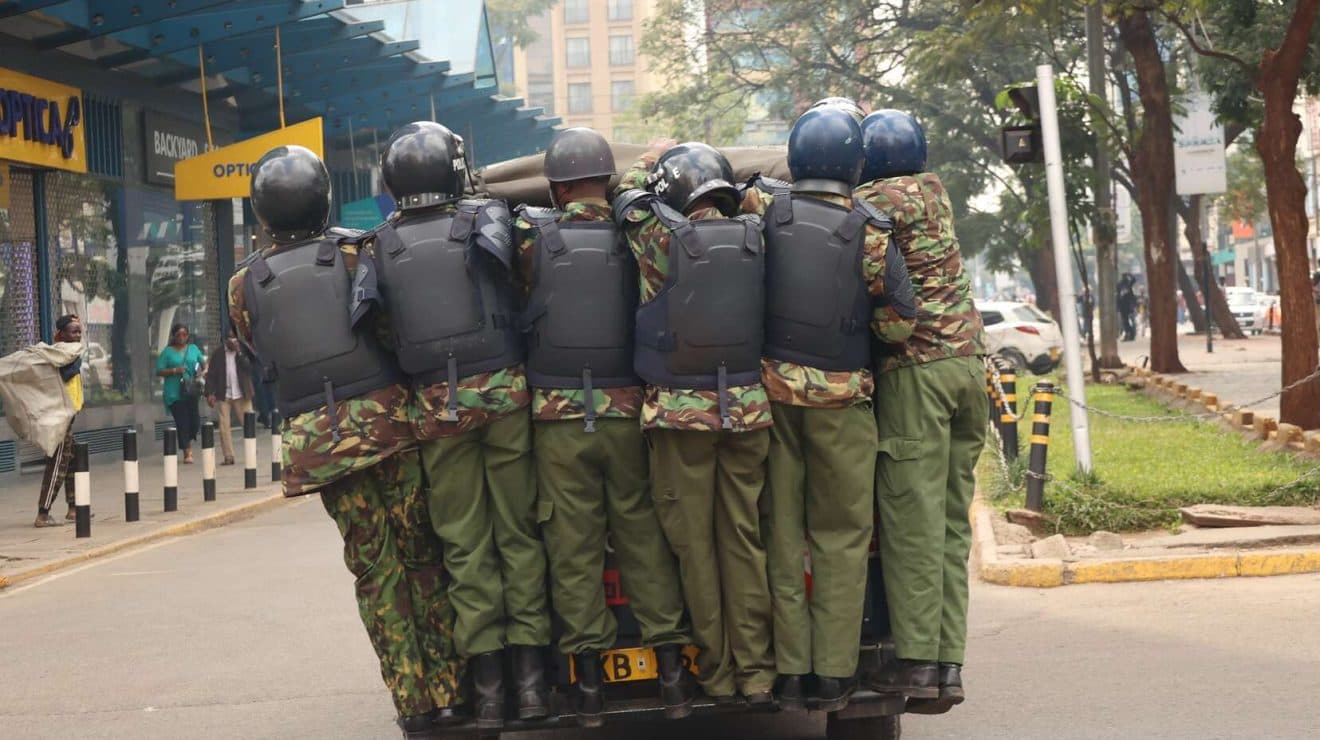
Just 25 out of 2,114 Kenyan police officers who sustained injuries in the course of their duties have been compensated, leaving a staggering Ksh2.2 billion in claims unpaid, some for several years. The damning figures were disclosed by the Ministry of Labour and Social Protection before the Senate Committee on Defence and Foreign Relations on Tuesday, November 4, 2025, in Nairobi, painting a grim picture of the state's failure to care for its uniformed protectors.
Appearing before the committee chaired by Isiolo Senator Fatuma Dulo, officials from the Directorate of Occupational Safety and Health Services (DOSHS) confirmed the receipt of 2,114 accident notifications from the National Police Service (NPS). The breakdown reveals a crisis across all branches of the service: 1,498 officers from the Kenya Police Service, 483 from the Administration Police Service, and 108 from the Directorate of Criminal Investigations (DCI) are still awaiting their dues. Shockingly, not a single officer from the DCI has received any payment.
The core of the dysfunction lies within the compensation framework governed by the Work Injury Benefits Act (WIBA), 2007. Multiple state agencies have pointed fingers at the now-defunct National Health Insurance Fund (NHIF), succeeded by the Social Health Insurance Authority (SHA), as the primary bottleneck. Musa Nyandusi, the Secretary of Occupational Safety and Health, informed the Senate that the NHIF had consistently failed to provide returns on compensation settlements, despite formal requests as recent as January 16, 2025. Furthermore, the NHIF has been accused of frequently disputing computed compensation awards and unlawfully subjecting injured officers to secondary medical reviews, further prolonging their suffering.
The National Police Service Commission (NPSC), chaired by Eliud Kinuthia, has also publicly blamed the insurer for breaching contractual obligations, specifically the requirement to settle assessed claims within 90 days. This sentiment was echoed in the Senate, where lawmakers expressed outrage at the years-long delays. The issue is compounded by what Nyandusi described as weak enforcement powers within the WIBA Act itself, which limits the Directorate's ability to prosecute non-compliant institutions and hold them accountable.
The Senate's investigation is the latest in a series of attempts to resolve the crisis. On Thursday, October 30, 2025, Senator Dullo's committee issued a stern 14-day ultimatum to a consortium of insurance firms to settle all approved claims. This followed petitions from several injured officers seeking parliamentary intervention for their long-pending cases. Records show the problem is persistent; in late 2024, the committee was informed that out of 1,756 claims submitted in the 2021-2022 period, only 937 had been paid. Hundreds of other claims were rejected or remain pending due to documentation issues or disputes.
The delays persist despite the high-risk nature of policing in Kenya. In the year leading up to November 2023, 37 officers were killed in the line of duty, with another 29 losing their lives in 2024, primarily due to banditry and terrorist attacks. For the thousands of officers who survive attacks with life-altering injuries, the battle for compensation becomes a second ordeal marked by bureaucratic indifference.
Acknowledging the current employer-liability system as unsustainable, the government is developing a new legal framework to address the systemic flaws. According to DOSHS, the proposed Workers' Injury Compensation Fund Bill, 2024, aims to establish a central fund to guarantee timely and consistent payments for all injured workers, including police officers. The bill also intends to incorporate comprehensive rehabilitation and reintegration programmes, aiming to restore the dignity and productivity of injured officers.
However, for the over 2,000 officers and their families currently caught in the backlog, these proposed reforms offer little immediate relief. The failure to honour these claims represents a significant breach of trust and duty of care, with profound implications for the morale and operational readiness of the National Police Service. As the Senate inquiry continues, the Kenyan public awaits decisive action to deliver long-overdue justice to the men and women who sacrifice their well-being for national security.
Keep the conversation in one place—threads here stay linked to the story and in the forums.
Sign in to start a discussion
Start a conversation about this story and keep it linked here.
Other hot threads
E-sports and Gaming Community in Kenya
Active 9 months ago
The Role of Technology in Modern Agriculture (AgriTech)
Active 9 months ago
Popular Recreational Activities Across Counties
Active 9 months ago
Investing in Youth Sports Development Programs
Active 9 months ago



