We're loading the full news article for you. This includes the article content, images, author information, and related articles.
President William Ruto awards a charter to Bomet University College at State House, elevating it to Kenya’s 36th public university and unlocking new academic autonomy for the South Rift region.
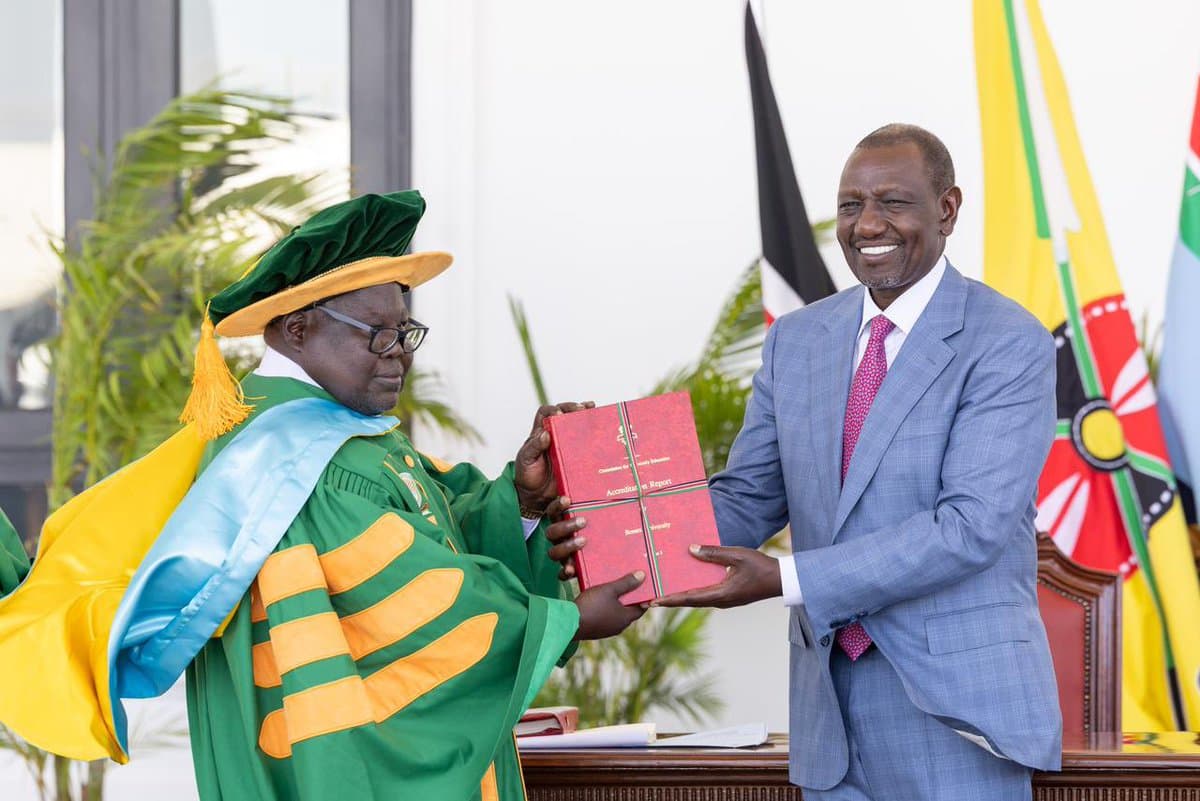
It is a dawn of a new academic era in the South Rift as Bomet University College finally sheds its constituent status to stand tall as Kenya’s 36th fully pledged public university.
In a move that reverberates far beyond the lecture halls of Bomet, President William Ruto has today presided over the awarding of a charter to Bomet University College (BUC) at State House, Nairobi. This is not merely an administrative procedure; it is the culmination of years of rigorous academic auditing, infrastructure development, and the relentless prayers of a community that has long yearned for its own seat of higher learning. The elevation of BUC from a constituent college of Moi University to a fully independent entity marks a pivotal moment in the government’s strategy to decentralize higher education and spur regional economic growth through knowledge.
The significance of this charter extends well beyond the university's gates. For decades, the South Rift region has relied heavily on institutions in neighboring counties for university education. The granting of this charter serves as a powerful validation of Bomet County’s readiness to host a national treasure. "This charter is the key that unlocks our potential," an elated stakeholder was heard saying outside the State House grounds. It empowers the institution to:
President Ruto, while handing over the instruments of authority, emphasized that this elevation is part of a broader "bottom-up" educational reform. He challenged the new university council to prioritize courses that solve real-world problems rather than churning out graduates for non-existent white-collar jobs. The President’s directive aligns with the new university funding model, which demands that institutions become centers of innovation and financial sustainability rather than mere cost centers for the Exchequer.
However, the celebration comes with a caveat. The newly chartered university enters a landscape where the ground is shifting beneath the feet of higher education financing. The days of automatic, blanket government capitation are over. Bomet University must now navigate the new student-centered funding model, which categorizes learners based on their level of need. This transition has been anything but smooth for older institutions, and for a young university finding its footing, the administrative burden will be immense.
Critics and educational experts warn that the university must move swiftly to establish robust income-generating activities. Reliance on state coffers is a strategy of the past. The university leadership is now tasked with forging partnerships with the private sector, attracting research grants, and ensuring that their academic menu is attractive enough to pull in privately sponsored students in a highly competitive market.
As the instruments of power—the mace, the seal, and the logo—make their way to Bomet, the mood is electric. But when the dust settles and the celebrations fade, the real work begins. Bomet University is no longer a child of Moi University; it is an adult expected to feed itself, house its children, and contribute to the national discourse. The training wheels are off, and the race to academic excellence has officially begun.
Keep the conversation in one place—threads here stay linked to the story and in the forums.
Sign in to start a discussion
Start a conversation about this story and keep it linked here.
Other hot threads
E-sports and Gaming Community in Kenya
Active 9 months ago
The Role of Technology in Modern Agriculture (AgriTech)
Active 9 months ago
Popular Recreational Activities Across Counties
Active 9 months ago
Investing in Youth Sports Development Programs
Active 9 months ago



